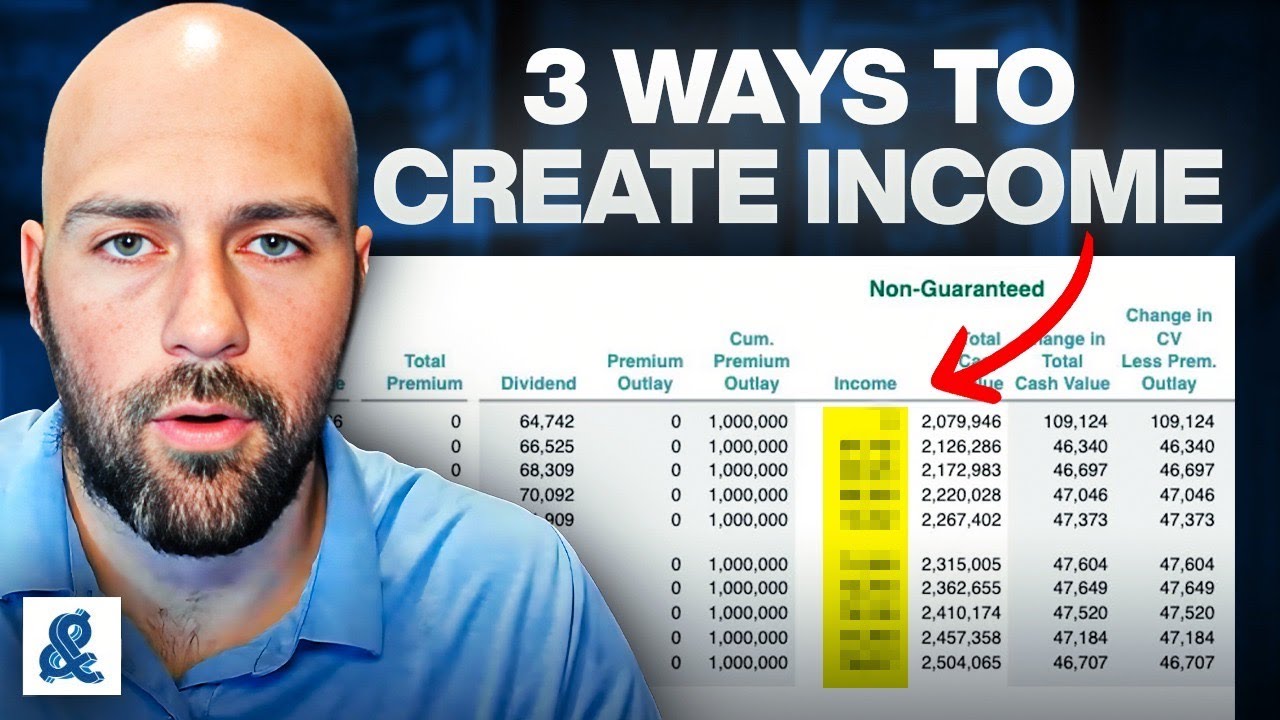
In this episode, you'll discover how whole life insurance policies can serve as a supplemental income source during retirement. Justin explains three practical methods: taking consistent withdrawals, using dividends for income, and accessing cash value as a volatility buffer in down markets. You will learn how a hypothetical $1 million premium over 25 years can translate into multi-million dollar income streams while preserving a substantial death benefit. The strategies focus on long-term preservation, tax efficiency, and legacy planning. For a comprehensive view on tax-efficient strategies with life insurance, check out BetterWealth’s life insurance retirement plan insights.
Whole life insurance builds tax-deferred cash value that you can access tax-free through policy withdrawals and loans. Unlike regular investment accounts, withdrawals first return your basis (the premiums paid) tax-free before affecting any gains. Policy loans allow you to borrow against your cash value without triggering taxable events, preserving the policy's tax advantages. This creates a flexible source of retirement income that complements other assets while minimizing tax burdens.
The cash value grows through guaranteed rates in the contract plus dividends (which are not guaranteed but have historically been paid consistently). You can choose to receive dividends as direct income rather than reinvesting them, maintaining growth while supplementing cash flow. For example, a client starting at age 40 contributing $40,000 annually can accumulate nearly $2 million in cash value by retirement, enabling tax-free income for decades.
Below is a list of significant entities and resources mentioned during the episode to deepen your understanding.
Infinite banking uses a specially designed whole life insurance policy's cash value to create your own banking system. You build tax-deferred cash value and borrow against it at low interest without going through banks. This provides flexible, tax-free income while allowing the cash value to continue growing.
Withdrawals from a whole life insurance policy first return your premium basis tax-free but reduce the death benefit permanently. Loans are tax-free borrowings against your cash value that do not decrease the death benefit immediately but accrue interest that must be managed to avoid policy lapse.
Wealthy families use whole life insurance for tax-free growth and retirement income because it provides guaranteed cash value accumulation, flexible access via withdrawals and loans, and a tax-free death benefit legacy. It helps mitigate taxes and market volatility in retirement plans.
Starting as early as your 30s or 40s allows enough time to accumulate significant cash value and maximize tax-free retirement income. However, policies can still be beneficial if started later with adjusted contribution amounts and timelines.
Life insurance cash value can act as a volatility buffer by providing an alternative income source during market downturns, preventing forced asset sales at low prices. This preserves your investment portfolio’s growth potential and extends retirement income longevity.
If your policy lapses, any outstanding loans or withdrawals above your basis become taxable income, potentially causing a large tax bill. Ensuring your policy remains in force through proper management or riders like overloan protection is critical to preserving tax benefits.
Yes, you can elect to receive dividends directly as income instead of reinvesting them to supplement retirement cash flow. Dividends are generally income tax-free and can grow over time, helping maintain death benefit growth and increasing income potential.
If you’re concerned about running out of money in retirement, overpaying taxes, or feeling uncertain about your current life insurance setup, BetterWealth can help. We specialize in designing policies that maximize tax-free retirement income and protect your legacy. Click the Big Yellow Button to Book a Call and let's explore what it would look like to keep, protect, grow, and transfer your wealth the BETTER way.
Below is the full transcript.
Full Transcript5,487 words
Hey guys, welcome back to the AndAsset channel. I'm Justin Garman here with BetterWealth. And today we are going to touch on the topic of how you can use life insurance in retirement for income. So I know it's something that we talk about a lot is one of the benefits of life insurance. You have another bucket, you can use it as supplemental retirement income. But today we're going to dive into exactly the types of ways that you can use a life insurance policy. and draw the income from your policy. So we're going to look at a hypothetical example here. So we're going to really look at it in three different ways. So what we're going to really cover is we're going to look at one person. We'll dive into those, the details of who they are and how we can access income in three different ways. So it's not just going to be, hey, there's one way that you can get the income. We're going to look at it in three different ways. One being just supplemental income. Think of that as we're going to take some income. consistently every year. We're going to look at how we can, another option of using the dividends rather than them going back into the policy, purchasing more paid up additions, but we can use those for income, have the dividends come to us. And then we'll also look at it as a volatility buffer. So as a way that we're not taking consistent income, but it's another bucket where we can draw from when other assets, whether it's stocks, real estate, when those go down to help us get through any of those volatile times there. Then we'll also touch on, there are going to be some important considerations to keep in mind as you are using your policy for income in retirement. So we are specifically going to be looking out later on down the road, not just immediately here. All right. So here is an example, a hypothetical example, the type of client we might have someone putting money into life insurance, and then we'll look at how they can take income, same policy. So identical policy. and just the three different ways that you can potentially take some income from the policy. So here, it's going to be a male, age 40 is when they start contributing to this policy. And they're planning to contribute $40,000 every year into the policy. What we will see here is, as we look at an illustration, that year one right here. So as we get to year one, this person, after they put in $40,000 of premium, they have a total cash value. of about $32,000, almost $33,000. So again, this is a high cash value policy. You can look at plenty of videos that we have on this specific kind of KNXN design of that. And then also an initial death benefit of just under a million dollars. So remember in these policies, we are going to maximize the cash value. This is for accumulation. You're going to minimize the death benefit and it will grow every single year. And so Obviously, you put in the money, you don't have all of the $40,000. Typical in your whole life policies, you're going to have a time where you have to continue contributing depending on age, numerous factors, but we get to year five. And that's the first year that now we have contributed a total of $200,000 as you see here, but we have more cash value available. And every year after that, that gap is going to widen and we're going to accumulate a large lump sum of cash that we're going to then look at using in retirement. So by the time that we get all the way down here to 65, so we have accumulated, we funded $40,000 into the policy every single year. By the time that we get to age 65, after 25 years of contributing to the policy, we will have put in $1 million of total premium over that lifetime. Now, there is flexibility in this. You don't have to fund $40,000 every year, but we're saying this person did. They contributed for that long. This was just another bucket that they were saving into for this use in retirement, as well as having that death benefit grow along the way. So out of the million dollars they put in, their total cash value at age 65 is going to be about $1.9 million. So nearly $2 million of cash value now available that they can use that to distribute. have some income, and then also about $3.6 million total death benefit there. So your total death benefit has grown to be approximately 3.6. And that is the time that we stop the accumulation. And now we're moving to retirement starting in age 66. And we're going to look at how we actually are going to, one, a few things we're going to do to the policy, as well as how we're going to take that income. So first, we're going to want to stop. contributing premiums to the policy. There are a couple of ways that you can do that. So I know it's a whole life policy, but that does not mean that you have to actually continue to contribute for your whole life. You can do it earlier than this, but we get to age 65 and we're going to do what is called a reduced paid up policy. So we're going to stop the premiums. This is now reduced paid up. So this means that we no more premiums are due for the life of the policy. So So. This makes it contractually paid up forever. We can't go in and pay more, but we also don't have to go in and pay more. It's completely paid for. It cannot lapse due to non-payment of premium because it's a fully paid up contract. So there's no longer, hey, we have to make sure we pay the minimums or we have to make sure and use, typically we can do a premium offset and use those dividends to pay for the minimums. It is completely done and it's going to be set there. So it can provide some long-term peace of mind. and guarantees of that continuation but the main thing that we want to do this for is because this will be the best way that we can ensure that that cash value will continue to grow in the most efficient manner without us adding anything there now the trade-off for this because with all things especially in life insurance is give and take and everything that we do so the trade-off is that it will result in a small drop in death benefit now the earlier you do it the bigger that drop typically is or the more of a percentage of what you have it's going to drop so it will drop in this case we have about 3.6 million dollars of death benefit it's going to drop to about 3.4 but then it continues to grow back back up as we take income as we do things now if we take the income it will draw down on that death benefit but would continue to grow if we just did reduce paid up and left it as is it would just be a one-time drop in the policy so That's the tradeoff. right there. So if we look at this, now we're going to look at taking income. So one question is, all right, well, how do you take income? Do you just take all the money out? Do you withdraw? Do you take loans? How do you do it? So here's going to be some of the mechanics of how this would work. So typically, phase one is we're going to just take withdrawals from the policy. So we've put in a million dollars. We can withdraw. So I mean, we're taking it out, our depth benefit is going to drop because we're withdrawing that from the contract. We cannot pay that back into it. We're taking it out, but that's what we want to do first. So life insurance, it goes off of the FIFO. So that's first in first out, meaning that we can actually all of the gain. We don't have to pull that out first, like most of your traditional and other accounts, any gain. Once you pull money out, you're going to be taxed on that gain. So with life insurance, we can actually take out what we've put in all of the contributions first. And then after that, anything that has grown above basis, we would be taxed on. So if we are looking at maximizing, taking income and for as long as possible, first, we want to take that out. So in this example, we're able to do that for about nine years with the amount of income that we're going to be taking. But we take out that first million completely tax free. And then after that, we start taking policy loans. So after that, we will take policy loans, but it's going to be. many years later. And the reason we want to wait to take the policy loans is because they're loans. There is going to be that cost of capital, even if it's in retirement when we're using it. I know we traditionally talk about, yeah, we're using it to borrow against, invest in other assets, do those things. Now we're looking at taking it as income and there still will be the cost of capital. So that loan will be building up and compounding against you. The goal though is we want to minimize that. And we're waiting later to take that and not taking so much in one year that it just starts to, one word, cannibalize and eat into the policy too much. So there is some strategy into how you would want to do that. So anyways, the whole time you're doing that, we can potentially get millions of dollars in income doing it this way. But that's going to be the most efficient way to do that. So to look at an example here. So we get to age 66. You see this little footnote here. that means that's the year that we did the reduced paid up. So you see our death benefit did drop. So we went from about 3.6. Now we dropped it down to about 3.3 here and our income that we are taking. So you'll notice one thing here for the first, like I said, about nine years here. So every year right here, we are taking policy withdrawals. So we're withdrawing everything that we have put into the policy. But you'll see here our total loan balance is going to be zero every year. So our total loan balance is zero because we're not taking a loan. So that's what we want to do first. But you see the income that that is able to give you. We are able to get all the way $100,000 of income. every single year here. And that this would be considered a supplement of income. This person, the way that you're looking at it is yes, you need to have other assets. Don't put all your money into life insurance and plan on just living on your life insurance in retirement. This is going to be a supplement to your retirement, meaning you have other assets that $100,000 is in all of your income. You have other assets that you're taking it along with it. So as you do that, yes, of course, your death benefit is dropping because we are pulling the money. from the contract. And in this example, I've done it in a way where I'm truly maximizing your income to last as long as possible or all the way to age 100, assuming death at age 100 or before. You could string it out longer if you wanted to ensure it would last all the way to 121. If you thought, hey, I'm going to die at 90, you could take a little more and make sure that that happens. So what we're doing here is that's why it's that $100,000. But then after that, now you'll notice we have a total loan balance. right here. So it is at the current interest rate, which at this company is 5.3. So that's why we take income of $100,000, but our total loan balance is 105,300. So that interest is now starting to build up there. However, our net death benefit you see is stays in the two millions all the way until this loan balance starts to build up. And obviously that death benefit then does drop down. So we take $100,000. every single year as you go down all the way out to 100. And if we do get to age 100, so if you died in age 100, at age 100 there, you would have taken a total of about $3,500,000 in income of totally maximizing what you have. So that's 35 years. So we're taking income all the way. to 100, that's 35 years at $100,000, you would have generated $3.5 million of total income by the time that you passed away there. As well as the other thing to note, you have about a $900,000 death benefit that is still left there. So just to quickly summarize as we look right here, so pulling away from the illustration. So we started our income at age 66 after we retired at 65. $100,000 per year, all the way to age 100. And like I said, that is $3.5 million of income from our initial $1 million over those 25 years that we put into the policy. So if we look at that, the legacy also continues. So this is a death benefit product, right? This is life insurance. We are getting it for a death benefit as well as some other assets there. So we If you're a person who would want to keep the death benefit, you would take less income if you want to make sure that that stays there. But even if we factor in we're getting this policy for the income, you would have left about that $932,000 death benefit, like we mentioned. So if we add those together, then you would have had about $4.4 million of value extracted from the policy. So we put in a million over that time frame. We take out 4.4 in. all and all of that is completely income tax free. So we do it right. We do the withdrawals. We do the loans. We're not paying any income taxes on that. You have the death benefit that is left to your beneficiaries, also income tax free. So that's taking one million dollars, putting it into a policy, and we're able to take four point four million dollars out of the policy income tax free over our lifetime there. So that's where it can become a pretty powerful thing, knowing you have it for income, supplement your income, and you are still able to leave that death benefit all with helping on the taxes. So especially if you are at that age, we don't know what the taxes would be, but especially now, if you're going to be taking lots of income, have other assets, you're a high income. earner and those taxes could be pretty high. This can be a very powerful tool, especially for them, but really for anybody. I don't know anybody who enjoys paying taxes. So if there are ways that we can mitigate that, then this is a very powerful tool to be able to do that. So that is method number one. Hey guys, I just wanted to interrupt real quick. If you're watching this and have an index universal life policy, a whole life policy, have any type of insurance policy in general. And you're like, I want to know if I'm on the right track. I want to know if this is set up properly. We at Better Wealth want to help you. We want to give you a free policy analysis and show you, are you on the right track? Is there some things that you potentially could be doing better? And so we have a link down below that you will have access to. We would encourage you, if you have a policy and you want to see if you're on the right track, check that out. And if you're someone that's watching this and you're like, I want to talk to someone, maybe setting up a policy for myself, or I have questions, we would love to serve you. You can also see a link to have a call with someone on our team. Back to the episode. Method number two here. is going to be, we want to really use this, just use the dividends. So we want to know, we know the dividends get paid out. Now they're not guaranteed, but historically they've never missed one and all of the companies that we work with. So we're going to take that dividend rather than what happens right now is that dividend goes back into the policy, it purchases paid up additions. So think of that as it's just rolling back in, increasing your cash value, increasing your debt benefit as it goes. But rather than that, we're retired, we're 66. we want that sent to us so that we can have it as income there so the way we have it here is we don't take it in that first year we did the reduced paid up we're gonna have elect to have the dividends after 66 sent to us there so first it's going to start off at 64 000 so we're not able to draw as much income from that but you'll notice our policy is still growing so the policy is still continuing to grow even though we are taking the dividends because remember there's two things that are going to make your policy grow. One is the dividend. That's really, hey, how much is it going to grow based on the dividend rate? But there's also the guarantees inside of the contract. So what's happening here is our policy is contractually guaranteed to continue to grow. The dividends are just really how fast is it going to grow? And so in this case, that's what's going to be sent to us. But our cash value or debt benefit, everything is still growing along the way. So we start off 64,000. It slowly grows every year. Where by the time we get to age 100, taking income there, that's going to be about $117,000. Same thing here. Our death benefit started off at $3.4 million and it grows to nearly $3.5. So again, because we're not reinvesting that, giving the paid up additions, it's not going to grow as much. But this is a way where you can take income. It's going to continually grow. Yes, it's less than the $100,000 there, but it's going to continue to grow. and Most importantly, keep that death benefit intact. So we're not just trying to maximize the income. We're truly looking at it from a legacy perspective and a help with some supplemental income there as well. And so what we see here, quickly highlight the numbers. We start a year later at age 67. Yes, but we are able to take $65,000 per year. And that steadily climbs every year to $117,000 by the time you get to age 100. So if you look at that. Know what you could take at the beginning based on the dividends. Think of that and say that could be a way that it climbs up with inflation is a good way to look at that. So by the time we get to 100, we would have generated total income wise. So income that we're pulling out of the policy, about $3.2 million. But this time, instead of a small death benefit, if we died at age 100, we have a death benefit of 3.4, almost 3.5 million. So if we add those together, the total. income tax-free because we were pulling it out. It was coming from the dividends, which current tax code is not taxable. Then we also had the income tax-free death benefit. We were able to extract $6.7 million from the policy that we contributed a million dollars over that time. So you can see there again, very powerful, especially for the legacy where we're getting both. We're getting supplemental income. It's helping us out in retirement. And we are also leaving a death benefit there. So that's method number two can be great for those who want to make sure and leave a bigger death benefit there. The last method that we'll look at is what you can call the volatility buffer. So all of these are different ways. You don't have to pick when you get a policy. This is how I'm going to use it. It can be based on what you actually want to do, what's necessary during that time. So one you've probably seen us talk about a lot is volatility buffer. Think of this as a way that as. stocks go up or other assets go up, whatever it may be, if they crash down, which we all know markets crash, that's what happens. That's good as you're accumulating because they go down, you buy more shares and then they increase back up. If we're looking traditionally, since most people, their retirement is invested in the market, that can be a great thing. But when we get to actually retirement and now we're not accumulating, we're distributing that. So we're pulling out and taking from that. When the market comes down and we pull money out, Well now. we didn't get to buy shares cheaper so that they could grow up as typically the stock market bounces back up. I think the longest it's ever been down was for three years. And so it'll go back up. But if we have to sell and use that for income, it never gets a chance to go back up. So having another bucket that you can pull from in retirement, and there's plenty of videos on here on retirement experts diving into the need for that and what can be necessary, then it'll help. give you more longevity and how long your other assets will last and help them to grow to be bigger where you can take more income from those but the life insurance part will come in and so you'll see here that the income start date is going to vary it's going to be whenever the market's down so here i had it every five to eight years just picking random times when it can be again no telling when it would be but first year i'm saying hey let's take out 275 000 that's going to be our income earlier we're looking at 100 000 or 65 here we're going to look at it more of being for the most part our full income that we would want above and beyond what you may have that's guaranteed social security or annuities, but what you would draw from a retirement account so that that has a chance to build back up. So we take $275,000. Every year that we do it, I have it increasing by $25,000. Again, the numbers could vary in any number of ways there and in any time period. So having this, we draw out that over time. And at the end, we get down to the very age 100 there, assuming that's when we die and you'll see here our death benefit is actually quite a bit higher because one, we're withdrawing here. You see, there's no balance here. So it is plenty of time to build up or we're not building up a loan balance until much later. But you're taking a lot more actually larger sums of income in those years. We have about a $5.8 million death benefit left at age 100. And overall, we took out about $2 million of income. So we did take out quite a bit less income than we did in the other options. But the idea here is that in some people, you would let your market assets grow back up and you would actually repay the loans because they would have gone back up significantly. So that can be a factor as well where you would have an extra $1.6 million of death benefit if that were the case. I'm assuming here we didn't do that. We just let the market climb back up, didn't take income from here and just took income from there. But there are some other ways and planning that you could actually do to help make this even better. But... assuming we didn't do that. We just used it when the market was down to help make it where those assets grew and we didn't have to worry about drawing down all of our other market assets. We end up getting starting again at age 67, but that could vary. It could be that first year. It could be later here. A market in the early years being down can be very detrimental for many retirement accounts as that is your only bucket that you're pulling from. Income can vary. Again, will just depend how much income you need if you're pulling it all from there. Also taken out every five to eight years. But a total now death benefit of about 5.4, almost 5.5. We took out $2 million of actual income. So our total benefit extracted from the policy that we put a million dollars in was over $7.5 million of income tax-free money. So income tax-free death benefit paid to the heirs, $2 million of income to help during your life. And the one thing that we can't factor in is. How much did that benefit our other assets? Because we didn't have to sell in down years that they were able to grow, that we could have probably taken more income over time from those, as well as now you know more so that you can go out and do the things that you want to in retirement because you have another bucket. So all of those things that we can't factor into just looking at the life insurance and how we can take the income from that. So quick recap and some key points to remember. One, the policy has to remain in force. for the tax-free nature. We can't let the policy lapse. Now, at the company we looked at here, they do have an overloan protection rider, so meaning we're not ever going to get to a point where we lapse the policy because we're taking out loans, which especially if you're taking money out every single year, the consistency there and you are truly trying to draw down and get as much income as possible, that's a key consideration because we don't want the policy to lapse. As well as if we do the reduced paid up, then there's no more premiums due. policy is not going to lapse because you don't pay premiums. But that's something always to remember is that especially later in life, if a policy lapses, you've taken out all this income tax free. Now the policy is gone. The contract's gone. Then there will be a tax bill due on that. So that's always to make sure that you're working with someone who knows what they're doing and understands that is in the beginning of designing a policy, but also many years down the road, especially with better wealth, we'll be able to help answer those questions of, all right, I'm going to take income. What do I need to worry about there? The other thing is these are projections. So they're not guarantees. Everything that we're looking at, we're assuming right there at the current dividend rate and the current loan rate. Those are projections we're planning in a vacuum. The chances of those numbers being exactly right, very low. So dividends are going to go up. Dividends are going to be down. It's all going to be based on that company's dividend rate, which varies depending on what economic cycle we're in if interest rates are higher typically dividend rates are going to be higher. As interest rates are lower, typically dividend rates are going to be lower. And so especially if you're taking dividends for income, they may be higher, they may be lower, as well as the growth of the policy over time. If we're taking loans, depending on what that loan charge is, the cost of capital, that could vary as well, as well as the dividend. So all of that to say, there is no guarantees there. Now, The dividends, every company we work with strongly assumed is what we like to say because they've never missed one. They've been through many of the different economic cycles. And so we strongly assume they will continue to pay a dividend. But don't look at an illustration and plan for exactly that number being what you could get. It could be higher. It could be lower. It could be close to being exactly what it is. But that's always something to continue. And I know while we looked at that $40,000 a year. So thanks, someone. making a good amount of money, they're able to put in $40,000 a year as well as other investments. Again, this should not be the only thing that you're relying on for retirement, but you could say cut that in half and then your income is going to be about half of that. You could double that, triple that, and your income is going to vary accordingly. So it's all about having an idea of knowing we want to build up another bucket. We don't want everything in one. We don't want to always be relying on the market, always be relying on real estate. It's just another bucket so that you can have it. It can help one mitigate the taxes, have another source of income and help in any end of the volatile times there. So the three ways that we looked at one that consistent income where we withdraw up to the basis and start taking loans. Take about the same every year. Have a supplement there. Think of your withdrawing from other assets. Maybe you have your Social Security. Maybe you have an annuity and you have your life insurance all tied into one for a combined total income or. Use the dividends. Same thing. It's going to be more of a supplement, not going to be as high, but that's going to keep the death benefit more intact or just a volatility buffer. So you can ensure that your other assets can do even better because you're not having to sell at an opportune time. So either way, each method, as we saw, can result in a significant amount of income, not only income, but tax free income and then also a tax free death benefit. And so that's one question I know we get a lot is you say you can take income, but how can you take the income? Well, those are the three really methods of how that would work. So if you do have questions about this, or if you're thinking, hey, I want, I'm 55. Do I have enough time to build up a bucket where I can start to take income? Give us a call. I will say it's all really, like I said, we put in a million, but our cash value, whatever that cash value number is at, that's really kind of what we're having to base that on. And how much income can we take? How long do we want to take it? And so give us a call. Happy to walk through any of. the different scenarios, happy to walk through how life insurance can be a big benefactor to your retirement and help you the longevity there. Hey, we know that we don't want to run out of money. How can we make our dollars more efficient so we can make sure they last to age 100, 115, 121, whatever it may be. So give us a call, like, subscribe here for even more life insurance content as we go.