Whole Life or Term Insurance? The Third Option No One Talks About · The And Asset
If you’ve spent any time exploring the life insurance landscape, you’ve likely encountered strong opinions about whole life versus term insurance. Some say whole life insurance is the only way to go, dismissing term insurance as merely renting coverage and a waste of money. However, this perspective couldn’t be further from the truth and might leave families dangerously underinsured. Combining both whole life and term insurance often creates the smartest financial strategies by leveraging the strengths of each product.
In this article, we’ll explore why neither whole life nor term insurance should be viewed as inherently good or bad. Instead, your financial situation, goals, and stage of life determine the right mix. This approach aligns with BetterWealth’s philosophy of intentional financial planning, focusing on lifelong protection, cash value growth, and tax-efficient wealth building. To get started with a personalized plan, you can visit our whole life insurance guide for more foundational insights.
What You'll Learn in This Episode
In this episode, you’ll discover why whole life and term insurance are complementary tools rather than competitors. You’ll learn how overfunded whole life policies build cash value and create lifelong assets, while term insurance fills crucial coverage gaps cost-effectively during your highest-need years. Specific examples include designing a policy for a 40-year-old earning $400,000 annually, who uses $100,000 per year toward a high cash value whole life plan paired with a $9.8 million 15-year convertible term policy.
This combination offers significant benefits: from immediate death benefit needs and tax-free income replacement to long-term wealth accumulation and flexibility in converting term to permanent coverage without new underwriting requirements. For a deeper understanding of the strategic benefits of lifelong policies, check out our Infinite Banking Policy article, which explains how to harness the power of whole life insurance for tax-free retirement planning and cash flow generation.
How Does Whole Life Insurance Build Tax-Free Wealth?
Whole life insurance is a permanent policy that offers guaranteed death benefits, fixed premiums, and builds cash value over time — an asset you can borrow against tax-free. This cash value grows steadily, providing a safe and liquid resource for investments or emergencies. Unlike term insurance, which expires after a set period, whole life provides lifelong protection and financial stability.
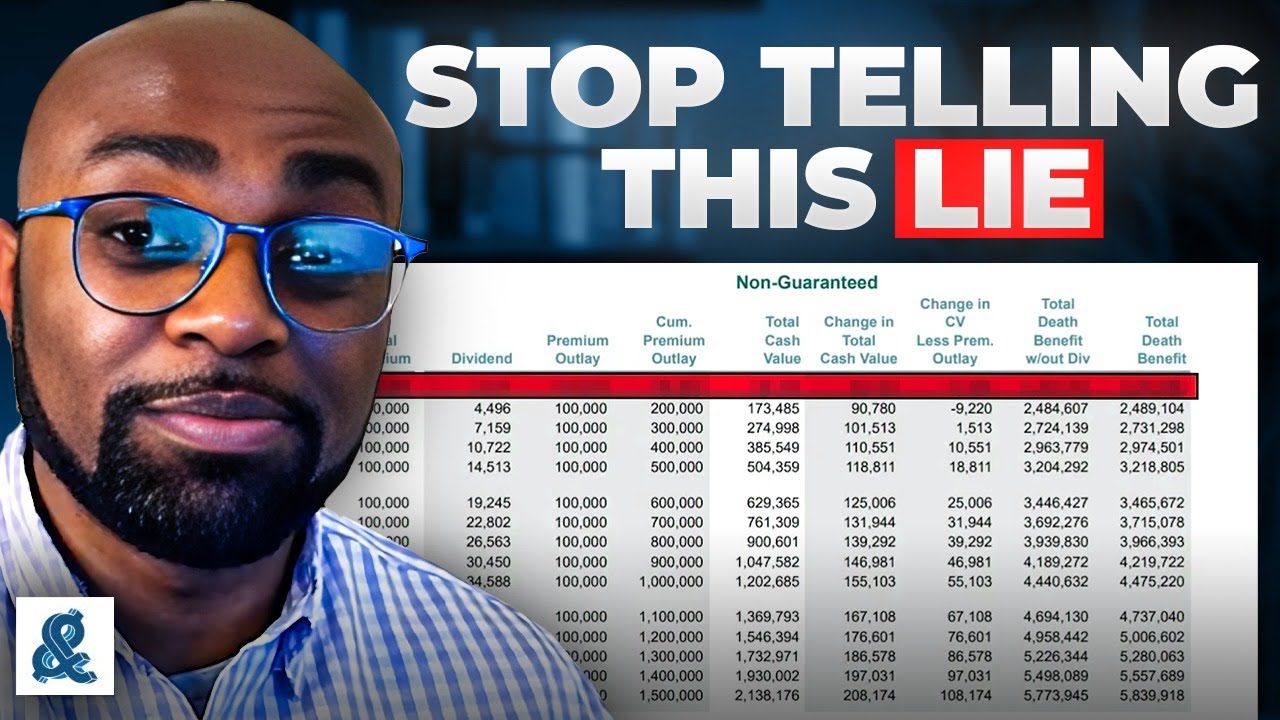
For example, a 40-year-old earning $400,000 who invests $100,000 annually into an overfunded whole life policy could see their cash value surpass $2 million within 15 years, eventually growing to nearly $4 million by their mid-60s. Meanwhile, the death benefit could start around $2.2 million and grow to over $7 million, ensuring both wealth accumulation and a lasting legacy. This type of policy forms the backbone of many tax-efficient retirement and estate planning strategies.
Mentioned in This Episode
Key players, strategies, and concepts featured include:
“Neither whole life insurance nor term insurance is inherently good or bad. The best plans use the right mix to meet your goals now and in the future.” — Demetrius Walker
Key Takeaways with Demetrius Walker
- Whole life insurance builds lifelong cash value that grows tax advantaged and can be borrowed against for any purpose.
- Term insurance offers affordable, extensive coverage to fill the gap in death benefit during your highest-earning years.
- Combining both products addresses income replacement needs and legacy goals simultaneously.
- A 40-year-old earning $400K can cover $12 million in death benefit needs with a $2.2 million whole life and $9.8 million term policy.
- Convertible term policies allow you to switch to permanent coverage later without requalification, protecting your insurability.
- Overfunded whole life policies create seven-figure cash values within 15 years with consistent funding.
- Term insurance premiums are significantly lower due to limited duration, making it cost-effective for temporary protection.
- Strategic combinations ensure your family receives tax-free income replacement and legacy benefits over decades.
Resources
FAQ: Frequently Asked Questions
Why combine whole life and term insurance in a financial plan?
Combining whole life and term insurance provides both lifelong cash value growth and affordable temporary coverage, addressing income replacement and legacy goals. Whole life builds tax-advantaged cash value, while term fills coverage gaps at a lower cost, ensuring your family is fully protected during your highest-earning years.
How does whole life insurance build cash value?
Whole life insurance builds cash value by investing part of your premium in a permanent account that grows over time with guaranteed rates and dividends. This cash value can be borrowed against tax-free and used for opportunities, emergencies, or supplementing retirement income, making it a valuable asset.
What is convertible term life insurance?
Convertible term life insurance allows you to switch your term policy to a permanent policy without new health underwriting. This feature locks in your health rating, protecting insurability even if you develop health issues, and provides flexibility to extend coverage beyond the term.
How much term insurance might I need if I have a whole life policy?
The amount varies, but as an example, a 40-year-old earning $400,000 and having $2.2 million in whole life death benefit might qualify for $12 million total coverage. The difference, about $9.8 million, can be covered with term insurance to ensure full income replacement for decades.
Can I borrow against my whole life cash value tax-free?
Yes, you can borrow tax-free against your whole life insurance cash value. These policy loans do not trigger taxable events as long as the policy remains in force, providing liquidity and flexibility without interrupting the tax-deferred growth of your cash value.
Is term insurance cheap compared to whole life?
Yes, term insurance premiums are significantly lower because coverage lasts for a defined period, typically 10-30 years, without a cash value component. This makes term life an affordable way to cover large temporary financial needs.
How does combining both insurance types protect my family better?
Whole life insurance provides lifelong asset growth and permanent coverage, while term insurance fills income replacement gaps during your working years at a low cost. Together, they ensure your family receives tax-free death benefits adequate to maintain lifestyle and cover expenses for many years.
Want My Team's Help?
If you’re a high-earning professional or entrepreneur uncertain about the best life insurance strategy, we can help. Many struggle with balancing permanent whole life policies and affordable term coverage to protect their family and build wealth. Our team specializes in designing customized solutions that fit your cash flow, legacy goals, and long-term financial plans. Click the Big Yellow Button to Book a Call and let’s explore what it would look like to keep, protect, grow, and transfer your wealth the BETTER way.
Connect with Caleb Guilliams
Follow Caleb on Instagram, connect on LinkedIn, and follow BetterWealth on Instagram.
Below is the full transcript.
Full Transcript2,030 words
If you've been around the whole life insurance space for a while now, you've probably heard this one before. Whole life insurance is the only way to go. Term insurance is just renting and it's a waste of money. And I'm here to tell you that is simply not true. And in fact, thinking that way could leave you and your family dangerously underinsured. And today, I'm going to show you why the smartest strategies often combine both, right? And how term insurance can be one of the most powerful tools in your financial plan when used the right way. And I'll say in some circles, especially among those who sell whole life insurance, there's this idea that if you believe in permanent insurance, you should never, ever in your life buy term insurance. You should stay away from it at all costs. And then on the other end of the spectrum, you got people like maybe Dave Ramsey or other people online who say you should only buy term insurance and never, ever touch, never even dream of touching whole life insurance. And I would say neither extreme is healthy. Okay. The truth is there's no such thing as a quote unquote bad product. Right. It's all about the context. Right. It's about your stage of life, your income, your goals, the legacy you want to leave. Right. The right tool at the right time is what matters. No product in and of itself is a bad product by default. And I want to give you a little bit of my own example. Right. I personally, yes, do own whole life insurance, overfunded, high cash value, whole life insurance. I plan to add more over time. It's not just for myself, but also for my wife, my kiddos. Right. But right now, at this point in time, I'm also the sole breadwinner within our household. If I pass away tomorrow, I wouldn't just want my family to get the guaranteed death benefit from my whole life insurance policy, because personally, I don't believe that's enough to cover my income for the next 20, 30 years. Right. I'd want my full income to be replaced for the next 20 to 30 years. And I'd also want that to be paid out to my family tax free. And for me, that means whole life. Yes. And term insurance, the whole life builds cash value. It offers guarantees. It's a lifelong asset. I can borrow against it for whatever I want to. Right. The death benefit is always going to be growing. The cash value is always going to be growing. And then the term insurance fills in a massive coverage gap at a very, very, very low cost so that my family isn't left short if the worst were to happen. And let me give you an example just to kind of round it out for you. OK, so let's say you're 40 years old. Right. You're earning, let's call it four hundred thousand dollars a year. And you care about two things, right? The first thing you care about is maximizing cash value. You want to maximize the cash value for opportunities because you want to invest in particular things that you care a lot about, but also want to create cash flow from them. So you care about that, but you also care about maximizing the legacy that you leave behind if you were to pass away early. And you can comfortably put in, let's call it $100,000 per year into whole life. And perhaps that'd be split between you and your wife. Maybe that's just on you. But for the sake of today's example, we're just going to say that it's going to be on you specifically. And so that policy is designed for high cash value, right? Your policy may have a little bit over $2 million of death benefit from the very beginning. The cash value is going to start growing into the seven figures over time. And then the catch here is that based on your age and income, you may qualify for $12 million of coverage. You want to make sure that there's some coverage that you have, not just for a set period of time, but also for the rest of your life as well. And it continues to grow and grow and grow over time. So let's take a look at Within this particular policy, once again, $100,000 is going into the policy every single year. And by the time 15 years down the line rolls around, there's about $2.13 million worth of cash value by that point in time. And if you really roll it down even further than this, let's say we're looking at mid-60s, we're seeing that there's over $3.8 million of cash value by that particular point in time. And by the time you're around that same age, we're looking at $7 million of death benefit and beyond. And this has just been because of you making the contributions for just 15 years. And then it continues to grow and grow and grow beyond that. Now, let's kind of retract this all the way back to year number one, all the way back in year number one, the end of your death benefit, we're looking at about two point two million dollars worth of death benefit. The total amount of death benefit on day one for this particular whole life policy is a little bit over two million dollars. OK, and so the question here is we're looking at this two point two million dollars. And the amount of death benefit that someone earning $400,000 may be able to qualify for would be closer to around $12 million. So that's a $9.8 million gap in coverage that they want to make up for because if they passed away today being the sole breadwinner, again, they want their income to be able to be replaced for a significantly longer period of time than just like maybe a handful of years. Okay. And so in order to be able to do that, what they wanted to do is really supplement that coverage with. term insurance because term insurance is designed to be significantly more cost effective than whole life simply because of the fact that it only lasts for a certain period of time. So let's take a look at that. In this particular case, we have that gap in coverage covered with the $9.8 million of death benefit here. And we so happen to be looking at a convertible term insurance policy for 15 years. And so for this particular person at a preferred health rating, we're looking at $5,451.18 per year for the $9.8 million of coverage. And this is the premium for this coverage every single year, guaranteed. for 15 years. Hey, it's Demetrius. Just wanted to pause the video real quick because if you're a high earning professional, an entrepreneur, someone who just wants more control over your money, we offer something called a clarity call. It's a one-on-one conversation where we walk you through how an overfunded whole life insurance policy could help you build safe, liquid tax advantage foundation for your wealth. There's no pressure, no fluff, no hype, just real clarity on whether this strategy is right for you. So go ahead and click the link in the description or the tag comment below. and we'll walk you through exactly how we can help you. Back to the video. So the moral of the story is you take out a $9.8 million, 15-year convertible term insurance policy, costs you about $5,500, but it fills the gap for 15 years. And so if you fast forward 15 years, your term insurance policy ends up expiring, but your kids are growing and your financial assets are strong. Your whole life insurance death benefit has grown from $2.2 million dollars at the age of 42. $7 million plus by your mid to late 60s, and the cash value is still there as a tax advantage asset that you can use while you're still alive. Because that term insurance was convertible, you had the option to convert some or maybe even all of it into a more permanent option at some point in the future without evidence of insurability. So in other words, during that 15-year time horizon, not only did you have $9.8 million of additional coverage at a very quote unquote cheap cost, you... also have the ability to convert that into another whole life insurance policy or some other form of permanent coverage along the way without evidence of insurability. So I want to share a quick story with you about a man that I met in my very first year in the life insurance and finance business, right? And so this person in particular, he had a convertible term insurance policy. And at the time that he got the convertible term insurance policy, he was completely healthy. In other words, I remember him getting the very best health rating. I remember hearing the story about the fact that he got the very best health rating that you could get at that particular life insurance carrier. And then throughout the way, after he got his life insurance policy, the convertible term insurance policy, he was diagnosed with cancer. And so thankfully, by the grace of God, he was healed from that cancer. He beat the cancer, right? But he knew that his health rating from a life insurance perspective was never going to be the same. He knew that it was never going to be the same. And if he was to get approved for life insurance at some point in the future, it'll be at a heightened rate because of the health history that he's had with the cancer. But because he had the convertible term insurance, he was able to lock in permanent coverage without going through the whole underwriting process again, because he had locked in his health rating more specifically by getting the convertible term insurance, which meant that he could convert that. into a whole life insurance policy without evidence of insurability. And that's exactly what he did. Right. And that option ultimately changed everything for him and like the way he felt for his family. And it changed everything for his family. And even though he's still with us to this day, the fact that he has that permanent coverage and the fact that he had that cancer, he who knows his time could be up at any given point. I hope it isn't. But with that said, he knows without a shadow of a doubt. that his folks are going to be completely fine simply because of the fact that he had coverage that was designed to be permanent and converting that into something permanent along the way. And so the point that I'm making within this entire video is this. Number one, whole life insurance is not quote unquote good while term insurance is quote unquote bad. Neither is the flip side true. Term insurance is not quote unquote good while whole life insurance is quote unquote bad. They're both tools and they're both very valuable tools. The best plans, I would say, are those that use the right mix to meet your goals now and in the future. OK, and that's one of the key takeaways that I want you to take from this video. And if you want to see how an overfunded whole life insurance policy, high cash value policy could work for you while also making sure that your family is fully protected. Go ahead and schedule a call with us. We'll walk you through a design that's tailored to your situation, your cash flow, your legacy goals. your overarching goals within your family, right? Because in the end, the best life insurance plan is not about picking sides. It's not about this or that either or, right? It's about protecting the people in the future that you care most about. So thanks for watching. We'll see you in the next one.