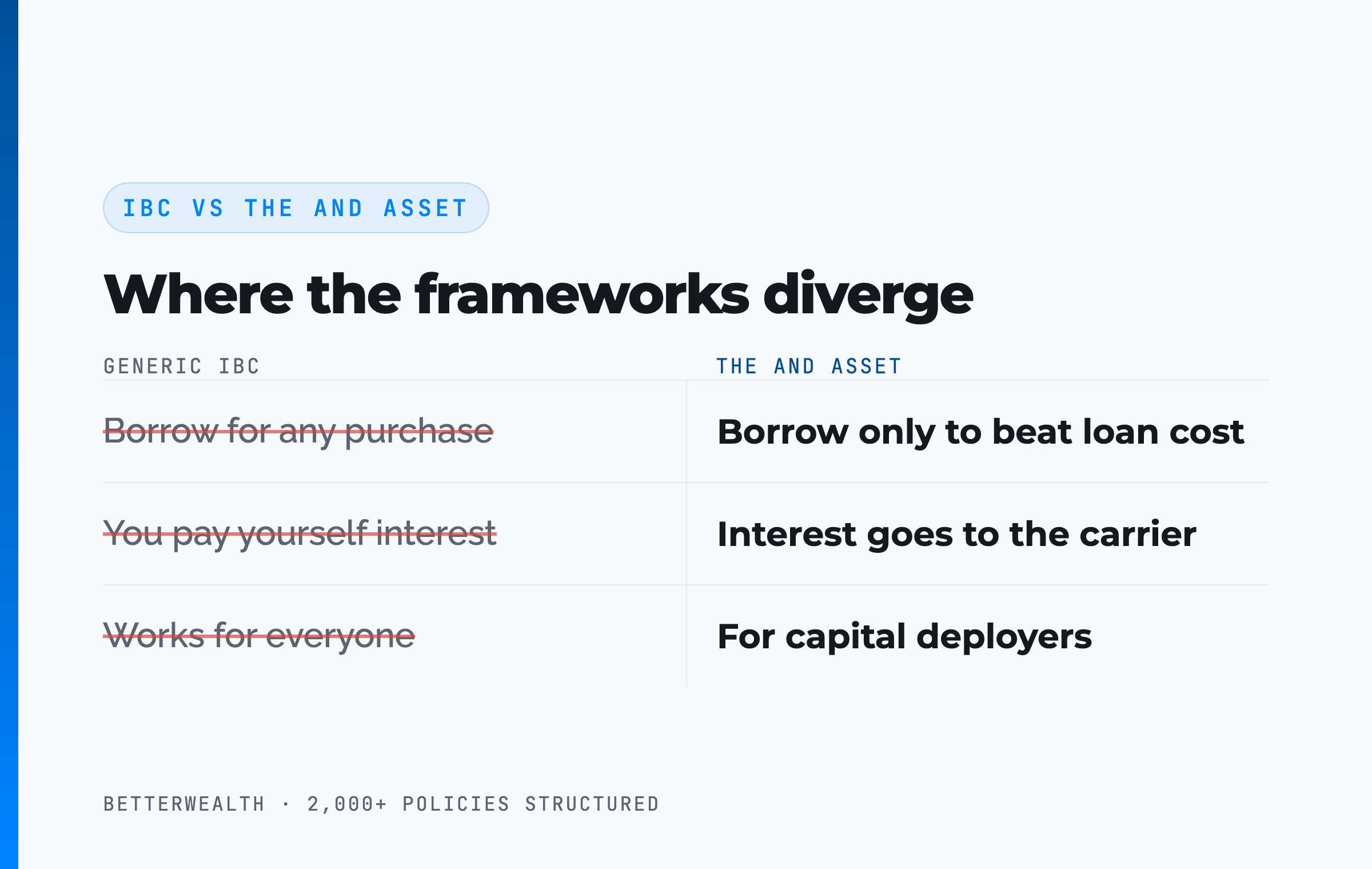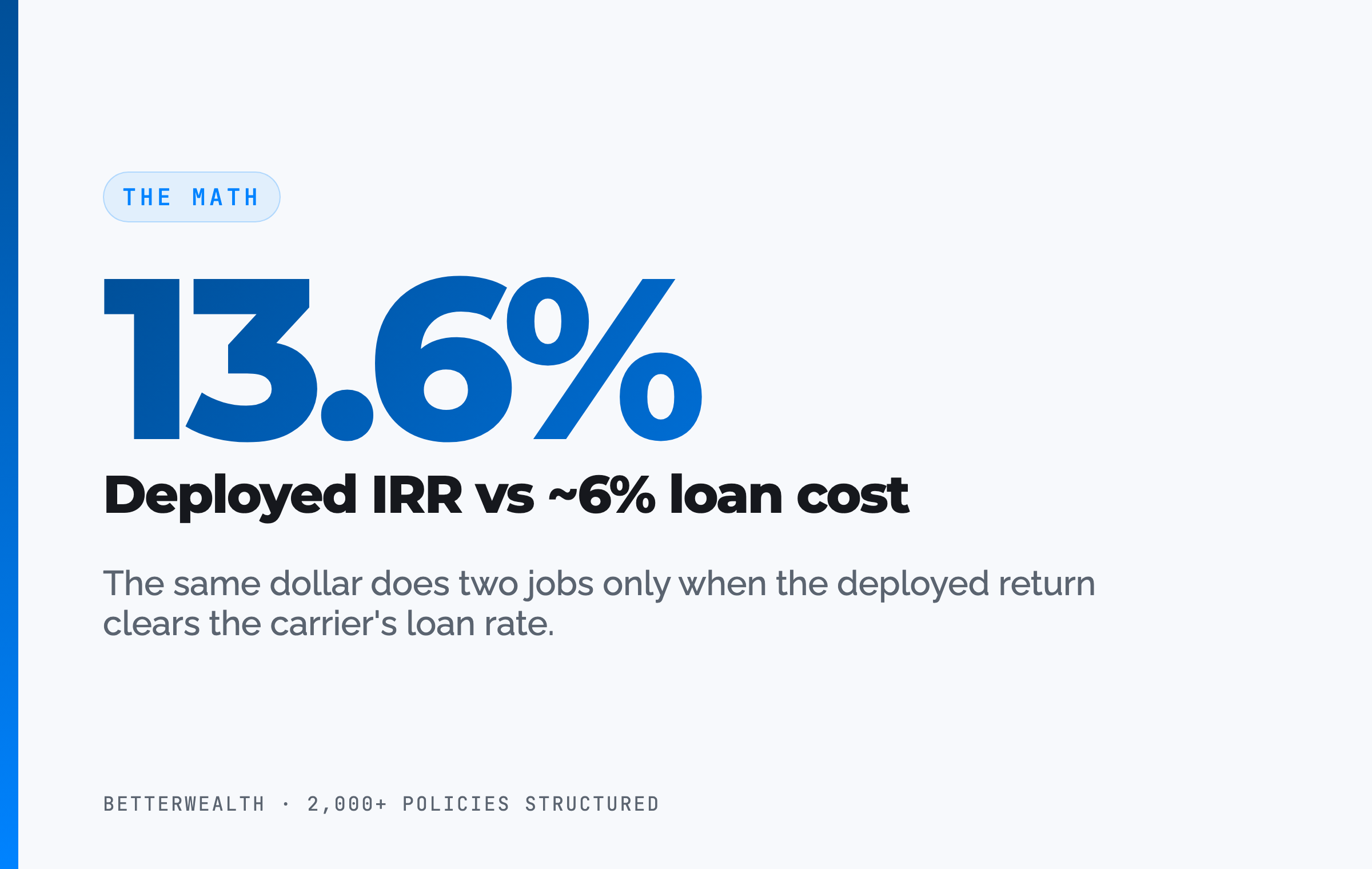

With the recent viral lawsuit between Kyle Busch and PacLife, the age-old industry debate around permanent life insurance is more mainstream than ever. So today, we're going to be reacting to live clients with the regional vice president of Prime America, our favorite, Miguel Chavez, as he challenges different life insurance companies to, in his words, expose IUL as a CM. So with that being said, let's dive in. I apologize. Your agent, they informed you incorrectly. That's not true. So then I got lied to by the guy that sold me the policy? Yes, you did. And I'm telling you the truth. And I can mail you out a copy of your policy that'll show you all of this information. Thank you for calling SecureInfinite. So I just wanted to confirm, I'm paying $4,662.50 a year. What is the amount that I can borrow? I got the policy that told me I can take out money for like a down payment on the house. I was more than happy to assist you. You won't be able to borrow from the death benefit, but you can borrow from the accumulation value. Then you can only borrow up to 90% of that accumulation value. So with your accumulation value only being $10,373.05. When does it show in your system that I opened the policy? July 25th of 2023. You cannot do it, but you can't borrow from the death. benefit. You can only borrow from your accumulation value. So I've paid in $13,987. So you also have administration charges that's being deducted out of your accumulation value and that's $108,000 roughly at $118.74 that's actually being deducted from that accumulation value as well. And also with you, because as of right now, the system state that you don't have anything available to do a loan due to your... Your accumulation value is not overly what the surrender value is on the policy. So how much can I take out today? Nothing. You're not eligible for a loan at the time because your surrender value, your surrender charge on your policy at the moment is currently running at $11,792.23. So you can only borrow what's over that. So I've paid in $13,000. You keep saying that. No, sir. That's not how that works. You keep saying that you paid in $13,000. You still have administrative fees that's coming out, that accumulation value monthly. I do apologize. Your agent informed you incorrectly. That's not true. So then I got lied to by the guy that sold me the policy? Yes, you did. And I'm telling you the truth. And I can mail you out a copy of your policy that'll show you all of this information as well. When I bought the policy, I was told that I was going to be able to make the first payment, which I'm paying $4,000, and then I would be able to use the money right away. You're telling me I can't. So if I cancel the policy today, what can I get out? So if you were to cancel the policy today, you wouldn't be getting back anything due to that surrender charge being $11,000. Would you like for me to mail out a copy of the policy so you can see that in writing as well? Okay, so I got an email over to you. You should be receiving that shortly. It's coming from ECC Life, Life Enterprise Context. If it's not in your inbox, check your spam address. And that's all I have to know. Thank you for calling. As you guys can see, yet another client with a policy that wasn't structured correctly. The lady on the call flat out called the agent a liar, told the client that he was totally misinformed by the agent. He said that the agent sold it incorrectly and what she was saying was the truth. Again, this is why we recommend and encourage everybody to call the customer service line because they're on a recorded line and they cannot lie to you. Versus if you call the agent that already sold this to you, that lied to you in the first place, he's only going to lie to you again. None of their calls are recorded. Again, being able to get away from any type of accountability. Oh, wow. So first and foremost, Caleb, you and I did not watch this preemptively. So this is our first time hearing this. So with that, what is your initial reaction to this? Yeah, number one, lady on the phone, boss. I think she did a great job for the situation that she was put in. Number two, man, it'd be sick, sickening to just hear. how this policy was sold and set up. Yeah, it's really sickening. Yeah, on so many levels. And then number three, this is going to make me just a bigger believer on why most people shouldn't do permanent life insurance. You know, I know that the people in the comments will be like, whole life's different and all that stuff. And yes, but I don't know. I just think it's... In a lot of cases, it can be overpitched. And that's why we have a pretty strict of like, hey, don't do small policies. Because a lot of these issues, I would imagine a lot of the times that we're going to, a lot of these videos that we're going to see is people that don't have that much money. And they're making it their sole focus. And we've been pretty consistent that insurance should be integrated. but There's a lot of things that we could talk about. There's things from companies that they're using, the differences between whole life, how it's being sold. And the whole surrender charge thing is pretty eye-opening and pretty frustrating. And I would be very frustrated if I was a client being told that I can do this, maybe even, who knows what the agent said, but like infinite banking and all that stuff, you see the accumulated value in your head. You're like, because originally when I was, watching the video, I was like, okay, 13,000 paid in access to 10. Like, okay, let's not overreact. Just, you know, it's, you know, given the benefit of the doubt. And then when it's like, actually, if you even surrender today with the surrender charges, you're not going to get anything out. And you've been paying in this, it seems like for over two years, maybe even three years. And, um, you can't borrow against it. Yeah. That's, very frustrating, especially since this thing was sold that way. And so I would be really curious to see like, what is the, where does the light at the end of the tunnel work? Because the client's in a really tough, tough place. I'll also say dumb because we jumped right into the video. I, my thoughts on these videos are overall positive. I think we need more people exposing this. And, and unfortunately, just like the Kyle Busch thing, everyone's going to get lumped in, but that's, we just need to work. We just we just need to know that when we're working with people, knowing that like there's going to be more and more information and stuff that's that's going to be negative because people hear life insurance and they bundle everything in. And so it's going to be even more important to educate and and properly disclose all the things, the good, the bad, the ugly. And hopefully this only highlights more why we do what we do. And we've been really consistent for years. So that's. Those are my initial take on just the series that we're going to be watching, and then also this personal call. Amazing. I love that. You said something interesting where you said that whole life is different based off what the people in the comments may say. And when I watch this, I specifically say, okay, it comes back to, again, are we dealing with the issue with the product? Are we dealing with the issue with the agent and how it's sold? Because the product is operating the way that it's supposed to, right? IULs have surrender charges. And so therefore, when you put money into a policy, if the agent doesn't share this with them, like you have a surrender value and an accumulation value, your accumulation value is essentially getting compounded. But that doesn't necessarily mean that's the money that you can borrow against. And that doesn't also mean the money that you can get when you use it. You have to look at the surrender side to see like what is truly available. And that actually was my story when I first got into the space. I bought an IUL probably almost like nine years ago, and I was putting money into it. And I wasn't putting enough into it to over exceed the surrender charges. And usually the surrender charges, you know, they do exceed a pretty significant amount. Every year become less and less, but they're pretty significant. Like, you know, $10,000 is pretty standard for a surrender charge over the first 10 years. So you're putting in less than that. you will have no money available to be able to use. And that was my thing. I was like, man, I put in like $15,000, but like, I have like no money available. It's like, how is this possible? And that was my first education lesson, but I was an advisor, quote unquote, an agent, and I had my own policy. And so if this was sold as a long-term accumulation, let's let it sit here for the next 15, 20, 30 years. And then let's talk about how we can use this in later on in life, or whether it's a cashflow retirement. for other optionality down the road, just an alternative to diverse. Then to understand, early on, you're not going to have any cash value to borrow against to use for other asset-based activities. I think that is fine. They actually understand how the policy functions and what it's used for. If you do the same thing with a whole life and we design a whole life and say, hey, this is infinite banking. This is the end asset. You're going to have money to be able to accumulate to borrow against, but then you put in 10 grand, but then the first year there's zero. Well, then it's going to feel the same exact way as you are dealing with the surrender charges with the IUL. So I think functionality around it, the product to product, it really comes down to what it is you're getting. Do you know why you're getting it? And how is it sold at the end of the day? But Don, when we structure whole life, what is the typical life cash value in the first year? That is actually accessible. This is the difference. In whole life, there's not this surrender charge. And they may use some of it, but it's very similar. It's like the cash value. is very, very close to your quote-unquote surrender charge. number. It's a great question. Yeah, it's a great question. And that's why I do personally believe if you're looking for cash accumulation to borrow against for an opportunity fund for liquidity and control, I do believe that whole life is the way to go for the entrepreneur, the real estate investor, the storage guy. Like to me, there's no comparison when you're looking at it from that sheer bucket, because when you design it, one, it gives you more liquidity, just sheer. Without looking at surrender charges to your accumulation numbers, the IUL usually has less accumulation value than the whole life policy, even when you're both max funding them to the MEC limit on both sides of the equation. Then on top of that, like you shared, the whole life doesn't have those surrender charges that come into play. So you have more accessibility to more loan value as well. So I do think that there isn't any play in my mind for. within a 10-year window to want to use an IUL for accumulation of borrow against. It really should be whole life because you can get on the low end, if it's designed well and you're in decent health and age, 70% all the way up to closer to 92, 93% depending on the design. And you will likely rarely not find that in an IUL. And if you do, there's still the surrender charges that you have to deal with yeah well well said i uh i think a lot of people that are pro-IUL would also agree that you don't use an IUL in the first couple of years. And so it's the infinite banking philosophy and process meeting IUL policy that can be very problematic. And then both need to be structured well. You could easily go to a whole life and get it structured very poorly. You kind of had that scenario as well happen to you. And so you had, you got hit on the IUL side and the. whole life side. And so it just highlights the product differences, but then the structure needs to be set up. And then from the expectation standpoint, if you're someone that's putting a few thousand dollars in a year, my question would be, is that all the money that you have? Because if that's the case, there might be better ways to go about it. If you're not maximizing a Roth IRA, I think we could have a really good conversation to be like, maybe that should happen, or building an emergency fund in a high yield savings account. And like establishing that first and foremost. And I know this is going to be very controversial, but like taking advantage of the match in your company's 401k. Like there are certain aspects that may want to be seen first versus putting money into life insurance. And that's another thing that I find is a lot of these smaller cases, the pitch is everything else is bad. This is the best. And so I'm not saying that you're preying on somebody, but it feels like that. and it very much could be like hey this is the thing that is that's going to change your life and so for all those reasons and again for those of people that are like well caleb you're not super pro 401k yeah yeah personally but that doesn't mean that that's across the board and everyone's in a different situation and i it would be hard for me to say not to take advantage of something like the match in that example so those are other things that i think need to be shared and that's where I think by buying term, doing all those things first is the. conversation that needs to happen. And then we can talk about insurance as an integration, but usually that happens when you're starting to save well over $10,000 a year. Again, not maybe a popular thing to say, but I think it's the right thing. And I bet you a lot of things that we're going to be seeing is around smaller policies. The Kyle Busch is on the flip side. He's putting a ton of money in and he also, there were things that went south. We talked about that last week or whenever. whenever this airs. We talked about that in a previous episode. So that's what I have to say about that. Yeah. And to the point with the surrender charges, regardless of the size of the policy, their surrender charges are going to be the same, which is why smaller policies aren't as beneficial as well. So nonetheless, with that being said, let's go to the next one. Pacific Life. Gotta love it. We're calling Pacific Life. Hello, this is Crystal with Pacific Life, and we're following up on the request for a rescheduled required phone call. What kind of policy is this? What is the current death benefit? What is the monthly payment? Which is $500 a month, right? When was the policy started? How much money have I paid in total? And what is the total amount of cash value that I can take out? $10,765 available on a loan. If I did the loan, is there an interest charge? If that's your loan, it's at a 2.25% interest. So it's billing you annually. It's going to send you a bill for the interest. Right, but that interest goes back to my account or it goes to Pacific Life? So, in essence, that's going to Pacific Life. It's the interest that's charged on the policy. So, this is my money that I put in, and to take the money out, I have to pay interest to you guys, but this is my money in the first place. I'm not sure if you still have your policy pages, but all of that information regarding how the loan works and interest and all of that, that's in your policy page. I gave you guys the money and... Now that I want to take it out, I have to pay you interest, and it's my money. If I surrender the account, what is it now? It's $11,573.14. Why is it that I paid in what I've paid in, and I have about a third of the money in there? It's the cost of insurance that comes out of the policy. But if you're making a payment that just covers cost of insurance and the policy, that there isn't any extra to remain in your... accumulated value. Let's say if you're paying $1,500, that's $500 a month, basically, the way we spoke of it earlier. Your cost of insurance in the policy is $200, and let's round it up and say $70, $269.38 for January. So your cost of insurance comes out of what you're paying. So if you're paying $500 a month and roughly $270 is coming out for cost of insurance, that's not leaving a large amount. in your accumulated value. So as I get older, the cost of insurance goes up. Okay, so you said if I paid more money, then I could save more money in it. But if the cost of insurance is going up every year as I age, will there come a time where the cost of insurance is more than the $500 that I'm paying every month? So if that happens, then I'm only paying $500 a month. Where would the difference come from? I can't really hear. So it'll start charging for the money from the money that I saved with you guys. So let's just just a hypothetical number, just a hypothetical number. If the cost of insurance eventually gets to six hundred dollars and I'm only paying five hundred dollars, Pacific Life will go into my. cash value that I've accumulated and start deducting $100 every month. So if it does that, eventually I would run out of cash value, right, because the cost of insurance would continue to go up. And then when that happens, the policy will go into grace. Notice will go out and say, you know, this is the amount that you need to pay to prevent the policy from lasting. So normally that doesn't happen years and years and years down the road. I'm gonna be fine. You're not going to be paying enough premium into the policy. You take this one, Dom. I think there's a couple of things that you... Oh, boy. Okay. So one, I think you shared it a little earlier. I do appreciate this guy doing this. I think getting exposure to the industry and what's going on, more people need to have accountable to the way that they sell policies. Now, after listening to him, I realized he's a little bit... on the more uneducated side about how life insurance actually works. So to me, when I listen to it, it decreases the validity in regards to how he communicates. That's okay. I still think that he's doing a great job, but I would love if there was somebody that did this, that like really, really understood how these policies worked so that they could give real feedback. Because I think it's two sides of the coin. It's one that the policies are designed and sold it properly. So it creates a bad rep. But then the other side, you have the person who's Talking bad about the policy but not fully sharing the full facts about how it actually functions and works So that's my first overall take and I'll go into depth on like the parts that I heard that I that are informed But I'd love to hear your take on it high level before I go more into the nitty-gritty pieces of it. Yeah, the Charging charging interest for my own money is a classic. It's like okay I've heard that once a week for their for the last ten years and it's just And in the comments, not to the people that we serve, but it's something that we try to make sure people understand. And it's a classic. It doesn't make sense if you don't value insurance. I'll say it till I'm blue in the face. But you should want to do that if you value insurance as a part of your portfolio. And if you don't, you shouldn't be a part of insurance. Sounds like all of these calls, people do not value the permanent insurance. And so as a result, they're looking at every way to. you know, freak out and, you know, poke holes. And so the whole paying interest to use your own money is something that we've covered multiple times and you're still getting a benefit of insurance. You could take a look at that and say it's not worth it, but that, that, that, that's something that he said, that's like, we could have a conversation about. Do you think it was interesting? And again, he's like, making it extreme, but he did illustrate how IULs can work if they're not funded well, designed well. And quite frankly, if people just forget about it, is there can get to a point where these things eat itself alive. And then the insurance company sends you a letter that says, you need to fund something to keep your policy from lapsing. And that's the idea of life insurance being flexible. has a double-edged sword and that's a classic double-edged sword. So those are the two things that, um, I got from that video. It was, it was hard to hear in some aspects, but again, like you have to understand, I appreciate him doing something like that, but you, but you also, he's biased, just like the person that sold the life insurance is biased. Just like we all have biases. I think we try to do our best, try to be as reasonable as possible, but everyone has biases And his whole bias by him filming is to make. this thing look terrible. Like that's the whole, that's what gets clicks. And I really do, my heart goes out to the people that are taking these calls. Like, can you imagine now that this is a trend and taking these things? It's just like, what a miserable job. But two out of two, like I feel like the insurance people that are answering that at the home office have done nothing but a very professional job. And so, yeah, those are my takes. Yeah, she did a great job explaining the cost of insurance and just being straightforward. It's like, hey, you don't have all of the cash value in here because there's a death benefit that you're paying for at the end of the day. And she went into the breakdown of it. So I really appreciated it. And yeah, to piggyback on what you're saying in regards to just having to borrow to use my own money, the concept of having the death benefit, one. but two also It's the only way you can get tax advantages when you're using your actual dollars in this instance. And so that's something that when you start thinking differently about how the wealthy actually use money and funds, whether that's using key locks, lines of credits, whether that's using your own business, your stock, all of these things are barring against to get tax advantages, which creates an interest charge. Right. The other thing is they said the interest charge was about two and a half percent, which means that on the flip side, that's same thing with a Kyle Busch scenario. It's not actually being accumulated in the highest growth bucket. It's more in the fixed bucket. So I don't understand how these IULs are being sold for this upside potential, but then they're being put in this fixed bucket. It's actually very strange to me. So there's that. The second part of it is he talked about the cost of insurance going up, which is also true. It is correct, right? It's an irrenewable term. The cost does go up. But the thing that hardly gets discussed a lot of the times when it comes to this. is the net amount at risk, right? And so essentially it's the delta between what the cash value is and the death benefit is really what your cost of insurance actually is, right? So early on year one, if I had a million dollar death benefit, but I had a, you know, $100,000 of cash value, well, that 900,000, the difference is really what the cost of insurance is based upon. As you get older, your cash value grows so much and your death benefit gets littler. So what ends up happening is you now may 30 years down the road have $2 million of death benefit, but you may have $1.8 million of death benefit or cash value, which means that $200,000 Delta is the only thing that's getting charged from a cost of insurance perspective. So yes, the cost of insurance goes up because you're getting older, but you're also net amount of risk is also getting charged at a smaller dollar amount overall. So that's something that doesn't necessarily ever get talked about enough. And then he also mentioned the idea of, okay, Well, if I'm doing $6,000 into a year of contributions, right? But the cost of insurance becomes $7,200 annually, then eventually my cash value or my policy will get eaten away. Like you said, that is completely rational and that is definitely possible. The whole reasoning why that would not happen if it was funded properly and you were actually making contributions is the cash value would be so large based off of the crediting rate. So you're getting a $6,000 contribution. But with the upside cap, you may get credited 7%, which would then eventually, even in that small bucket, out exceed the cost of insurance. So the whole point of this concept is there's enough money into the bucket, getting credited a high enough rate to then where it doesn't eat itself away, where the policy doesn't lapse. So it all comes down to the basics again of can we fund it well? Can we design it well? And can it be used for the right purpose and even put into the right allocation? And if so, then these things should be fine. But the problem is, is it comes back to the basics of how it's being sold and designed at the end of the day. And how many people are actually doing it right? And I talked to an experienced insurance agent the other day, and he tongue in cheek said, I don't even know how to design and properly structure an IUL based on the hypothetical assumptions. And so it does, if you're going to do something, it needs to be monitored. it needs to be looked at. You need to do it right. And the problem is, especially when you look at a lot of these things being sold, is it's MLM or it's new agents that are getting in and more of them will be out of the business, CF. And so it's just like, it's the whole thing is not set up to be successful. And I'm just curious to see if that model is going to change because I just see like with the Kyle Busch or some of these videos and social media, like I think there's never been a greater time for exposure and the people that are really doing it right are going to are going to win. The people that aren't doing it right are not like they're not going to be able to exist. And so that's the positive nature of social media is before people weren't able to get this information at speed. That just what you said earlier actually reminds me of my own personal story as well. I know it's been almost a decade now I've been in the space, which is kind of crazy when you think about it. But I remember early on when I was trying to figure out like what insurance products to sell, how these products worked. I actually got plugged into, you know, MOM with World Financial Group, at least like surrounding myself with them, seeing what they were selling, what they were doing. One of the guys in the space for 20 years, and he was just like promoted himself. And I think he was like actually a baller, like high ranked, you know. doing a lot of really awesome things, quote unquote, based off of their industry standards. And I started asking the questions like, okay, cool. Like you have this accumulation value, but it's like, but how does the loan function work? Like, how does that work? Like, how do I actually start to use the money? I was like, do I pay myself back interest? Like I started asking the questions that I first got started. He had zero context of how to answer that question. And he was in the industry for 20 years and selling at UL. I'm like, okay, so I now realize that there's a lot of people in the space that have no idea what they're talking about, even if they've been in it for a while. So it is kind of crazy when you think about it. Most people have no idea where to start or how to really evaluate whole life insurance. That's why we've built The Vault. It's all of our best life insurance resources and educational tools all in one place, all for free. We have calculators, handbooks, crash course, deep dive videos on numbers. If you want to learn more, click the link in the description or tag comment below to unlock. the vault. All right, back to the video. Cool. All right, I think we got one more video, so we'll get that pulled up. Amazing. One more, and then we'll get into some Q&A. Hello, Paul. Pacific Life. What did you need? Policy number. Policy number. Policy number is V as in Victor, zero, zero. Thank you. Please have your first comment. Yes. Please provide me your date of birth. Perfect. Thank you very much. Paul, how can I help you today? Just to confirm. What kind of policy was I sold? An IUL, an Indexed Universal Life Policy. An Indexed Universal Life Policy. When was the policy originally opened? It was originally opened in May 28, 2020. May 28 of 2020. Currently contributing $500 a month to take out a loan. The loan policy depends on multiple factors. So we can run to see how much your maximum loan balance would be. Your loan is being top of those tax values and just other various features of the policy. Okay. We have your loan balance max only at $13. My loan value is $113.15. In terms of what you can take out for a loan right now. That doesn't make sense. So I pay in $500 a month, okay? When I bought the policy, they said I was going to be able to use this to borrow money. And to use it for projects, I can use it to put a down payment on a home or start up a business. I've been paying $500 a month since 2020. So I've had it for about four years now. $6,000 a year, about $24,000 in total. And you're telling me I have how much money available? For the loan balance, $115. Based on the cash value currently. I'm not too sure where the misinformation may have began. I would refer back to your financial... I haven't talked to him. I was calling in to get the loan. He told me to call you guys. I'm confused as to why I have to talk to him and not you. Is he going to give me the $24,000 then? Or who's going to give me the money? So if I went to him, he would be the one that cuts the check? So then why would I talk to him? I'm not sure if you're going to be able to perform in terms of what he told you, but the way that I'm explaining it is how the policy works. Okay, so then I don't need to talk to you. I mean, if I canceled the policy today, what do I get back? I can get back to you in $1,166.72. $1,166.72. And I've paid you guys $24,000. Yes, correct. That's correct. Truly correct. Right, so that's what I'm going to get back. If I decide to terminate the policy today, that's what I get back. I gave you guys $24,000 in four years, and I get back $1,000. In truth, it's just the value itself that is great. Yikes. Yeah, I think I've said everything I need to say as it relates to that. Yeah, something's majorly wrong with how that policy was sold and set up. I think that's a common theme in this whole channel. Yeah, it's frustrating. I'm frustrated for the people. I'm frustrated for the home office people that are taking those calls. Frustrated for the agent that feels like they got straight up ripped off. And I hope, if you guys watch our channel and you're like a life insurance enthusiast and you think Dave Ramsey and all these people are terrible people for calling it out. I just ask you to have that extra empathy because if we're not going down the rabbit hole, like what we're doing, I would I would I think it would be the safe answer to say avoid life insurance because of stuff like this, because it's it's hard to endorse something when you know that people are getting hit. And that's that's why I'm a fan of insurance, but it needs to be done well. And I know that it feels very salesy, like, oh, it needs to be set up properly. You should talk to us or someone that. And it's, I, I get it that it says that way, but that's why we're not dumb. And it's because it's stuff like this and because we want nothing to do with something like this. And so I don't know, I don't know what to say other than that one was probably the worst when it comes to the situation. I couldn't tell it early on. It sounded like there's an outstanding loan, but I didn't, I don't think that was the case. So that would be the only caveat if they had an outstanding loan, but it didn't get come up. So maybe if they're did and he edited that out. Shame on the person editing that video. But if there was no outstanding loan, which I don't think there was the case, that's frustrating. And that policy was designed for a different reason, not cash accumulation. And it'll be interesting, Dom. I don't know if these agents will get in trouble. I don't know what happens, but it's not sustainable. And these insurance companies are going to get. clobbered when it comes to lawsuits. I just don't know what's going to happen when it comes to how these insurance companies that especially sell these IULs and servicing them, it can't be a great business model. Yeah. I mean, when the agent set this up, they're probably making close to $24,000, right? I don't agree with that. Over $24,000 over four years, you think they made $24,000? Sorry. I apologize. $5,000 a month, $6,000 is what they probably made. $6,000. $500 a month, six grand. So the agent probably made six or maybe a little bit more setting that up. Yeah. $24,000 is the total contribution so far. $6,000 is likely what they made. And I do think that you made a good point is if there wasn't discussed or talked about like the accumulation value or like the, if there was a loan balance on there, then it may not be telling the whole story in theory so it actually would be interesting to know what that was because what if it was designed properly but it actually had he had like a full max loan and we didn't even know and i may have just heard you it would be i didn't hear it either i would wrote it down because that's what i was doing over here i didn't hear anything about that okay and then just assume that my ears were maybe just trying to like trying to listen for it um so i I don't I don't want to assume that there was any outstanding loan because I would assume that would have come up in the video. Like I would assume that would have come up. So yeah, I think it's straight up paid $24,000 in, have access to less than two grand and the loan available is less than 200. It's just not great. Yeah. The math really is a little janky. That's why I think there probably could be somewhat of a loan balance. But obviously, we don't know for sure And let's just pretend like you said there's not. Yeah, that's crazy when you think about it. You have, what is that even percentage? You know, it's like 113 divided by 24,000. It's 0.004. That's like less than half a percent. That's wild of total liquidity. So that obviously isn't going to do anybody any good. The other thing I'd want to know is what is the death benefit on that thing? The death benefit has to be astronomical, and maybe what is also the age, because those are also some factors that can play into it. So nonetheless, what I think would be really cool, I don't know, Joel, this may be something that we want to consider. Imagine us doing the same thing, but calling these insurance companies and, you know, seeing, hey, this person's contributed this. How much do they have? This is how we're, oh, okay. That sounds great. I feel like you do it on the other side and you actually shed some positive light on it. Or vice versa, like just in general, like we should be a company that people come, we'll review your policies and we'll review your policies. We know insurance, but we're not. coming from the paradigm that all insurance is bad. And the problem is, I'm, the problem is a lot of times that these people are being told to cancel. And so you're like permanently reduced, like canceling may be the right solution, but it could be the worst solution. But you really think that anyone in this person's shoes is going to say, you know, what you actually need to do is transfer internal transfer or external transfer into a policy that's much more sustainable. No, their insurance is evil. So they're just going to get you out. And So yeah, I think there could be a whole thing that we could do on the Andesit channel that calls in or like reviews policies and makes that more apparent and celebrates the, hey, this policy is done well. Because we do review policies where we say, this was done well. This was designed really well. Even if it wasn't designed from us, like this is great. But we get a lot of policies in the whole life NIUL space that we're like, yeah, this is not, this is, this is not great. And we could take it a step further and call the company with them. So that's a great idea that we should do. And if you want us to review your policy or if you're down for something like that, let's make something like that happen. Amazing. Love it. All right, let's go ahead and let's get into some Q&A, guys. It's one of my favorite parts of the show. All right, I'll take this one. When it comes to borrowing against your life insurance, is there a credit check? Do you need a... Do you need a proof of income? What are the requirements? Well, if you have no cash value in some of these cases that we just reviewed, you won't be borrowing anything. But in the policies that we design and set up with the companies that we work with, it's called a loan, but you don't need they don't run your credit. They don't look at your income. They don't ask what you're using the money for. It's just a think of it as a mechanism of accessing your cash. cash available. And instead of withdrawing the money or surrendering it, which you can do if you want, they give you the function to be able to loan against it, allowing you to get all the benefits of insurance and all. And so the short answer to that is no, you do not need, there's no credit check, no proof of income and no requirements needed when you take a life insurance loan out. Amazing. All right. Next question. What happens to the children? If a parent isn't insurable, what should a parent do to protect their kids? All right, this question is tough at heart because, you know, the only way, not the only way, but one of the best ways to obviously have a death benefit or something for protection for income and legacy perspective is to have the parent be insured so if they die and pass away, it could go down to the next generation, aka the kids. And if the parent is not insurable, right, I want to start by saying this is why it's super important to get insurance on your kids, because if they can get insurance on themselves, then they don't have to ever answer that question to the future, because if they become uninsurable or they become unhealthy, well, then they can have the protection for their family no matter what happens in life. So that's super important. It's something you can do to help at least them and their next generation. Secondarily, what you could possibly do as well is, depending on the relationship, um You could still go to the insurance company and you could be an advocate to maybe getting insurance on grandparents. And then getting insurance on grandparents potentially can still have a benefit that could be there for somewhat of a protection purpose that can be set aside to then put inside of a future Roth or high-yielding savings or something that can just sit there and be safe and protected when they pass. That it could just be sit there for them as well. So, so. It's very, very challenging. I say, you know, this is why we believe, you know, wealth comes in many forms, such as your health being a big piece of it, because if you can't get insurance, you know, because you're unhealthy for whatever the circumstances, you're limited on options relative to the person who does have health. Yeah. And I would say for for those of you that are like, hey, I'm not able to get insurance, but I want my children to get insurance. And you're you understand the limitations of, you know, you can't insure children, you know, under under 18 and all because you need to have life insurance. It's all about the cover letter. If the insurance company knows the situation and say, I can't get insurance and here's why there's I would just encourage. it's all about the cover letter. And so to make sure that you're either working with us or somebody who really knows the name of the game that can look at that, if protecting your case is important. Okay. Is the and asset available outside of the USA? The answer is yes, but with a caveat. And the answer could be no with a caveat. So that really means it depends. Most insurance companies and this concept in general, they focus on the United States and also Canada. Canada has its own unique limitations. The United States has its own unique laws and limitations as well relative to each other. But their insurance companies will always have caveats for individuals that have resources. So if you have high net worth, high income, high assets, the insurance companies are willing to kind of step out of that bubble and get insurance for different individuals in different countries. There even are some individuals that or excuse me, some insurance companies in like the most bizarre, like Bermuda or something like that, where if there is wealth and there's assets that are involved, they'll move mountains to essentially take your money. So the answer is if you don't have money and you're outside of the U S and you're not in Canada, the answer is no. But if you are, then the answer is anything's possible. Yes. So U S and Canada. Yes. If you're rich, no, if you're not. That's the summary of the answer. Yeah. All right. This next question is a mouthful, so I'll read it. So I frequently hear to not use a checking and savings account, but instead put your money into policies. But how? If I put my W-2 checks into my policy every two weeks, how do I use the money for my life expenses? I don't have a debit card for my policy. How am I filling up my gas tank, paying an electrical bill, etc. It just doesn't make sense to me. It doesn't make sense to me either. So I would say don't do that, period. Like no insurance company, even the ones that are like the biggest pro-infinite banking insurance companies don't want you to do this. This is either a misunderstanding or a crazy sales pitch to get you to put a ton of money into insurance. And you should not do that at all. So I, You're not crazy. Trust your gut. And don't, it's not even wise to use a policy loan for anything filling up gap, like any, any life consumption expenses, not a great recommendation. That's, that's one of the reasons why we're not necessarily super pro using your policy for cars. If some people want to use their policy to buy cars, I can potentially get behind that on like a one transaction, buy the car and then pay, pay it back. That's like that's one thing that we could talk about. But this is exactly why you for the points you made, why it's a really dumb idea to try to use use it for everything. And it's just not possible. And insurance companies would not be for that. And if they found out that your agent was teaching that they would send your agent a nasty letter saying to stop saying that. Yeah, it would be a it'd be a disaster. I would say that in theory, if you really wanted to. And I almost don't even want to say it. But it's like, you would have to take out an entire. months worth of expenses and a policy loan, and then have that in your bank account and then use that and then pay a backlit. But that would be, don't do that. Trust me. Like that's very financial fiscally irresponsible. It doesn't make any sense. it's stressful. It's not something that you should do, but you know, just conceptually thinking like that's probably the only way that you could do it. So, all right, next question. and the last one I'm 61 and looking to retire in two years with a 300k 401k and a pension. Can I get a life insurance policy that will build cash value within a year of getting the plan? And is it worth doing this at my age and stage toward retirement? So I'll start by with the first part of the questions. Can I get a life insurance policy that will build cash value within a year of getting a plan? The answer is yes, you can. Depending on your health, that's going to be a big factor today. If you're an extremely healthy individual and depending on the design, if it's designed for high PUA, high liquidity, We probably can get you a quote unquote sexier policy for liquidity relative to most insurance policies that you would see. What we'd actually do is we would design it to where it's the maximum amount of cash value you could get based off of any factors, based off of company design age. Like we would absolutely do that. Now, the next question is, is it worth doing this at my age in the stage towards retirement? That is a mouthful of a question because. there is some caveats and some questions that would need to be asked. One, what are you wanting to use the policy for? Two, when would you start using the policy? And three, is the death benefit important to you? Because if the death benefit specifically is very important to you, then this is something that does make probably a ton of sense, right? Because if you don't have insurance, you don't have a permanent policy already, and you want to pass down money from a legacy perspective or potentially be able to have permission to spend on more of your other assets. because you will have that death benefit to pass down, then that's a very viable option. But if you were wanting to use this strictly for cash flow purposes within the years, less than 10 years, when just surely the cash value piece of it, as this is going to be your retirement bucket of money to use, it likely doesn't make the most sense relative to you have expense charges early on, you don't have dollar for dollar access right away. It will take probably being a little bit older, maybe years eight or nine, maybe maybe depend 10, depending on how old you are, your health for even to break even and get all of your dollars back for dollar for dollar. So you probably may be in a better place if the death benefit wasn't important to you to just taking that money and getting a conservative yield on your money at that point in time. So there's a, there's a lot of questions that would need to be asked first and foremost, if you're wanting to borrow against this to use for real estate and business and other things like that, it's a definite no, just going to be straight up and honest with you at that point in time. Um, and so especially if the death benefit's not valuable. If the death benefit is very, very valuable to you, the entire conversation shifts and changes. So this is why we kind of have to get to the root of it and ask some questions beforehand. Yeah, it's simply does life insurance integrate and make your situation better? And if the answer is yes, you should do it. If the answer is no, you shouldn't. And if you're like, Caleb, that's why I asked the question, tell me. Well, you have to talk to our team. And what we would do is take a look at your situation and be able to tell you. And if all your money's in your 401k. Um, probably, probably not looking so hot if I'm being honest, but maybe there's other aspects of your plan that you did not put in this comment. And we just look and see does insurance when integrated help you better accomplish. I remember we did an illustration on a very lovely elder lady who'd make someone 61 look young. And we did a MEC policy, which is a single pay. It broke even after year two. which blew me away. And for a MEC, anything above the interest, anything above basis, you have to pay tax on. So it's not a, it's made, like some people are turned off by that, but it like had a double death benefit and it got a better return than the current CDs and savings accounts over like 10 years. And so it was like almost immediate liquidity, had some type of death benefit. And it was a lot easier to qualify from a health perspective because even though the death benefit was double what they put in, it wasn't like crazy. And so that's an example of like, would we endorse MEC policies for everyone, especially if you're young? No. That's an example of a design and an outlook that for that individual checked the boxes and made them better off. And so that's just an example of why it's important to look at everything. But yeah, you definitely want it integrated and not just. in its separate buckets. Yeah, it's way, way better for the example that you used than putting it inside of leaving it in like a savings account. I mean, you're now getting a conservative 4% rate of return long-term, even short-term because the policy breaks even so quickly. And you have the death benefit to pass down. So now you have the dollars to do a more simple job. Even on a Mac, the death benefit is paid income tax-free. And that's another thing where it's like, do we really care about the... taxes on the $10,000, $15,000, $20,000 gain maybe potentially. Okay. But it's like, yeah. So that's well said. Yeah. I mean, you'd have to pay the taxes in a savings account anyways, if it's 2% growth. So they operate the same way. You just get more growth plus the death benefit. So yeah, 100%. Cool. Okay. All right. Let's start our call-in show. Well, call in the insurance companies. I would not do good because I'm such a, like, I would not do good at that series. But I think I have a funny feeling, Dom, you could rock that quite well. Yeah, no, it'd be fun. The hardest part about it is getting on the other line to call the insurance company and having to wait on hold for them to answer the phone. Yeah, we may need to take volunteers to get online for us. Depending on the insurance company, that could be a while. Yeah, exactly. We'll see you next week. All right, guys. Yep, see you then. If you're a high-income earner or own a successful business, you're already creating real value in the world. The real question is, are you keeping that money, protecting it, and growing it the way that actually supports your long-term goals? At Better Wealth, we help people like you better keep, protect, and grow their wealth through various tax strategies, estate planning, specially designed life insurance, retirement planning, and even a fractional family office service. If you're interested in one or more of the areas we can serve and want to learn more. The next step is to book a free clarity call with us. Click the link in the description or tag comment below to get started.