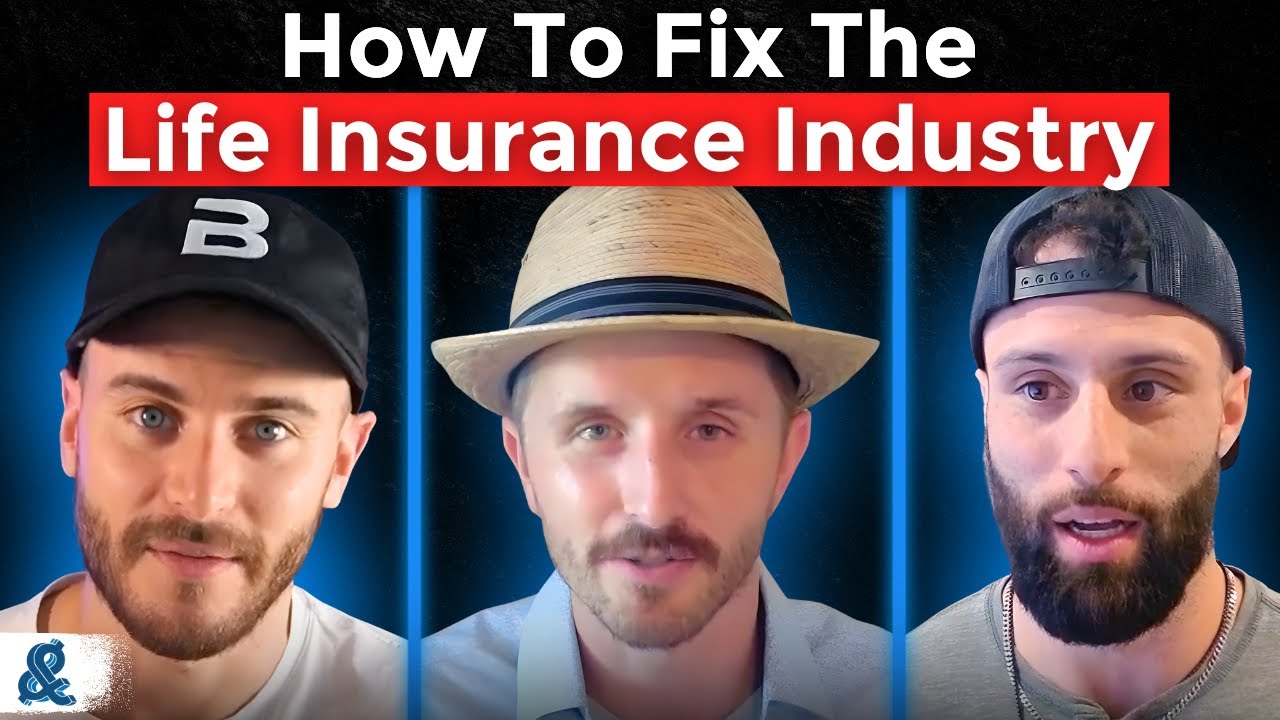
Life insurance is a powerful foundation for long-term financial protection and wealth building, but the industry faces serious challenges with complexity, distribution, and education. In this discussion with BetterWealth's leadership and experts, we explore practical solutions to these issues, focusing on simplicity, incentivizing persistency, holistic financial advising, and leveraging technology to improve the client and agent experience. Whether you’re a consumer or a professional in the life insurance space, understanding these solutions can help you make smarter decisions and better protect your wealth.
Get ready to learn how the industry's present limitations can be overcome with intentional action focused on education, incentives, and simplicity. For those wanting to dive deeper into whole life insurance and infinite banking strategies, this episode offers a roadmap for better client outcomes and sustainable industry practices.
In this episode, you'll discover actionable solutions to the persistent problems in the life insurance industry, including how simplifying products and communications garners clearer understanding and greater client trust. You'll learn why emphasizing policy persistency over high first-year commissions can revolutionize agent motivation and client retention. The conversation stresses the importance of agents adopting a holistic approach — viewing life insurance as one piece of an integrated financial plan that includes tax strategies and retirement planning.
We also discuss the critical role of technology and improved servicing in enhancing the client experience and supporting underwriting teams. This episode addresses the threat of insurance companies potentially bypassing traditional agents by offering better, tech-driven products directly to consumers or financial advisors. Lastly, you’ll gain insight into how BetterWealth’s multi-expert content creation builds trust and educates on complex financial tools, supporting both consumers and agents alike.
To explore more educational resources on aligning life insurance with your broader wealth plan, visit BetterWealth’s Life Insurance Insights summary page.
Simplicity in life insurance contracts, illustrations, and conversations creates clarity that fuels confidence and action among clients and advisors. Complex products and confusing jargon have historically hindered consumer understanding, leading to high policy lapse rates and poor outcomes.
By streamlining product designs and educational messaging, insurance companies can reduce friction and make it easier for consumers to comprehend how policies fit into their overall financial goals. For example, a simplified whole life policy that clearly demonstrates guaranteed cash value growth and death benefit stability can help clients see the long-term benefits compared to term insurance or volatile investments.
This focus on simplicity aligns with BetterWealth's philosophy of removing financial friction so clients can live more intentionally. Clear communication about features like premiums, cash value loans, and tax benefits improves persistency and builds lasting relationships. You can learn more about how simplification impacts policy design in BetterWealth’s article How Does Whole Life Insurance Work?
Here are key people, companies, books, and strategies referenced throughout the discussion:
Simplicity ensures clients understand their policies clearly, reducing confusion and policy lapses. When insurance products and their features are straightforward, clients are more likely to maintain coverage long-term, increasing policy persistency and satisfaction.
Life insurance should be integrated with tax strategies, retirement planning, and cash flow management to maximize benefits. A holistic approach helps clients see how insurance complements their overall financial goals rather than being a standalone product.
Insurance companies can focus on simpler products, better technology, incentivizing long-term agent behavior, and supporting education. Raising distribution standards collectively will improve client outcomes and industry reputation.
Effective and responsive servicing keeps clients engaged and reassured their policies are managed well. Companies investing in better support reduce client drop-off and enhance long-term relationships.
While technology can improve distribution efficiency and education, agents who provide trusted advice and holistic planning remain vital. However, insurers may develop tech-driven direct sales models, which could disrupt traditional agent roles over time.
If you're a high-income earner or business owner, keeping and growing your money efficiently through life insurance and tax strategies is critical. Many struggle because the industry is complex, sales-driven, and often confusing. Our team at BetterWealth focuses on delivering clarity and customized solutions that protect your wealth, support your legacy, and align with your long-term goals. Click the Big Yellow Button to Book a Call and let's explore what it would look like to keep, protect, grow, and transfer your wealth the BETTER way.
Below is the full transcript.
Full Transcript5,530 words
All right, everyone, welcome back to the fastest growing life insurance YouTube show on the planet. My name is Caleb Williams. We got Dom, we got Austin, and we are in for a treat. Last week, we talked about the problems in the industry. And there's a lot of problems, whether it's lack of relevance, whether it's lack of training, lack of incentive, complexity, whether it's, you know, the reputation. What we didn't mention where what what very much some people could be thinking is here's a big problem. People starting podcasts on insurance and yapping. We yap for a living in this space. And we're for sure, um, could you could put us as a part of the problem is making YouTube videos and trying to do our best. And I'm sure we're not perfect in that. And so I say that jokingly, but, everyone's entitled to their opinions. And I'm sure some people would see us as the definition of the problem. They're like, everything was great until we had YouTube, until we had social media, until we had... All of this stuff. And so all that to say, we're not going to talk about the problems, but we're going to be talking about the solutions. And remember, the solutions have to solve the problem. So there's got to be that aspect. So if you've not watched our last week's episode, you can go back and check that out. And as always, we really appreciate you all commenting and we want to hear from you. And there's going to be things that we mentioned, we may not mention, and we want to hear from you because this is a bigger than just us. And so with that, we're going to start with Dom and you are going to share your solutions. Like if you had the magic wand, Dom, and you were going to say, I should probably get a green pen here. You had the magic wand here and you had to, you know, solve the problems. What are some of the solutions to our lovely industry? Well, the first solution would be we would have an insurance company. Because if we had one of those, we could solve every problem that we had. So TBD one day. But in the short term, if I was speaking to the insurance companies versus then speaking to ourselves, because I do think that that is a separate conversation and we can only do so much. Obviously, we can have relationships with people in the space to influence and share what we think is working or not. But at the end of the day. you know, they got to go to their boardrooms and make their own decisions. And so, start with simplicity. I think simplicity is a big word that we've taken over within our company, at least putting it at the forefront. I think that it needs to be a word that should be in the space when it comes to these insurance contracts, when it comes to the insurance illustrations, when it comes to how we talk about life insurance. Essentially, simplicity will create massive clarity. and clarity will create massive movement and improvement. So I think that's the first place to start. If we could essentially create some type of reformation around simplicity, I think that a massive change in the industry will happen. I think incentive-wise, I think that there should be more of a focal point around, like, persistency and keeping policies on the books and more of hand slaps for lack of persistency, which essentially just shows, like, how well was the product that was originally designed. and shared with the client, not sold, but educated in regards to helping them. Because if I know that I buy something that's going to help me and it's going to follow through on it, I'm going to keep it. I'm going to want it no matter what, which means that the persistency will essentially be at an all time high versus if you have these turnovers, high turnovers, you create massive, obviously gaps in regards to what the person wanted and what they do have. And then that's where the insurance companies come into play. And then they do the mass mutual, you know, IBC bands because they're like hey We can't have IBC no more. There's too many policy turnovers. People are taking too many policy loans. There's too much liabilities, right? But if you can create more of an incentive around not first-year commissions, but more of a long-term approach, I think that'll help. Right now, we're reading a book on, as a company, we actually just finished it, called Unreasonable Hospitality. And I think the focal point in mindset around how do we serve with unreasonable hospitality versus how do we sell, right? Education and serving will go a thousand years farther than focusing on selling, selling, selling. And by having that mindset, I do think that you will create massive change as well. Some of the things that you talked about, Caleb, that I think we have done a better job. I think when you're getting started in the industry, I think that's what makes it hard. Like with the PHPs, the MLMs, the WFGs, is you get so focused and narrowed in on a product, as in like life insurance alone, you forget how it fits into the bigger picture. You can't ever actually ask a good enough questions to say, well, how does this fit into my tax conversation? How does this fit into my retirement conversation? How does this fit into my future cash flow? And until you can start thinking holistically in either being the expert or having other professionals. that are in the space helping you to help people be a little bit more holistically approached. I think focusing on a product will create a lot of bad reputation, which will create, obviously, the issues that we've highlighted. So focusing on more of, I think, a holistic integration across the board, I think will be a very good thing for the industry. I also do think that these insurance companies just need to net up and start paying some money into having better technology. uh better service uh and like even for our underwriting team and servicing team like trevor will be on the phone for 40 minutes just to talk to somebody like he'll be doing work in the background but trying to talk to somebody it takes 40 minutes just to get to a human it's like well there's ai hire more people have better education on your end and essentially make the technology way better so it's easier to consume like you know if you got a billions and billions of dollars just it's unlimited in what you're going to do And I think that they're focused so much on the profitability and like, you know, the dollar amount that they forget that by investing will actually create massive opportunity and returns. So at the end of the day, I think a lot of the issues stem from pride, stem from ego and stem from greed, right? It's the fall of all man, which is why the Bible says what it says. And if we can essentially remove those things and focus on helping people, I think that a lot of this stuff will be will solve and fixed. And then I think for us, we could do what we're doing. We can talk about the issues and then talk about how we can be better and be advocates for why we think that the industry is the way that it is and how we can improve. And I think by doing so, we can start spreading ripple effects. It's actually funny because, Caleb, I do believe this. Maybe I'm wrong. Maybe I'm wrong. But I remember when we started creating content in the basement, you know, six years ago or whatever it was. There was a lot of things on the internet that was like misinterpretation of like what like a 4% guarantee actually meant or how the dividend actually worked. And we were in the basement early on calling it what it was, a spade a spade. And like, this is not how this works. This is really how it works. And then three, four years later, I started seeing people that were talking bad about it, like saying incorrectly, started talking about it correctly. And I'm like, people are watching our content. And they're starting to take on the things that we're saying. I was like, they said that exactly how I said that to the T I was like, obviously I can't prove it, but I was like, I came up with that. And I said that, and you're, you're now saying it. And I love that. Like, that's all I care about at the end of the day is that the industry is changing and that people are starting to speak about it correctly. Um, and I love that. So at the end of the day, I do think that the people that have a voice should speak up more. And, um, I think, I will pass on the baton. I think that was well said. I think that was super well said. If a lot of the legends in our space had a microphone that they were using, we would be really shocked by how much momentum we would experience in this space. And it is kind of sad to think that we, six years ago on our podcast, were one of the biggest voices in our industry. It's cool. It's humbling. It's also kind of like... yeah it's messed up and it hopefully it inspires people to get their microphones out start yapping and let the best ideas win awesome yeah first of all can we just acknowledge the the hat yes we may yes we may i've been i've been into fedoras uh for quite a long time so i have a a collection of them some of which i'll be bringing to mexico uh when we meet as a team uh but hat choices aside, Dom, you had some very incredible points that I wanted to point out. I love your point about persistency. If carriers focused more on the long-term performance early, I guess I should say the ability for the client to keep up with the policy long-term rather than just the initial funding, I think that would pay dividends long-term. Something else that... there's, there's somebody that all three of us, know in common. And, the way that he does business is just, I, I remember, I really love it where he, he provides financial advising services free of charge, but then like anytime anyone wants like a life insurance policy, he's like, you just go through me. And so like, he gives them this big value add up front and then he kind of, and then as the relationship progresses, he just is going to be the agent of choice for the policies is that something that I think would help the industry is that, I mean, and I know that Not every agent has... the ability to be a financial advisor. But if there was at least an attempt to get to understand the overall financial context or have like a financial x-ray. of the client's life before you try to like take them down the road of insurance and figuring out what works for them, what their goals are. It would help so many people get not get into policies that they can't afford and they surrender after a couple of years. Like, you know, I just I just help was talking to this lady who like she worked with two agents before me, both of which never took time to understand her situation, set her up with policies she could not afford. And she's going to take a huge, steep loss. Well. when everything is said and done. And when I, after I kind of looked at their situation, I was like, man, like this just doesn't make sense. Like, I don't know. I don't know why they took you down this road in the first place. It just doesn't make sense. So just spending time getting to know what people are bringing to the table, because oftentimes, and here's, here is the, the very dirty, dirty truth of the matter. Most, not most of the time, sometimes people have not actually, before they pick up the phone and call us, they have not actually taken the time to get to know their own financial situations. They call. with an incomplete understanding of what's going on. So like they don't know. And how can I possibly know if they don't even know? So obviously then that becomes a point of revelation for them where they're like, oh, maybe I actually need to sit down and understand, you know, how much money's coming in versus how much money's going out, that sort of thing. So agents getting to understand their client situation more so than just what kind of product do you want? How much death benefit do You want that sort of thing. Another thing is something that we're already doing and which Dom alluded to, which is that we are educating. I think we're doing a fantastic job educating. I love, Caleb, that you kind of delegated to the team that everyone on the team is going to be kind of making our own content as part of our job. And so, you know, it's multiplying your, you know, just previously what was you doing kind of videos with everyone or just videos of your own. And now you have like five or six people on the team. that are all putting out really high quality content that are educating at a super high level. And what this does, not only does it educate people, but it builds trust because then when they call in and that they talk with one of us, they've already seen our videos. They trust what we're saying. They see us sometimes in the same frame as you. And so they kind of know the structure of our company. It builds trust in what is a difficult environment to trust since we are virtual. no one walks into our office and sits down and shakes our hand unless they come to our summit in Nashville. Yeah. So I think that just making really good, really good content and having everybody, if there's, if there is an agent and they have, you know, it's more than just them having other people on their team also making the content just so that people can get a little bit more at ease and familiar with them before they start. And I said, I said, those are some of the the biggest ways that I think that are, if I could kind of magically help our industry change without just changing human nature, like what Dom said earlier, right? Like pride and greed and all this other kind of stuff. Like, I wish I could change those things too. But ultimately short, short of us doing that, I think that those are three really good steps that we could take. Yeah. Well said, well said. Most people have no idea where to start or how to really evaluate whole life insurance. That's why we've built the vault. It's all of our best life insurance resources and educational tools all in one place, all for free. We have calculators, handbooks, crash course, deep dive videos on numbers. If you want to learn more, click the link in the description or tag comment below to unlock the vault. All right, back to the video. I'm going to try to focus on what the industry can do because you're spot on. Like it would be easy for us to say, hey, certain people should be changed the way that they show up. but it's like That would be like make us feel good by saying, but it's just not going to happen. Like no matter how much good energy we put out in the world, it's like, you know what, there's going to be that person. So it really comes down to the marketplace and supply and demand. There's insurance companies that have said this to me. They're like, hey, we create products that are like spread out incentive long term, but nobody sells it. Shocker. Why doesn't people sell it? because They're going to sell the thing that gets them paid more. And it's just, that's just like human, human nature. And so I think if I had to summarize the problem, like of all the things that we said, the problem is in the distribution channels of how insurance is sold. Like almost everything else can be tied into distribution. And so while there is things that can be improved, I think the number one solution needs to be figuring out how do we make the distribution of a really. Powerful product better and and one of the things that you mentioned Dom is simplicity I think first and foremost it's got to be on the list. I think education Like, how do we educate people? How do we ensure that if you are going to represent said insurance company, that you're going to do it well? What's tricky about this is let's just say an insurance company, ABC insurance company, makes it very, very difficult to work with you. Then the fear is, hey, why am I going to, there's a bunch of other insurance companies. I'm just going to work with other insurance companies that pay me more and don't make me really have to understand what I'm doing. And so just to be clear, I'm not... a fan of more regulation and I'm not calling for more regulation in our space because that's a double-edged sword but I do think the insurance companies uh if if they got together and said okay guys we are going to elevate the standard because because selfishly we want this to be done right because nobody wins when there's sloppy distribution and and so that would be that would be uh you know simplicity better education incentivize long-term behavior this only works if a lot of insurance companies get behind this. It does not work if one insurance company is going to say, we're going to do it. But you incentivize long-term behavior, meaning, hey, we're going to pay you for the 20-year result that you're literally incentivizing long-term. And yeah, will people say, yeah, don't you get paid some in renewals and all? It's way different than what you get paid the first year versus ongoing. And I would say just like Figure out a way to even that out. Yes, the biggest thing, will that turn off some people? Will some people not be able to make it? Yes. I overall think that's actually a good thing. MLM companies would not be able to thrive on a more lower tier. They're able to thrive because they're front-loading a big part of the commission and then they're able to cut in 12 different people. If you lower that, you... you could pay out even more over 10 years, but you kill some of that short-term incentive. And so I think by default, you make it hard to operate. And so that's an idea. Technology, you mentioned this, Dom, but we got to have a way better user experience across the board, way better, way better user experience. And so it's like, how do we get a better technology across the board? And then this is going to be like the really unpopular thought process. But I actually think if distribution is the biggest issue and there's going to be a company soon that's just going to say, you know what? We're screw the advisor. Screw the agent. Let's just front load, make a better product and use technology to work through people. It's not like agents are like with AI. You could actually better explain a product to somebody and have a. better customer experience. And instead of paying the agent, we're just going to make the product better. And then we're going to market in such a way, maybe market to actual financial advisors, maybe market to other people and figure out a model where you're sending your person here, they're getting a better product, and we're leveraging technology for that experience. And so I think that is the threat to distribution not being a great, great, like thriving is you're The threat is potentially an insurance company saying, hey, we're just going to cut the middleman out. We're like the definition of middlemen, and we're going to use technology. Now, I know right now I've talked to many people about this, and almost nobody thinks it's possible. Everyone's like, this needs to be sold. That's like, this is crazy. No one's ever going to do that. And I do think that there's some valid points. I think that the distribution channels that insurance companies have through agents. is a powerful distribution, but I just learned it's a lack of humility to say it can never be done or that's not going to happen or people are never going to buy insurance. It's like, I see a world where make a product so good and market it in such a simple way and then leverage the power of technology and AI to make sure that there's thoroughness. I think it's an interesting thought experiment. And I'm not saying that that's the solution. I'm just saying that should be on someone's bored right now. And I wouldn't be opposed to insurance companies saying, hey, listen, we're going to have a standard and do this the right way. And we're going to just not tolerate not thinking long term. I know I said a lot of words, even when, you know, saying this out loud, it feels like a lot of these things are just out of touch. But I would summarize my points by just saying, make your product better, and then figure out a way to market that. thing and incentive like incentivize people to want to represent the best product i would like to think if there was an insurance company out there that checked the boxes when it comes to strength record i mean i i feel like we're a good example of this like we we're working with companies that we could get paid a lot more, but we're working with companies that we're truly trying to do the right thing for the client. And we're trying to live that out. Are we perfect? No, but we're like pretty like leaning into doing the right thing and working with companies that we get paid a lot less. But the desire is we believe that they have the company and product that will be able to better serve. And, you know, if that was more exposed and more people were educated. Then there's an incentive to be like, no, I want to represent this company because if I don't or if I don't know about this, I'm going to lose credibility. And I think in a way we've been doing a little bit of that, Dom, just in our content. If people ask their agent some questions and their agent doesn't know a good solution, they may lose a client. So now they need to be more educated. Why? Because financially it's better off for them to be educated. I think the same thing goes with, hey, make a product so good that if your advisor or doesn't know about this, think twice about working with them. So that creates the incentive to want to work, like do this thing. And then, and, and, and then, so I think that, you know, I think that's really, you have to lean back into incentives. You can't just say, do the right thing. Um, because you should, that's the right thing to do. Like you've got to create an incentive. And I just think you need to think long-term and be like, Hey, we're actually going to create something that if you're not hopping on the bus with us. you're actually going to go out of business or it's actually going to hurt you. And so try to lean into that same incentive of why you may be making a short-term decision and make it more attractive to be a long-term decision. All in all, I think if we don't get our act figured out, we will be replaced. And I know that's not a common belief right now, but save this video because I think five years from now, we could be replaying this video. And I don't know. I think it's a perfect storm. If you're a high-income earner or own a successful business, you're already creating real value in the world. The real question is, are you keeping that money, protecting it, and growing it the way that actually supports your long-term goals? At Better Wealth, we help people like you better keep, protect, and grow their wealth through various tax strategies, estate planning, specially designed life insurance, retirement planning, and even a fractional family office service. If you're interested in one or more of the areas we can serve and want to learn more, The next step is to book a free clarity call with us. Click the link in the description or tag comment below to get started. Back to the video. Scary thoughts. Scary thoughts. Well said, Mr. Caleb Williams. Austin's like, oh boy. I was like, oh man, I'm like, oof, feel the news tightening. Yeah. Yep. I like the, I like the save this clip five-ish amount. Make it, make it proof. It's like it's a shot across the mouth. Yeah. Amazing. Absolutely amazing. Okay. Well, I think that's it. Yeah. I mean, I mean, so like just from my wrap up thoughts, like we know the industry is broken. Like it's complicated. It's sales driven. You know, if we can put more emphasis on service driven, it's controlled by people that are obviously very pride, ego, greed. driven, which gives people like Dave Ramsey a higher voice. They call it out, say it's a scam, and they have the ammo, right? I mean, it's not like we're saying Dave Ramsey's wrong. I think that we could probably agree more with people like him than not. But at the end of the day, the problem isn't life insurance in itself. Life insurance is one of the most powerful tools on the planet for protecting families. building legacy, helping people create generational wealth, right? And so it's really just how it's sold, how it's packaged, and how it's delivered. You're totally right, Dom. Think about it. None of us mentioned the actual product. It all comes down to the education because a lot of the products that aren't performing well are in the way that they're being sold, designed, and distributed. And usually that's on the agent themselves, which the insurance company is enabling that. Yeah, it's so interesting because, yeah, we didn't mention like the big issue is if products need to change. It all comes down to how they're being sold, which is really an interesting point. Yeah. So, yeah, if we can put the energy where it's needed and focused on the things that matter most and realign incentives and values and, you know, how we serve. And I think that we can make some progress, but it's going to take the insurance companies. It's going to take us. It's going to take people that are in the space. It's going to take a big movement. So, yeah, I think we're personally on the right track, and we're here to help in any way we possibly can. Awesome. Couldn't agree more. What's up? Thoughts? Thoughts? Man, I think that as far as the problems facing the industry, I think that what is ahead of us is nothing compared with what's behind us. I think that especially, I'll speak to our team and the Better Wealth team, is that I think that of all the things that we pointed out were issues, I think that with the people that we have on our team, that we are more than capable. of solving those issues, at least in our sphere, in our orbit of the people we run with and the carriers that we work with, is that we can make sure that people aren't just getting sold a product, but they're getting offered a solution, that we're helping them get closer to a goal, that we don't just want a commission, that we want a long-term relationship with them. And I tell that to people on every offer meeting or every kickoff meeting, like, hey, this is not the last time you're going to hear my voice. Like, you know, this wasn't just a sale. This is a long-term relationship. We want to have you for as long as this policy is active. You know, I think that in terms of, you know, how we, as you said, simplicity, like how do we make this simple? I think that to us, you know, making content, really trying to demystify this for the masses, I think it is another really good tool that we can use on our behalf to solve the problem of it just being like Like, you know, just this kind of mystical, not quite fully concrete idea that may or may not actually make sense for them. So, you know, I think that we're doing a lot of really good things as a company right now. And we're going to continue to do more things in the future. Yeah. I have four takeaways because I want this to be actionable to the person watching. If you're a consumer, you're watching this stuff, would love to hear your thoughts. And also, if you have any questions about your policy. If you have questions about wanting a new policy or want to talk to someone, we'll have links down below. We'd love to serve you. But here are four things for the person watching this who's maybe in the industry or thinking about getting into the industry. Is number one, marketing. How you market matters. Your message matters. What is your message even on the front end? Think about your marketing and ask the question, if Caleb or Dom or Austin were to look at your marketing, what take would they have? Okay? Number two, your sales process. Your sales process should be holistically valuable, meaning your sales process should not just be able to help them understand the product, but it should help them understand how the product works with your other products, portfolio, and your goals. So how in a sales process can you lead someone through a process that is integrated into their situation? Fulfillment, the whole process from the beginning to the ongoing aspect, really, really important. And then the ongoing servicing. This is where, quite frankly, a lot of people just drop off. And it's something that we are continuing to ask the question, how do we get better at fulfilling? How do we get better at our ongoing servicing to the point where, Austin, like you're in a really, really big way. Like a lot of your week is thinking, how do we serve our existing clients? That is not common at all for agencies and companies to do. Those are just things that we're challenging ourself, and I think everyone benefits, short-term and long-term, if people get on board with those four points. And so, gentlemen, it's been a pleasure, and I look forward to next week, where you'll just have to stay tuned, because I don't think even we know what we're going to be talking about next week. But it will be good, and I'm excited to start doing some real-time reactions and get more spicy. I feel like we're still waiting. in the kitty zones with some of these topics, which I'm happy about. But I can't wait to dive into the deep end because I know that we could get ourselves in trouble real fast. And I'm excited to do that with you guys. So far, we're checking the box politically correct, but I don't think that's going to last for that much longer. And so make sure to subscribe to see the train wreck ready to happen. Dom, final thoughts? Well, I gave my final thoughts, which... subscribe like and share you you uh you then took it over and gave more even better final thoughts and so i i appreciate that but yes like subscribe to the train wreck let's get it