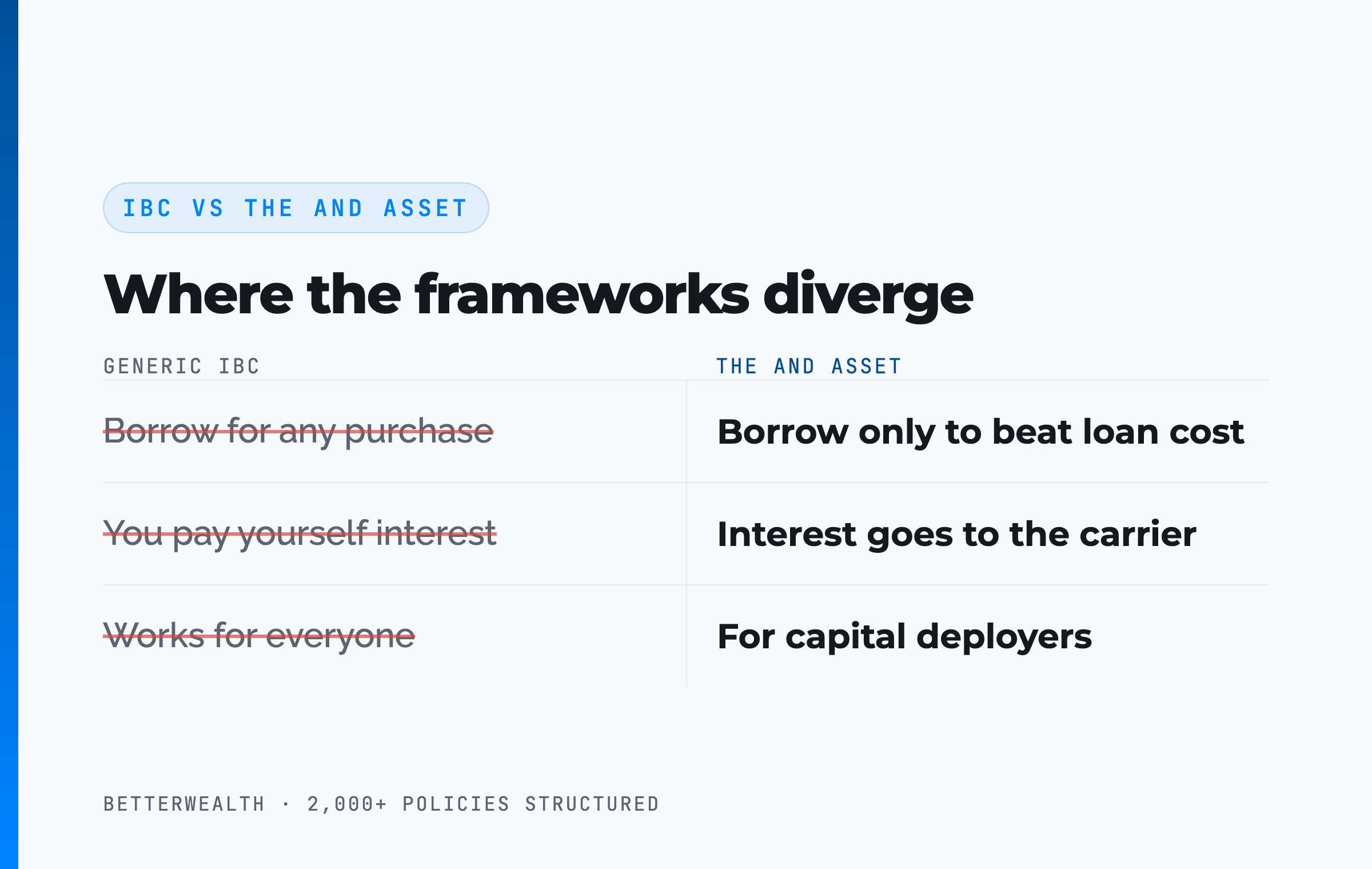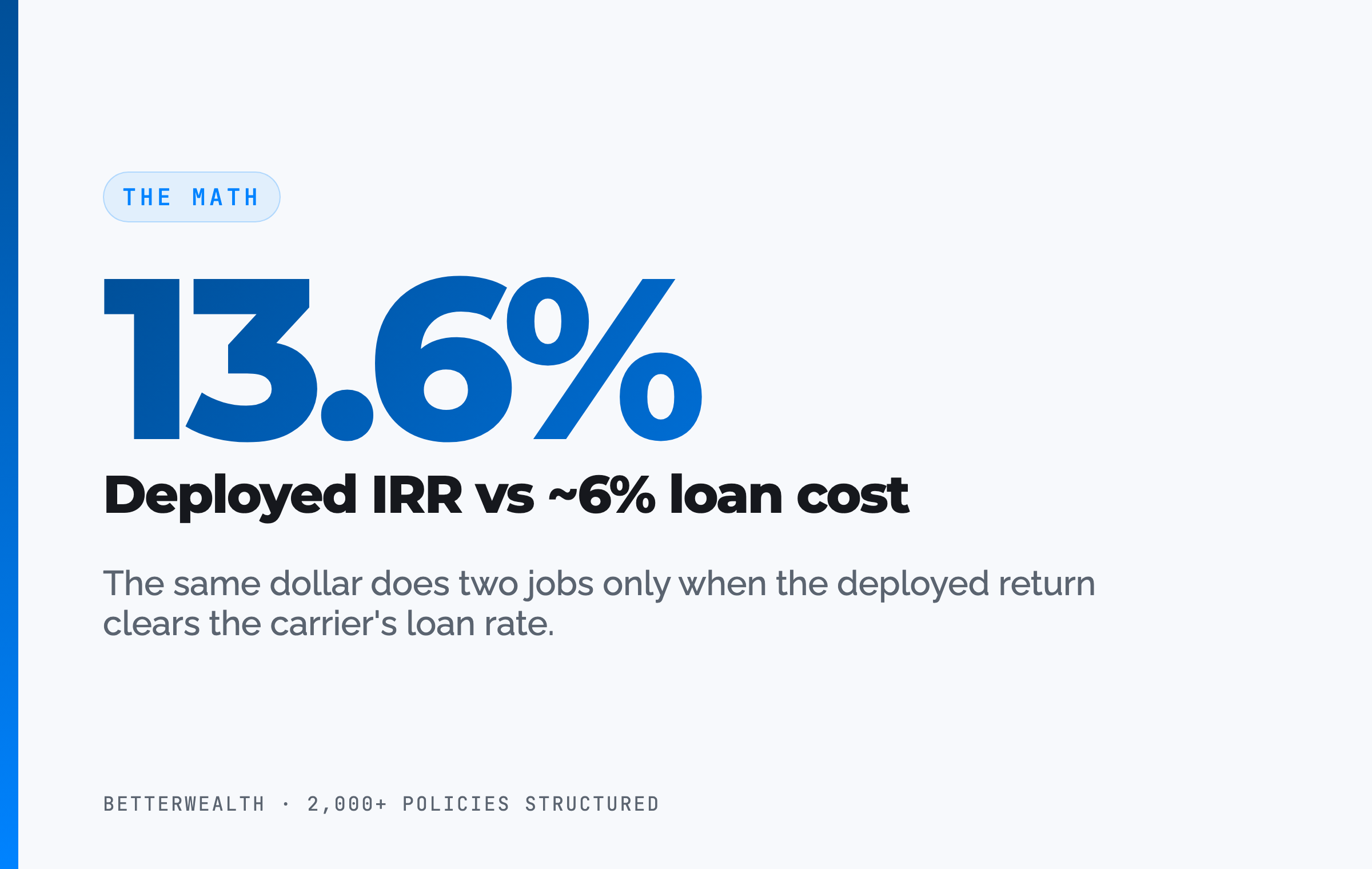

I always want to put myself in win-win scenarios. Whole life is genuinely a win-win situation. IUL is still a zero-sum game. Wow, that was a lot there. You said that you don't like the IUL for infinite banking. I love the IUL for infinite banking. You never read Nelson Nash's book, apparently. Of course I have. The biggest part that I have a problem with in the IUL space is people selling IUL as a savings alternative. Like David McKnight says all the time, it's a bond alternative. No, it's not. It doesn't have even close to the same risk profile as a bond. You took a product that you like and you justified the reasons as to why the dividends came down. But those same reasons are why the cap rates came down in the IULs. It's kind of nuts to think that the $186,000 of income based on the amount of revenue or money that you have over here is actually higher than they're paying on annuities right now. Of course, it's higher than they're paying on annuities. You know how budgets are figured for life insurance and annuity. My point. How many people in the IUL space are designing policies like this? I don't know very many at all. Is IUL still a good product to use? The age old debate, at least the age old debate on this channel. We have whole life versus IUL. We got James Barber, the YouTube, you're a YouTuber, James. You've been, you've been having your YouTube channel for how long? Five or six years now. Five or six years. You make a lot of great content and you have whole life. and also IUL, and you're a big fan of both, but you're going to be talking about why IUL is still a good product. And then Chris Kirkpatrick, Life 180, no stranger to this channel. And I think if you've seen any of Chris's content, you've got to know where he stands. And he's obviously going to not agree with the idea of IUL still being a good product. I even argue that IUL was never a good product. But this is going to be a great time. How this is going to be structured is, James, I'm going to let you take up to 10 minutes and just share. Your framework and thoughts uninterrupted, Chris, as it relates to IUL and your your thoughts around that. And then, Chris, it's going to hand it over to you five to 10 minutes. And then what we're going to do is be able to go back and forth, have a conversation. I got some questions that also we have an illustration that, James, you did, because a lot of times in these conversations, it's all about philosophy, philosophy, philosophy. And I wanted to go one step further and say, like, hey, let's actually roll up our sleeves and address real. illustration, which I think is something that very few people have done on the internet. I also want to just say for all of you watching, thank you for subscribing. Thank you for your support. We wouldn't be able to have these conversations if it wasn't for the community. And so I very much look forward to reading the comments and hearing people's thoughts around that. Without further ado, James, I want you to head it up. Thank you so much for being on here. I'm going to mute myself, but I will be starting your timer. So excited to learn and excited for for this conversation. Let me start by. thanking you for having me. I love seeing these on your channel. I think these kinds of conversations are really good and it's really helpful for clients, for agents, really helpful for agents to help understand. So we're not just getting the message from one side or the other necessarily. As with all financial products, I think there's a place for them in somebody's portfolio if it warrants it. So that's the approach that I take to the IUL. I do love the whole life. I love the IUL. I own both. I own... a lot of policies at this point. My largest policies are actually whole life at the moment. I think that's a great base to start from, especially where I began. But oftentimes, my clients will come from a different position. And it's all about figuring out what's going to work best to hopefully de-risk their portfolio a little bit, but still give them what they're looking to do and try to accomplish what they're trying to accomplish in their overall financial plan because my channel was really stock market focused and near the beginning. I have a lot of clients who are completely comfortable investing in the stock market. However, they like the appeal of having some of that downside protection, having really good loan opportunities against that where we can potentially get arbitrage. And with the proper design, everything comes back to the proper design because the expenses can be very high in whole life or IUL if it's not properly designed. And so when it comes down to the highest likelihood of success, well, even a terrible whole life, you're probably going to have success in it if you can make it through the illiquid period. But in an IUL, people generally don't make it through the illiquid period if it's a bad design because they keep dumping in money and they're not seeing the results because the expenses can be just so big. And at the end of the day, you don't have the guarantees that you do with whole life. So design is really critical in the IUL space. And I'm going to show you a design of a policy that I purchased for myself last year. This is an IUL that basically we can dump a ton of cash into it. There's really good opportunity for growth. And where it fits in my overall portfolio is it gives me exposure to the market, at least the upside of the market. but not the downside at a very, very low cost. So that's why I ended up getting it. I have a really good position for my whole life. So at this point, didn't need to add to the whole life. I wanted some exposure to the market because essentially in the accumulation phase that I'm at, I still want the downside protection and my exposure to the market. I satisfy the high risk part by trading options. So as I say with anything, it's all about. how everything fits into your portfolio. So for me, that's where this particular policy will fit. And the conversations that I have with my client is trying to figure out what's going to work best. I don't usually pit IUL against whole life when I'm talking to a client. The client comes to me and we're going to identify what is it that they're trying to do. And if they already have a whole bunch of risk in whatever their other investments are, whole life is probably the better choice. And if I, throughout the conversation, talking to the client, if I figure out that Whole life is. probably the better choice. We're going to be looking at whole life. We're not going to put up both of them because I'm sure you guys know when you put up illustrations on both, the bigger numbers of the IUL is really attractive. And it's really hard to get people to think they're not actually going to see those numbers or potentially better. And that's definitely a risk with the IUL. Whereas in whole life, we're probably going to be hitting those numbers or at least close to it, especially with where people are buying their policies these days. where we're just getting out of a really low interest rate environment. And we expect those dividends to keep increasing on the whole life side. So let me do a quick share. This is an illustration I ran for myself. This matches the illustration of the policy that I purchased. I'm just going to scroll through it a little bit so people can read it if they want to slow down or pause. But we're going to focus on the numbers. Let's get to the numbers. So non-guaranteed scenario. We can illustrate these things higher than 6%. I like to always dial it down. to 6%, I think it's a realistic number to beat. And I think it sets a good expectation. If it's a well-designed policy at 6%, at 5%, like these things are going to work really good. If it's not a well-designed policy and it has really high expenses, at 6% it's probably not going to be quite as attractive. It's still going to look better than a whole life policy, but likelihood of success definitely drops. In this particular one, Chris asked that I illustrate income. I don't generally illustrate income. When we do illustrate income, we're going to have and talk about it because income in any life insurance product, doesn't matter whether it's whole life or IUL, does come with certain risks and you may not be able to get what's here. All of the assumptions that are put into these things lead up to the number, the cash value that is going to determine what the income is going to show. And then of course, how long are you showing income? What type of arbitrage is it showing? All those things make a difference. And the big thing is how much cash does it draw down to as you're drawing this projected income? So usually when it comes to cash value and setting the expectation on what a client might be able to look at for income, it's going to be heavily dependent on what actually happened inside this thing. So this can give them an idea of how it works. But the reality is when we get to retirement age, we're going to have to run numbers then and see what happened in the past. And then let's make some projections in the future of what might be safe. And we won't necessarily be pulling income from the life insurance policy itself, whether it's whole life or IUL. We're going to have to compare against annuities at the time. And what type of guarantees does the client need to meet their finances throughout retirement? So this is just an option. Let's get to these are the index options that I like to use at the moment. This might change year to year. These numbers here tell us what the MEC limit is. So I have a $1.1 million death benefit to start this, and I can dump in, well, really for the first few years, I could dump in almost $87,000. My long-term MEC space, every single year in the policy until age 99, I could put in almost $80,000 if I wanted to. Let's look at what that costs from an expense. And one of the things I really like about IULs in relation to whole life, even though it is a very long illustration, this is 70 pages of illustration, which I know Chris hates, but it discloses a lot of information. And I appreciate the details. It can be confusing for clients. It can be too much. It can be overwhelming. But really, it's there for their protection to have so much information. You've got guaranteed scenario, which is basically going to assume no growth in the index ever and highest possible charges. That doesn't generally happen. So I usually ignore the guaranteed scenario. And let's get to the expenses because we're probably just about out of time. Does the guaranteed scenario, does it show a lapse? Oh, of course it does if we're showing income. Because the guaranteed scenario, when it comes to income, it assumes that you're going to try and take out the exact same amount of money as if it performed as the current. Okay. Yeah. Continue. I didn't want to, I just wanted to, I know you whipped through that quick. Okay. So here's our policy charges ledger inside the IUL. You have your load fees, the load fees in this particular product is 9% for the first year, 5% after that, you've got your documentation fee. The per unit charge is where the insurance company is going to recoup any expenses? that they put to sell you the product. Commissions, medical exams, underwriting, any ordering medical records, all that gets recouped in those numbers. Basically, the higher the target premium, the higher these numbers are going to be. So a good design minimizes target premium. Then we have our cost of insurance, which is actually split between these two columns. When I do my designs, I don't do any riders that have an expense other than a supplemental term rider, which is supplemental annual renewable term insurance that doesn't pay anybody a commission. So it's how we reduce the target premium and get these costs really low. And then you'll see the cost of insurance split between those two. And James, you are at times. One of the questions I have as we transition to Chris is this illustration that you showed, which we'll dive into after Chris shares, this will probably be a very big conversation. But Chris also has this illustration to comment on. The question I have for you is how many people in the IUL space are designing policies like this? I don't know very many at all. Okay. Is it fair to say that in an IUL space, typically people that have the IUL conversation, they usually will say the same thing where they'll be like, hey, most people don't do it this way. We do it the right way. Is that something you resonate with? Absolutely. And so you can see where, and again, I want to be as neutral as possible. It's a kind of a frustrating thing. And we say the same thing on the whole life side. It's like, hey, not all whole life is this way. And so it's like, are we endorsing the life insurance industry? Yes, maybe no, it's tough. And so it's a, it's, it's not just an IUL thing, but I think you would be the first to say that IUL, um, if not designed well, has a lot more areas of potential downfall. Again, any final words before we transition over at Chris? I wouldn't say that there's more. Well, I mean, there's clearly more, it has less guarantees than whole life, but either one can be designed. terribly. And everybody that's trying to sell it is going to tell you that they designed it a good way. Yeah. Everyone's part of the 5% of people that do it the right way. Yeah. Yeah. So I think it boils down to hopefully people are just meeting with multiple agents and listening to their pitch as to why their design is good. And then look at the actual numbers. I think that's just best practice. Cool. I'm going to mute you. Going to unmute Chris. Chris, my friend, you have 10 plus minutes. Technically, we went 12. You do not have to mention anything about the illustration. I want you to do your thing. And then we can talk. Probably the illustration will be the back and forth. So without further ado, it's all you, my friend. One of the things I always say with this stuff is, and this has kind of become my calling card, is that people need to align their money with their values and beliefs. When I look at IUL and I look at whole life, I feel like I've been unfairly like... categorizes this IUL monger who hates it so much in all these ways, which listen, I get it. I've earned it to a certain extent. It's one of the reasons... By the way, have you seen my new book coming out? IUL Exposed? Coming out? It's coming out. I'm excited about that. But the biggest thing I could say is that I think... And James hit it on the head in what he was saying is that IUL is an investment alternative. Whole life is a savings alternative. And so the biggest part that I have a problem with in the IUL space is people selling IUL as a savings alternative. Like David McKnight says all the time, it's a bond alternative. No, it's not. It doesn't have even close to the same risk profile as a bond. You can't even put it in the same category because of that. And I respect what James just said to open up in the sense that he said, I have a lot of traders, a lot of people that are into the stock market investing, and they're looking for other things with other risks. They're obviously smart people. They can manage. Would I ever put my money there? No, I wouldn't. And I'll get into all those reasons as we go here. But when we go from IUL to whole life, I think it's an apples and oranges conversation. Unfortunately, they get categorized and pitted against each other. And because of the fact that they're both cash value life insurance policies, they both have tax-free growth and you can access them tax-free with policy loans and withdrawals up to cost basis and like all these different things that go into it. Both of them have living benefits. Both of them have death benefits. Like, so they fall into this kind of category where it's easy to mix the details, so to speak. And I think with that, there's a lot of misrepresentation of what IUL is more than anything else. And I think for me, when it comes down to its core, I don't think there's any product in the world that's going to solve anybody's problem. And I think that the biggest thing with IUL is that it's sold in a way that makes people think like, hey, this product is going to be there as my death benefit. It's going to give me tax free income for all these years. That's why I asked him to illustrate it with income, because, I mean, at the end of the day, people are wanting it for income. You know what I mean? Most of the people buying an IUL are buying it for tax-free income and retirement. Otherwise, there's really not much of a conversation about why you would buy an IUL. And so my thesis is that there's no control with IUL, ultimately, at the end of the day. There's just no control with the product. When you sign on the dotted line with a whole life insurance carrier, you are effectively partnering with that company in the success of that company. With IUL, you can design things. perfectly fine and they can still go awry. It's one of the reasons I did my IUL challenge. I know a lot of people give me pushback about the IUL challenge and they go, oh, IUL can't do this. And so the premise of the IUL challenge is show me an illustration that's 10 years old, that's through surrender. And I want to see the original illustration. I want to see a current illustration that just simply matches what the original illustration was. I don't needed to beat it. I don't need to be crazy. I mean, if you look over the past 15 years, the S&P 500 has averaged 13%. Like we just came through the greatest bull run of all time. And so if these illustrations are run, quote unquote, conservatively, and we just came through the best, the greatest bull run in S&P 500 history, well, and if these products are supposedly supposed to provide upside potential, well, if they can't even meet their illustrated results on the conservative illustration when they were sold in the greatest bull run of all time. And by the way, I don't care how it was designed, because how it was designed, we should still give upside based on the metrics of how it was sold. And so there's a lot of these variables that kind of come into play. And so my thesis is, the performance of the index has nothing to do with the performance of the cash value in the policy long term. The reality is that when you sign on the dotted line with a whole life policy like company, like I said, a participating mutual company, you are participating in the success for that company. When you sign on the dotted line with an IUL policy company, you are a profit center of that company, bar none. And the thing that really frustrates me, and I'm not sales this way, so don't take it this way. I'm just kind of venting for a second as I give my opening statement. But the thing that really frustrates me is people that have bastardized whole life and are now selling IUL under the guise of it's good for infinite banking. This is what the Rockefellers would do. This is what JCPenney and Walt Disney and all these people have done is like, use this strategy. Nothing could be further from the truth. IUL didn't even exist when those people were around. They used whole life. When you look at just from a top-down view and the way that it is misrepresented, miscategorized, and then when you realize that these people are positioning IUL as this long-term, stable, life insurance companies have been doing this for 180 years, and they throw... IUL into the same conversation his whole life because of the longevity of the life insurance company, it's irrelevant. The life insurance company with an IUL, you could put your money into an IUL and I promise you, your policy can lapse. And when it does lapse, if it does, the life insurance company is going to still keep on trucking on and being profitable and doing their thing. That's the difference. When you put your money into a whole life contract, as long as that company is thriving and succeeding, then you're going to succeed as well. And so... To me, it's an alignment of values. I always want to put myself in win-win scenarios. Whole life is genuinely a win-win situation. IUL is still a zero-sum game. There are winners and there are losers. That's always the case. And I'm not saying IUL companies are out to screw over their policyholders by any stretch. But I am saying that we go through these economic challenging times, environments change, and when that happens, they have to do what they have to do. What I know, what has been tested through history is that they're always going to choose them over you unless they're contractually obligated to look after your best interests. And that's what that's what it is with a whole life policy. And so and anybody who thinks like IUL is different, they always say history doesn't repeat itself. It just rhymes. Right. Like you look you look at UL and the history of UL. And it was one of the fastest growing best products for a decade and a half. and then it had a colossal blow up. VUL went through a similar pattern, even though VUL is having an annoying resurgence because of the fact that the market has done so well because of the bull run. Once again, let's see what it looks like in five years from now when we are not experiencing that bull run again. IUL is this same situation. They haven't performed up to expectation, even in the greatest bull run of all time. They didn't provide upside potential then. If they didn't do that and people can't show it, Well, then. what's it going to look like in not the greatest bull run of all time it's gonna so my my thesis is All of the people that say IUL is great because you're not getting all the risk and maybe you have some of the upside taken off the top, but you're going to beat whole life. That's the thesis. I will say that conversation was bailed out by the greatest bull run of all time. And now when we're in this new environment without these higher returns, you're more likely to have a situation where like I'd almost be willing to bet that whole life will actually outperform on a net net net basis. IUL over the next. 15 years, whatever, it's just on paper. It's been proven. There's no upside. I mean, I'm literally offering $10,000 to people to just show me one policy that can do it, one policy. And the people that say that whole life can't do it either, I'll say, yeah, you're right, because whole life is literally a fixed market alternative. It's not an investment alternative. Its promise isn't to provide upside potential. It's to provide safe, liquid. risk management, it's going to get the best possible returns with the lowest possible risk. And when you look at what it does and the benefits it offers compared to the other assets that kind of fall into the same risk profile, there's nothing that holds a candle to it. And so when I look at, I guess to finalize my opening statement on this, if we can get into it, is when we look at both and I look at whole life is a savings alternative, you know, from a classical sense. And I would say that it's the best savings alternative in the world. When I look at IUL, I look at it as an investment alternative. And when I look at it as an investment alternative, I think about it through the lens of an investor, looking through the lens of investor risk profiling. And I realize IUL doesn't really do anything better. Like it's not the best at anything it does. There's another asset that can always beat it at something. And so when I look at it like that, I go, there's really no point in IUL. That's kind of my take. Kind of going back to, you know, the investment side of it. Two things. And then, James, I would love to hear your rebuttal. If you have any questions, there's a lot of statements that Chris made that I think you would, you could, you know, call them out on or have a conversation with. Two things that I'll say, Chris, on the whole life side, whole life companies, usually the argument that could be made like, yeah, IUL can change things. Whole life companies can lower your dividends. Of course. And so, and that has happened historically as interest rates have come down. And that's why. No, whole life insurance policy could do the same challenge. But your whole thought process is like whole life, the philosophy is it's just a different mentality. And what you said, I don't want to put words in your mouth, but you're saying IUL is you have to have a different mentality. It's not a savings alternative. It's an investment alternative. But knowing what you know about investing, it's not going to beat any investments. I don't want to put words in your mouth there. Yeah, but I would say that whole life, yeah, the dividend rates have come down over a period of time where interest rates were coming down. And so, and I will say this, whole life agents also earned a bad reputation in the 80s doing the same thing that I think IUL agents do now, which is misrepresenting and selling off illustrations, making it seem like these things are conservative in the way that, and not really articulating and educating agents or clients how it really works. And so, whole life has earned its bad reputation, whatever, over the years, and that is what it is. But when we look at whole life and we look at the reduction in dividend rates, which has happened, there's no doubt it's a reflection of the change in the fixed market environment. Right. Like so bond rates have come down. CD rates have come down. High yield savings accounts, money market accounts, all these things have come down. And so once again, it's not good or bad. It's compared to what? Right. Like what are the alternatives? You know, that's the thing. Like a lot of people right now are saying, well, why would I put money in a whole life earning four and a half percent net net? over a long period of time when I could go get it in a high yield savings account right now for four and a half or 5%. And I've done all this stuff when you take in the tax advantages and when you take in the fact that whole life will be there. And if interest rates keep going down, I mean, there's no guarantee, you know, so that's just the thing. All right, James, I'm going to, I'm going to hand it over to you. I want to hear not maybe a rebuttal and questions, and then this is all wild west from here. So we're going to have conversations. I'm going to do my best to moderate. But yeah, let's, I appreciate you both for showing up and And what would be your response to Chris? Wow, there was a lot there that I would love to rebut one by one. We don't have the time for that here. I actually did do a response video to one of Chris's videos where he talked about a lot of these same things. And I did talk specifically to each of those instances. So feel free to check out my channel. Look at that video. And Chris, I'd love your thoughts on it too, if you go check it out. Because I'm sure I went into more detail. than what we're going to get into here. I think it's funny that we basically agree that IULs get sold poorly. IULs get designed poorly. I think most whole life gets sold poorly and also designed poorly as well. When it comes to changes that can happen, well, let's address the IUL challenge. I can make that same challenge. For a whole life. Yeah, but I just addressed that. You took a product that you like and you justified the reasons as to why the dividends came down. But those same reasons are why the cap rates came down in the IULs. And when the IULs first came out, agents were overselling it because they were allowed to. There were no restrictions on, or very little restrictions, on how much they're going to be able to illustrate. So they were illustrating very high rates of return. You won't find hardly any that dialed it down like we're doing. right now. There probably wasn't very many because, you know, I don't know why. What's the incentive to do that if it makes it harder to sell? That's the way a lot of life insurance agents will sell their products. A lot of them will sell it to the illustrations and they're going to dial it up, crank it up as high as it can go. It doesn't matter if it's whole life or IUL. I think we both disagree with that approach. I would say, though, to that point, it's not the thing that brought whole life returns down and dividends down is only one function of what causes IUL. cap rates to come down, which is the general fund return. And so when we look at that, the general fund return basically becomes the options budget for an IUL. And then you have the options costs. And so it's not, it's actually what you're saying is actually not accurate because you have that options budget, which is the general fund return, which leads to the dividends effectively in a whole life. Yeah, that comes down. And as that goes up, it will go up. But as dividend rates have come down, so too have cap rates because the general fund return, but then also options costs have also gone up because IUL companies are creating their own problem. Because the more popular it's gotten, more companies have sold it, more options are being fought over. Options are a supply and demand product. There's not an infinite amount of options to be purchased. And so the more IUL companies are fighting over these options, the higher they're driving up the cost. That's just the reality. It's supply and demand. And this is why everybody's talking about all the PIMCO and the Zebra Edge and all these Stupid indexes that just like are they have no backtesting, no history. And I'll say this, my opinion strongly, if you are going to do an IUL, which everybody knows, I don't think you should stick to the S&P where, you know, there's history and, you know, there's actually metrics and whatever. But like the options costs are the other element of that budget that come into play on what prices, the cap rate, the par rates, the spread charges, all these different fees that go into it. And so going in the future as. the fixed interest rate environment goes up. If it continues to go up, who knows? It could totally trend the other way at any point in time. But if it continues to go up in the way that we've seen, well, then whole life dividends are going to continue to go up. It does not have the same promise for IUL. In fact, I would say there's a real good risk that it doesn't in a lot of situations. And the only ones that really are seeing significant increases are the proprietary indexes that they've created. to help kind of control that supply demand issue with the options budget stuff. So it's not a supply and demand issue. Options, you can have an unlimited number of options. It's all about volatility. The pricing of the options has to do with volatility. To an extent, the volatility increased when a massive amount of retail traders got into the options space since 2020, basically. So we have seen options costs go up. You're right. That is a factor with where participation rates and things will be at. Now, the participation rate, when I started one of my IULs back in 2018, the cap rate was 11.5 or 11.75. National line, or you're familiar with that. The current cap rate, nine and a quarter. That's not a huge difference as far as the caps at the moment. 25% lower. Well, sure. But we understand why that happened. It happened because we're general fund budgets are at, and the cost of the options adjusting. The S&P especially is super popular. The popularity of that has increased drastically. And the number of options being sold has increased drastically. That does affect the volatility, but there literally is an unlimited amount. That's what market makers do. Market makers just adjust the price. It's basically just a factor, but it's still the same argument with whole life where we've seen that reduction. We just have to understand why the reduction happened. And I know in a lot of the videos, you didn't say it today, but in a lot of videos you put out, it's the big bad insurance companies that have made the adjustments because they're trying to screw you out of. I've never said that. Good performing product. I've never said that. I've never once said that. Never once have I said that. Okay. Well, that's the attitude. Is that because you talk about the IUL failing and it's guaranteed to fail and you're a profit center and the insurance companies, they don't care. They don't care if you fail. I worked at one and I've listened to the conversations behind the scenes. So I know the spirit of, of like how these things are designed and how they talk about them. Like at the end of the day, they don't care about the policyholder. That's what's important to understand. Everybody assigned some sort of morality to these insurance companies because they're supposed to be like death benefit focused and family focused and all that stuff. But the reality is there is no morality to what they're doing. They're all a business. They're there to me. And they're definitely not going to lose money at our expense. Neither will the whole life companies. No, that's why that's where you're backed up. That's why you see the whole life companies shifting from being mutual companies into mutual holding companies, into stock companies. And the guarantees just keep going down. And what people's expectations were continued to change. At the end of the day, whole life can change. So can I.U.O. You're not marrying these products. OK, you can. You could certainly get into a whole life and expect to hold it forever. But if you're in an Ohio national product that you thought was getting five or six percent dividends and now it's a stock company and you'll never get more than the guaranteed rate, wouldn't you find somewhere else to put your money? Because there's much better opportunities. I would argue the same thing for IUL. When we get into an IUL, we're going to get, first of all, hopefully a proper design that is very low expensive. Now, over the last seven years, I haven't seen changes in the underlying cost. You know, you have the guaranteed part of an illustration that shows a jacked up cost of insurance. That just hasn't happened. Even throughout COVID, it just hasn't happened. They haven't jacked up that cost because they have to remain competitive. So let's assume that you get into an IUL and at least for the near future, the costs are going to remain similar. They probably are not going to change drastically, if at all, from the projections in the illustration. So you have an opportunity to make money on the funds that you put inside of it. And if it doesn't end up working out like any investment might not end up working out, you can do something else. There are ways to mitigate if changes happen and we can move into different products if it requires it. Let me ask you a question. One of the things that drives me nuts about these IUL companies, Allianz is one of them that drives me nuts about it, is that they have IUL and they have fixed index annuities, right? Do you do any FIAs? A little bit. Okay. So every company that sells IULs, whether it's National Life, Nationwide, you know, PacLife, Allianz, any of them, they all have their IUL and they have their FIA and they have their index, you know, index crediting, you know, the index that they're going to use for the crediting mechanism that goes along with whatever product. For the accumulation annuity on the S&P 500, for Allianz using the same index, their cap rate is 6.25, where it was 12.5%. So it's half. with the PIMCO participation rate on the annuity. It's 130. Where was it? Twelve and a half on on the on your illustration. Oh, you're you're talking about a cap rate on an annuity compared to a cap rate on a life insurance product. Yeah. Yeah. Yeah. Yeah, exactly. What's the point of comparing those two? The point is, I learned working at the home office that it was common practice for insurance companies to market at a certain level, a higher level, knowing that there is that. A portion of that cap rate is going to be written off as a marketing expense to buy new business because they knew if they illustrated it at lower cap rates, they're never going to be able to sell the product. That is how National Life does business. That is not how Allianz does business. So Allianz is one of my top carriers. I love the Allianz product, and I love their annuities. And I've talked with their actuaries, and they specifically say that they don't profit from the index options. That's one of the reasons why we have a cap rate of 9.25 with My National Life. And I get 12 and a half with my Allianz. When it comes to don't do the index option at all. What if you just choose the fixed account? I can get 4% in the National Life product or three and a half. And I can get 5.4 in my Allianz. Because Allianz has a higher options budget. So different companies are going to treat their products differently. And we have different opportunities for growth in the different products. So we got to understand how these companies build their products. Where are they making their money? And what do they want? Can I ask a question? Not that we want to drag a company through the mud here, but would you say that when it comes to like national life group kind of deal, that that's a good point to like how they're marketing one thing and then dropping thing and like part of the risk of IULs? I'm talking to James. Like, is that, would you say like, that is a, are there companies out there that are saying come in here and then after you're in the product, they drop you, but they're marketing one? One thing like, is that happening? Yeah. What you tend to see in this space is certain companies, and I would actually say most companies come out with a new product every year or every year. And that new product allows them to have a new rate. Correct. Correct. And but the other people that are clients of theirs are getting paid on a smaller index and all. Correct. And sometimes there's a good reason for that. Sometimes they'll close a book of business and they'll open a new one in order to remain competitive. So insurance companies, they're not necessarily doing that in order to screw the people that just got in the year before. Right. If you're the insurance company, again, all these insurance companies are trying to make money. Right. So if you're the insurance company. And you get a bunch of people in a product this year. And then next year, all the general fund account goes up big time because the bond rates shot up. You have to be able to remain competitive. But if your book of business is a decade old prior to that, it's going to be a slow turnaround with the new rates that have gone up. And there's going to be new companies that hop into the space. There's going to be companies that will close their book of business and open a new one that will be able to offer the higher rates. and the participation rates and the cap rates that come along with that. The challenge is, is those will be very volatile over a number of years because the bond rates are going to fluctuate. And so you're going to get whipsawed with high cap rates and then low cap rates and high cap rates and low cap rates. Some companies don't like to do that. Allianz is one of the ones. They don't like to do that. They had their last product for like six years, seven years. They just went into this new product. But other companies... have no issues. They'll just pop out a new product anytime that they want. We take that into consideration when we're trying to decide which carrier that we want to recommend. I'm not arguing in this space for IULs in general. I'm not the guy that says, wait a minute, you have a complaint about IUL? That's wrong. Let me tell you why. Because it's probably right. Just like most complaints about whole life. There's truth to it, but there's exceptions. And it's the exceptions that we live in, right? That's the products that we're offering to people is the ones that are... not the norm that we see in the space. Hey guys, I just want to interrupt real quick. If you're watching this and have an index universal life policy, a whole life policy, have any type of insurance policy in general. And you're like, I want to know if I'm on the right track. I want to know if this is set up properly. We at Better Wealth want to help you. We want to give you a free policy analysis and show you, are you on the right track? Is there some things that you potentially could be doing better? And so we have a link down below that you will have access to. We would encourage you if you have a policy. And you want to see if you're on the right track, check that out. And if you're someone that's watching this and you're like, I want to talk to someone maybe setting up a policy for myself or I have questions, we would love to serve you. You can also see a link to have a call with someone on our team. Back to the episode. Yeah. And Chris, I want you to address that. And I also want you to address the fact that there is something called a 1035 that gives you optionality. And if you're in a whole life insurance policy that is not performing well or an IUL policy that's not performing well, you have the ability, if you're insurable, to transfer to another policy. and obviously there's some risks there, but that is something that is an option that someone should look into. Even if you have a policy that you're not in love with, you're not necessarily stuck with it the rest of your life. But Chris, why don't you address the other point as well? Well, so there's a couple of things. So James, what you just said is true, but that's a challenge. Do I want to buy a product where I'm like, when I buy and what block of... them. business and the timing I buy, I have no control over that. I don't know. The insurance company doesn't know. And once again, it goes down to they're going to do what's best for them, the insurance company. And so if I bought a product in, like, I'm going to speak to a nationwide product just specifically that I just looked at because it made me want to throw up. Right. And it's like, and I never saw that product just so you know. Right. You get it. But you know what I'm saying? Like this person bought this product in 2018. It had an 11% cap rate and now it's got a 7% cap rate. Yep. Right. Like it was sold with a six point seven percent illustrated rate or no, a seven point one percent illustrated rate. And now the cap rate is lower than the illustrated rate. Right. And this is only six years later. You know, like so these things happen continuously. And the thing is, is that it is common practice across the industry with every company I've ever seen. I have yet to see one company have cap rates. on their products that were sold in 2014, 2015, be the same as they are with the products that they're currently selling. And that on its own should tell you that like- Are you saying that even with Allianz, you're saying that their clients seven years from now have different cap rates? I'm saying the cap rates are the cap rates. Why would you expect it to be the same though? I mean, this is a different- Well, if I- If I buy a whole life policy back then, my dividend is what it is, the same dividend for the people that are buying new dividends now. So that's what you're saying. Two things I just want to say. You're right on the whole life. You know, if dividend rates 6%, you're getting 6% on new policies and old policies. Generally speaking, that's how it works. On IUL carriers, there are certain carriers that come up with new products that. promote an index, but then their older clients get something credited a little different. Technically, they can get around that because they're different products. But it's my understanding that some insurance companies like what James is talking about doesn't do that. Is that true, James? Like that you as a client seven years from now get the same crediting rate as the new products that they're promoting. I just I want to get clarity on am I saying that correct or is that not? Yeah, not necessarily because it could adjust. So in all life insurance products, annuities. whole life and IUL when you buy the product matters because you're going to get lumped in with a whole life. Oh yeah. Definitely still with whole life. You're going to get lumped in with the cohort of when you bought that product. So whole life companies, they can change the dividend rates. They can change the expenses inside the policy, but you don't know it. They can make a change as long as it applies to everybody in that class. And you can't change my dividend rate on a product. and not everybody's that has the same product on my specific policy. Yeah. What you see, you're telling me I can get a different dividend rate than what the rest of the policyholders are getting for a dividend rate. Yes, but not just you. It would be anybody in your class. So if you're a smoker, they could change all the smokers in that particular cohort. If you have a table rating of two and table rating of two is experiencing greater mortality than they expected. they're going to increase the cost on everybody that's in that table rating of two. And you can see this if you go and you just look at reports that people put out there. It's revealed, but you got to dig for it. So that's what they're saying. James, you're saying that that whole life companies do that and you can provide proof to that? Oh, yeah, there was an article. I did it in one of my videos. OK, I would love that. I think there might be. I'd love to see that. I can't remember the particular company, but it's it basically revealed it where it. It specifically called out the smokers in the particular rating that they were adjusted for. And they increased the cost on that? Yeah, they increased the cost. My understanding is that pool life is kind of built in from the very beginning. So I'd just be curious to see how they got away with that. It's if they experienced greater mortality. So if the actuaries were wrong with a particular class, they were adjusted. To be fair, I'm on the side of James on this. If insurance companies can do that. the whole argument that IUL carriers are the only ones that can change the levers and whole life can't. Well, there's more, there's more, there's more levers. There's a lot more levers. Yeah. I think that's the difference. I think that's the difference. Yeah. I will absolutely give you that. You just have to understand that there are also levers in whole life. So people portray whole life as this solid rock that will never change. And that's just not true, but it does have more guarantees and you can certainly sleep easier with the whole life. I 100% agree that the whole life is a good savings alternative and that the IUL is the good investment alternative. Chris, I want you to respond. Then I got some questions around like bond alternative, infinite banking. Got questions about what Curtis Ray is doing on the leverage side. I have a couple of questions there, but I want you to address what James shared just now. I would say what he said. I don't know about that part of the whole life thing. I'm dying to see that article now. I mean, I guess it makes sense like from a mortality. thing, like that is one part that we know that the dividend is impacted. And they say openly, it's impacted by the mortality experience of the company, right? And I guess that would be the languaging if I'm like, I haven't looked through anything, but that would be the languaging that they would use as a policyholder, your dividend is impacted by the mortality experience. And if they want to segment your class into that, I could see them maybe doing that if they got that really wrong and impacting the dividend. for a smoker. And I guess that's more reason as a, as somebody going to get insured to make sure you get the right rating. But this is what I wanted to say. And by the way, I'm like, we're mentioning so many companies names. Don't sue us. Like with this friend, I can't control Chris and what he says or what James says. So just like, don't you, if you're legal counsel for these insurance companies, just don't, don't send me a letter, please. But if you want to come on, I'd be more than happy to have you come on and address anything you have. If you're You have the ability. Come on. What I will say is whatever this article is, I would love to talk to somebody about that. Because I think it is, what I've always been, the whole concept is like whole life versus IUL. IUL could be an investment alternative. I think most people that do IUL wouldn't necessarily say that it's in the same category as a savings alternative. So I think people would agree with that. Even Curtis Ray, I think, would even agree with that. But he would say that there's certain products will outperform. But the idea, one of the pitches is that... there's more moving levers. There's still the dividend lever and all, but there's more levers in IUL. Obviously, if whole life insurance companies can change it with the black box behind the scenes, I would love to address that. And we need to keep people honest. Well, I think what he was saying, though, also, is that it's not that they're not going to pay. It's not that whatever. I think that it's important to take a step back on this and realize that what we're dealing with is insurance. Okay, like we're dealing with insurance products that have cash elements to them that have asset qualities to them, right? And so, like, that's where I started. Whole Life is a savings alternative. IUL is an investment alternative. Everything is done through the lens of an actuary. Everything is priced in. So, you know, what I know is that there's more commission to be made from a base level. If we talk about equal blend, equal design to equal design. IUL pays more. Like I know like the Allianz top contract. I, I. The 165 is what I've seen. I've heard some people say 170, but I've only seen 165. The top whole life contract I've seen is 135. So that's a significant difference. I don't know how a company is going to say, we're going to pay higher. We're going to offer more flexibility. We're going to offer more benefits. We're going to get bigger returns. Everything is priced. The only way they're able to project that is because they control the metrics. And so when we look at. Like, for instance, the S&P 500 index that you have on the Allianz and then the PIMCO participation rates, they're 12.5, respectively, and 180 or 185 on the PIMCO on the par rate. No, there's no cap on the S&P 500 futures that I have in there. Okay. It's a 75% participation rate currently. Oh, you use the futures one. Okay. Absolutely. And the futures performance, it tracks the S&P really good. but The insurance companies have figured out that, well, Allianz in particular, that they're able to end up getting uncapped options because the cost is lower. So I didn't look in the futures one. Yeah, the PIMCO is 180. 580. Okay. So do you know what's the minimum guaranteed participation rate for the PIMCO? Oh, it's super low. 5%. Yeah, it's super low. 5%. But do you know why that is? Please tell me. Anytime you offer a guarantee, the insurance company has to set. those funds aside and it's less money that can go to the options budget. Allianz in particular has chosen to offer lower guarantees so that they can have a higher options budget. That's why we get the 12.5% cap as opposed to the nine and a quarter cap that National Life is offering. That's why we're able to get those uncapped participation rates. That's why we're able to get that higher fixed interest account. When we choose that product, we're choosing it for the greater potential upside knowing that There's a chance that it could potentially get to that lower guarantee. Now, I went out to Allianz and I talked to the actuaries and I said, when might be a situation where we would see that guarantee come into play? Because it's such a low guarantee and I was concerned about it. And they said, I'm not concerned about it. It basically never happened. What would have to happen is we would have to have negative interest rates year after year after year because the general fund of the account of the company would have to continue to go down, So I'm not worried about that guarantee of half a percent. Let's say five percent. Let's say it goes down to that point. There's a lot of other problems that have been happening for a long time, and we probably would have gotten. That's not even a concern. Can you explain to the listeners what that actually means? Five percent? Because five percent actually doesn't seem that bad. What's that? No, no. What you guys mean by five percent? Yeah, five percent participation rate, not five percent growth. OK. So if it grows 10% and you got a 5% participation rate, you just got half a percent. Okay. So I want people to understand that. And the reason I brought it up is because all the illustration is done with 185% participation rate assumption. The guarantee you're saying they're never going to go to, it's 5%. They build in this barrier. Like, and I'm not concerned about the guarantee. I think the guarantees are the most overblown thing of all time. Like, no, like it is what it is. But 5%, like that's. that's at the far end of the spectrum to bring it from 180 down to a hundred down to 120. That's realistic potentially for it to happen. And so how does that impact the growth and the returns and that kind of element of the metrics that you're just not in control of? I'm not saying the 5% because, you know, like it is what it is. Like I I've seen consistently companies have to shift to within 50% of what that guarantee might be. be. So, I mean, 185, that's 180 difference. So let's say they drop 90 points from where they are now. You're looking at 90 to 100 point. uh participation rate percent participation rate everything is relative so you have to look at why did that happen and if you if you own the product you're going to have to make a decision do you want to stay in the product or not does it make sense to still be in it or is there something else that makes more sense it could be the case that something else makes more sense but maybe it's a situation where everything else is crashing and like this was the This was one of the few things, hopefully along with the whole life policy that you own, that didn't take a big hit because you got the downside protection. Now in the Allianz product particular, we have a 1% guarantee every single year in the policy. And when we get it funded, when we're done funding it and we reduce that death benefit to a minimum net amount at risk, that underlying cost of insurance, if you've max funded that, that underlying cost of insurance should be close to 0.1 or 0.2%, easily met by the 1% guarantee. Chris, you have a quick response. I want to go into some other questions. I mean, I feel like we could keep going round and round about all this. Yeah, I would like to show the illustration here soon. So be prepared, Chris, for some questions around that. Can I just tell you, I found the video that I did. It's called How Whole Life Insurance Dividends Work. Is that the response that you did? It's the one that says... No, that is article. Okay, great. Reducing dividends for most Clarica Term Pro Smoker policies. this is a result of the mortality review and adverse mortality for these policies so i went into that with that video what insurance what company was that for that company is sun life assurance company of canada so it's a canadian company that's not even a u.s company they all operate the same they all have that's another conversation i i would yeah ability to make adjustments. But way different regulations and all that. Oh, absolutely. Absolutely. But if you look inside your contracts, it will say that if a price changes, it's going to change to all. Okay. We'll definitely look into that. Okay. So when it comes to index universal life, do you believe, James, that index universal life is a better alternative to investing? I mean, you teach option trading. You probably make great returns. Where does it fit in your investment philosophy? Everything in moderation. I'm not going to say that you should not invest anything in the stock market and put it all into an IUL. It's a silly argument. In an IUL, you're limited to certain index options. You don't have control over that options budget, as Chris likes to point out. And in the market, you have potentially unlimited returns. So it doesn't really make sense from a financial advisor standpoint to suggest that somebody would move all their funds into an IUL, just like you wouldn't recommend that they move it all into whole life. It's going to depends on what their goal is. If their goal is to earn 4% over the next 30 years, why not put it all into whole life, right? I mean, you could easily beat that. You get a nice pen policy and a no, no brainer, right? But that's not the reality that people are faced with. So when we meet with a client, we're going to look at their overall portfolio and we're going to identify, okay, you have X amount of risk. How much of that would you like to risk? And then are you looking for a savings alternative or are you looking for an investment alternative? You're saying that IUL is a good de-risk or an investment policy? Absolutely. Okay. Absolutely. At a certain level. So you've got to try and figure out what is that level? How do you help decipher it? That's the question. Well, you just have to look at the whole picture. And you also have to understand the client because the client came to you for a reason. What is it that attracted them as far as the IUL? And I've had a number of people that come to me and they're interested in getting a product. And I say, I don't think it's the right. I don't think it's the right time. Because what attracted them was probably a lot of misinformation. Absolutely. Like, I mean, that's the reality. That could be the case. So I'd be curious, Kayla, if you don't mind me, like in what world do you see, like explain to me, give me like three ways, five ways that IUL de-risks, de-leverage, like, because to me, like. Okay. Yeah. I just love to hear that from you. This, I'm going to share my screen here. And while you're sharing your screen, I just want you to know that. My next question is going to be around Bond Alternative. Our friend Tom Wall wrote the book, Permission to Spend. He's going to be at our event in June, June 16th through the 18th this year. Make sure to come out. If this is after June, you missed an amazing event. And check out the link below for next year's tickets. Chris, you're going to be there speaking. James, you're invited to come. We're going to have incredible people. And I'm telling you that if you're watching this and you're into life insurance, you're into these conversations, you have to. to be at this event so go check out the link below life insurance summit it's betterwealth.com summit And we're really, really hoping to connect with you. And we're trying, what we're trying to build is conversations like this and more to help you be more effective and just understand life insurance in a better, in a better light. So with that, James, we'd love to hear, see this screen. Love whole life as a bond alternative. This is one way that you could potentially de-risk. If you are, have a bunch of money invested in the S&P 500, which a lot of people do because it's a simple path to wealth, right? You just keep investing year after year, dollar cost average. Okay. Well, the S&P is at, or at least it was earlier this year, all-time highs for price to earnings ratios. It was bound to retrace, but this is the S&P 500 futures, the ER that's available in the Allianz product, and this is how it tracks to the S&P. So you get really good performance right alongside with the S&P. Over here on the right, you can see how it would do compared to a 12.5% cap. Now, this was the 80% participation rate, which was available up until this last month. Now it's a 75% participation rate because rates went down a little bit. But you can see you got really good growth opportunity. And this is actual results, right? This S&P future has been around. So they know the numbers. It's not just backtesting. This is a good alternative. This is where I get my exposure to the S&P 500. Because I don't want to be sitting in the S&P 500 in my broker's account where it could go down 50% or 20%. So James, you teach option trading. You're saying that this is a more effective and efficient way to do invest without hedging with options. Yeah, not necessarily. A lot of people don't know how to use options. But for you, you are not on the table for a lot of people. It can be very, very dangerous. So you're saying so. So for a facility like someone that knows what they're talking about on the option standpoint, they could potentially do something like this. But if someone doesn't know, like, this is an option strategy without paying someone. or knowing how to do it. Anything that you see available in a life insurance product, you can just go into the market and do it. There are funds out there that will give you the downside protection, just like in the IUL. But do you know how to get in and out of them? Do you know how to get those guarantees? To insurance's credit, there's certain tax benefits that you get by having it in insurance outside. Chris, what's your... responsibility i would just say i mean like if they're offering this like you just showed that what is it 75 participation right now right so they lowered it a little bit which whatever okay you're trying to avoid a negative 20 year a negative 30 percent you're a negative 40 year in your portfolio but the cost of doing that is giving up 25 of the upside every single year so think about like from a long-term perspective like the math just if the really if if you're goal is that you need access to the money or something of that nature, okay. But if we're ultimately buying and holding and riding it out and letting it compound, I would say that if I let's say I invested for 10 years and I had the IUL and I've got 75% participation rate, meaning I'm not capturing 25% of the gain that happened, right? Now in the IUL, I have it. Now I'm, my IUL is going to be smaller. It's going to be a smaller total balance because I've I've given up 25% of the annual gains compounded over that decade. Is it though? Sure. Of course it is. I mean, see, absolutely. It is. It's of returns makes it. Okay. Okay. That's a good, if you save on the downside in some years and you catch all the upside, I'm not saying it'll be more than 25% or like that. It'll be, it's you're talking to average versus real. The thing is, you don't know. And the other thing that you have to battle is, are you the type of investor? that can ride out a 50% drop? Or will you panic and sell at the bottom? And then you don't get back in until it's already back up near the top and everybody's excited about it and it can go wrong. That's fair. And I'll also say that if that's the type of person they are, the flexibility and whatever that IUL offers is also going to be detrimental to that individual because they're going to be undisciplined with the flexibility that it provides. And they'll blow. person is going to screw up with any product like that. You'd be surprised what the downside protection does for people's ability to sleep at night and the ability to say, you know what? Remember, I did this for five years before. This year? Yeah, but it's going to be client specific. I've definitely had clients that have bought the product and in the first year it was a zero return and they panicked and then they got out. And I'm like, I don't know why you bought it because I usually tell people like, if you're going to do that, don't buy it. I'm not trying to just sell. everybody on the street for this thing. But you get the point though. There's always a cost to everything. You've got to deal with human emotions. And that's why I said there's a place for it. So are you more comfortable with 100% of your investments in the S&P 500 and just letting it ride out? Or will it be easier for you to be able to do that if say you put 80% there and 20% here? So my argument to that, my strong, strong, strong argument against that statement would be focusing on financial structure. There's no product that's going to solve your problems. And if you need to, you're not supposed to invest. You shouldn't go invest. This is my philosophy, my principle, my way of existing is save money first, save with the intent of investing and don't invest what you can't lose. Don't invest what you need access to. Don't invest what you can't ride out. Don't invest what's not there for the long term. And so if you have your the people that are freaking out like that, I would guess that if you look at the rest of their life, the rest of their financial structure doesn't provide enough safety to to actually allow them to be an investor. And so they're not really an investor. They're just speculating in the market. I disagree with that. I think there's a lot of people. I think there's a lot of people who listen to the bulk of the marketing that happens in this world, which is very heavily stock market focused. And they're just going to follow along with that. as well as people that are forced into 401k. I can't fix stupid. There's people that are forced into 401k plans, and they're going to be at risk in the market in their 401k plans. It might be that that is too much risk, and they'd like to have a little bit less risk. They're comfortable with the IUL product. I mean, obviously, polite would be a good risk move as well, but it's all about a conversation. Let's do one more thing, because there's another thing that this provides. We're not just looking to de-risk. We're actually buying a really cool product. You said that you don't like the IUL for infinite banking. I love the IUL for infinite banking. Now- You never read Nelson Nash's book, apparently. Of course I have. Of course I have. But what you have to understand is I own a very large whole life. I own multiple large whole life products. And I own multiple IULs. Which is the product that I'm going to borrow from first? I'm going to borrow from my IUL because I can borrow it in this product. I can borrow it 5%. It's fixed for the life of the product. and it doesn't affect impact my growth. If I borrow from my life insurance from the whole life, I have direct recognition policies. Well, I also have a non-direct. Why do you do that? Because it's a good product and I like to know exactly what my borrowing cost is. That's fair. I also have mass mutual, which is a non-direct recognition. Non-direct. Yep. But the cost to borrow from that is 5.82. So why would I choose to borrow at 5.82 when I can borrow at five and neither one of them. I have an answer for you. Go ahead. So what are you borrowing for? It doesn't matter. It does matter. It absolutely matters. You want to know why it matters? Because your policy charges 5% up front. It doesn't matter. And if I go to it, a hundred percent matters because I can go to even Lafayette right now, whose loan rate is so freaking insane at 7%. Okay. But it doesn't matter, but, but it does matter. Hold on. It does matter. Let me get this out because if I borrow at 7%, I'm not paying set. If I buy a hundred grand from your policy, let's say I want to do a, a six month fix and flip and I want to borrow against my policy. I'm borrowing a hundred grand. I'm getting five grand upfront. That's what the loan cost is out of your policy. It's an upfront 5% loan charge with Lafayette at 7%, but it's going to be 7% over the year on a daily average. And that's what you're going to get charged on a daily until you pay the loan back. I'm not sure why you think there's a difference there. Because if I pay it off sooner, I don't have to pay the full 7%. The 7% only happens if I pay a full year. You pay the 5% sooner. and the rest of it will get credited back. Yeah, in no life insurance policy, do you pay it no matter how long you've had the loan? That's ridiculous to say that. It doesn't matter whether you're being charged upfront by the insurance company or in arrears because they're just gonna adjust how much you have access to. It's the same result. None of those insurance companies are going to risk having a policy lapse because you borrowed too much money and you can't afford the interest when it's due at your anniversary. So you're going to see in a company that charges more upfront, they're going to show a higher amount that's available to borrow. A company that's saying they're going to charge you in arrears, you're going to have a lower amount that's accessible to borrow. Because at the end of the day, if you hold that loan for the whole year or until your anniversary date, you have to be- Right. It's going to- So it doesn't matter. Yeah, you got to have the money there. What matters, and I said it doesn't matter that I use the money. We're assuming that I needed access to cash. And if I store my cash. inside life insurance policies, which is what I do. I don't keep my cash anywhere else. I store it inside life insurance policies. I store it in whole life. I store it in IULs. If I need that cash, if I'm going to go do an investment, if I'm going to go buy something, whatever it is, I'm being the banker there. I'm going to borrow from the policy that makes the most sense to borrow from. And in my case, because I have a diversification of policies, no sense to borrow from my IULs. I just want to point something out. You're doing the volatility buffer with whole life. which also makes you very unique, James, because you have whole life and IUL. You're a big fan of life insurance. Whereas I think part of the difference would be. if all your money was in IUL, you could still do, quote unquote, infinite banking. And for those of you listening, I'm using my quotation, but you could make the argument that there could be a little bit more risk there, but you're using the volatility buffer in whole life. Do you agree with that statement? Knowing what you know now, would all your money be in IUL and you do the same activities? Oh, no, I like having both. I like what each one provides. Infinite banking, doesn't have to be done in a life insurance product. And people in the infinite banking- No, it doesn't. People in the infinite banking space love to say, you got to use whole life for it. I mean, as I like to say in my infinite banking video, you can put your money under your bed and call that your infinite bank. You borrow it when you need it, and you put it back and pay yourself interest if you want to. But it carries risks. Your house could burn. You could get house robbed. Like that can go away. You can use a checking account for infinite banking. You borrow from the reason you use it because the death benefit is the backstop of everything. That's why, like, that's why they say like from a legacy generational planning. Of course, we're all in agreement that there's massive benefits to using life. And we have almost all of the exact same benefits in IUL that we do in whole life. There's just an element of risk in the IUL. For a lot of people, it doesn't make sense to do that, to take on that risk. But for some people, it does make sense to do that. As long as it's properly designed, I'm an advocate for that. Chris, I know there's, I mean, would you say from a bond alternative, James, that IUL can check the box? Or would you say that a bond alternative whole life makes a lot more sense? I mean, possibly. But if I was looking for a bond alternative, I would look at whole life. The next question would be from an income standpoint. A lot of people that sell IUL sell it from the income mentality. I have a problem with people on whole life and IUL selling. for income. I feel like it's a little bit misleading. What are your thoughts on that? Yeah. I don't like the income on either of them necessarily, at least the projections. Yeah. In your projections, are you using any type of like loan arbitrage? Because it makes it like on paper, it looks amazing. Over time though, one or two deviations can really be problematic. Sure. So in the illustration that I shared with you guys, I utilized the participating index loan for the first 10 years of retirement. The assumption being, when I get to retirement and I want to start drawing an income, do I have experience with the index options that are available at the cap rates and participation rates that are available that I can beat that 5%? If I do, why would I not use a participating index loan when I first start? There's a real good chance that we could easily outperform a half a percent arbitrage in those early years. Will it happen over the long term? Who knows? But if we do beat it in those early years, we're going to keep it going. And if we don't, or if at some point we're drawing down, we could switch to the fixed loan and it's just a wash. We're going to get a credit of 2%. We're going to pay 2%. It makes sense to do that. And then I'm in the exact same situation I would be in my whole life. There could be a time, and I use those first 10 years for the participating index loan. After age 75, we have an overload protection rider. If we wanted to, we could just borrow the rest of it out. We don't even have to deal with trying to get arbitrage. We'll trigger the overload protection rider. The insurance company will maintain a minimal death benefit until we pass away so that we don't have to worry about tax consequences. And I can take that money and go do whatever I want with it. I could go buy an annuity. I mean, I could 1035 into an annuity if I wanted it for income. But presumably, I can just take that money and put it into bonds. I could do anything that I want with it. James, you said that you have you did a video that was kind of like going at Chris and kind of rebutting. Do you remember any of like key points? And at the same time, Chris, I'm not letting you off the hook. This is... and IUL exposed, do you have any like good zingers? I'm hoping to go back and forth quickly. And then I would like to look at the illustration, Chris, if you have a couple of things that you want to point out. James was super helpful. He got us that illustration and that would be great. So James, to you, do you remember, I know the video and we'll get access to that so people can watch the whole thing, but is there any like any other thing that Chris has said in his past videos that you're like, Hey, I, I disagree with, or I'm going to call him out on. In particular, one I can think of was the Allianz video. He went through an Allianz illustration and there was clearly some things that he didn't quite understand. Or at least he didn't bother correcting if he misspoke. Do you remember what those were? It was two videos and it was about four hours worth of video. That's the same response Chris will give me when I want you guys to give me specifics. You're like, hey, I have a three-hour video. And I'm like, I'm not going to watch a three-hour video. It was two hours. I had to split it up into two videos. but his video itself. was was long it was yeah two hours itself so yeah you guys are you guys are the worst little long little long-winded i don't want to tell you all right nothing specific to say it's all about detail like i do appreciate that chris likes to get into the detail so do i That's where we thrive. Chris, you're writing a book called I Will Expose. Give me some of the receipts on that. Like any zinger. Well, I just look at it like this is I kind of equate it to the feds chasing Capone back in the day. And James, you hit it on the head is like before 2015, there was no regulation AG 49. Right. And so it was the Wild West. People were illustrating things that ungodly like arbitrage. You could illustrate a 4% arbitrage. It was insane. And people were doing it. And obviously, people were trying to find a balance of what looks too good to be true and what can I sell and what's sexy enough to really make happen. Find the happy medium. And it's the old pigs get fat, hogs get slaughtered kind of situation. And then eventually, there were enough lawsuits. There were enough problems. Regulators were getting wrapped into this. And so in 2015, they created regulation AG 49. From that point, it's just been the feds trying to catch up because then the insurance companies adjusted within like two months. They came out with multipliers and bonuses and all these things. And so then in 2020, they came out with the regulation AG-49A. And once again, within a couple of months, the insurance companies change and they make all the illustrations. And for everybody's information, regulation AG-49A was designed to help rein in illicit, unrealistic illustration tactics. That was the entire purpose of it, right? Every time the insurance companies update regulation AG 49 to. 49, 49A, 49B, and it will keep going. The insurance companies, they have the smartest actuaries in the world that are dealing with this stuff. And so they are always a couple steps ahead of regulators who have to move at a snail's pace. And so therefore, by the time these changes are made, three to five to six years have passed and millions of people have been hurt in the process. And so that is a challenge. Like, listen. I think at its core, the arguments that I've heard from IUL that I could pseudo maybe just agree to disagree and just let them do their own thing and say, hey, if I'm going to design this, if I'm going to manage it and manage the indexing and have quarterly meetings with my clients and manage their index IUL like I would manage an investment account for some of my clients there, I'm going to tell you then it's not a fixed product. If you need to do it, if you need to be on it like that, well, then there should be regulation that requires you to handle an IUL like you handle a VUL. Like you need to have the same securities regulations, you know, certifications and licenses to be able to do so. You know, that would be a thing that I would say. And so, like, I mean, I've got so much stuff in here. It's like it goes into the history. It goes into the but I would I would say the understanding of all the different. features, the net amount at risk, understanding that, how the living benefits play or don't play. That's another thing. A lot of people sell IULs as all these living benefits and tax-free income in retirement. And so then they use their money for their tax-free income in retirement, and then bang, they have no more living benefits. And then they need the living benefits and they're screwed. You know what I mean? So it's just understanding everything in this life insurance game is actuarially priced. If it's providing flexibility, flexibility comes at a cost. If it's providing higher potential returns, that comes at more downside risk. Whatever it is, higher cap rates are going to come with higher illustrated cap rates are going to come with lower guaranteed cap rates. It is what it is. And at the end of the day, when you look at it through the lens of what we were talking about earlier, in the sense of the cap rate is determined by the options budget, which is the general fund return. Effectively, we're simplifying, but I think we can agree that's a simplification that makes enough sense for most people. And then the options cost, and that leads to effectively the cap rate. My argument is all you're doing is when you look at the way life insurance companies do options, James does options. I don't trade options, right? James is probably pretty good at that. Life insurance companies are not doing anything sophisticated. That's why they call it a hedging strategy. They're not trying to like chase and create like these different options strategies that can create massive returns. They're just hedging. That's all they're doing. And if you understand, languaging matters. If you understand what that means, they're just trying to mitigate risk and maybe create a little upside potential. But the argument that I make in my mind is, Caleb, if you have the ability to get 50 basis points to maybe 100 basis points, better, potentially. I'm not saying it will happen, but potentially. That's the IUL story. Long term, it might be whole life by a percent. Are you willing to take a risk on a lot of downside risk? for maybe 50 basis points of upside potential 75 basis points of upside potential Yeah, I think the whole debate on this whole thing is what does a lot of downside risk look like? Because James probably would say it's not. It's also how much is appropriate for that? Because you're not going to take your whole entire portfolio and put it at something that's risk for half a percent or 1%. But how much is appropriate? You're going to be comfortable. Most people are going to be comfortable with a certain amount that they know is guaranteed. And then they have their play money or they have their money that is meant to do better. That's what they're going to take some risk to get a better return. Some of it could be in the market. Some of that could be in an IUL. What's the proper thing if it provides you with some other benefits as well? Dave, we were last thing on, then I want you to pull up the illustration. I got two quick questions for James while you do that, but what's your, what's your. I was just, I was just going to ask like the challenges. Well, I can agree to disagree on the philosophy behind that, but. I want to know your perspective on middle class America, annual household income of 120 grand, putting their money into an IUL as the first product that they're using. What's your thought on that? I would say it depends. What is the goal that they're trying to reach? Where are they lacking in what they're trying to do right now? For a lot of people in that position, maybe they don't have a retirement account set up and they're looking at putting money into a retirement account. and They're not interested in a whole life product to be that product that gets it started. I would say that there's value in using a whole life product to get it started because I love the whole life product as the beginning place for your emergency fund. If they don't have an emergency fund yet, oh yeah, I think they should be looking at a whole life product first. But if they come to me and they say, hey, I'm interested in the IUL. If you have somebody that comes to you and says, I'm interested in the IUL and this is why I wanted, I want it. to supplement my retirement? I have a certain amount of money set aside for this. What should I do? We'll probably have a conversation about whole life as well once we look at their overall financial picture. But if they want an IUL, I'm not going to not sell them an IUL either. We're going to make sure we have a proper design one because there are some that we can do where they're putting in 50 or 100 bucks a month and it will turn into cash value and they still have access to it. That's the most important thing is. Will they still have access to it? And obviously we can do that in whole life space as well. All right, Chris, I want you to pull up the illustration because I want you to hammer James with some questions around that. James, question on Curtis Ray. Are you aware of his message and what's your thoughts being into IUL, knowing pros and cons between IUL whole life? What are your thoughts on his marketing and his approach? We talked about this last time you and I met. I'm not a fan of how he presents things. I think he puts things in to... rosy of a picture. He makes it sound like 12% return is conservative when you're recycling your money back into it. And I don't know if he's changed his message since then. That was a while ago. To be fair, I think he's changed his message a little bit. I definitely disagree with the thought that that's conservative. I don't have a problem with people doing what he's proposing they do, but I don't like the product that he uses and I don't like the designs that he uses. I don't like how he pitches it. I think there's better products. I think there's better designs at a lower expense that would give us a better opportunity for success with doing that type of stuff than what he's doing. And I should add, I think he probably also pushes people to do too much. And that's my criticism on whole life and IUL. Yeah. And again, hopefully you've seen like for me, I'm trying to be as neutral as possible here. Really appreciate you both. I have a problem with people just overemphasize any one product. Both sides do it. What I found on the IUL side is it tends a lot of these network marketing style carriers, people that have low education, getting in, maybe getting their insurance license, then they're peddling this IUL. IUL has upside for sure. There's more moving pieces. It's just unfortunate that the same people are selling it on average or not staying in the business. Not that they would be able to help anyways. And so you kind of have this perfect storm of IULs getting sold, not set up properly. probably companies that aren't great. And then these people are getting out. And so like, unfortunately, you have that situation, not that you're endorsing that it's just it's an unfortunate deal. And there could be a world to say, whole life sounds more unsexy. But like, in a way, it could be the guardrails to keep insurance safe, because it's it's harder to over centralize it. There's people that do it. But it's harder, especially it's like if you all All you care about is pitching something. IUL is the route for you. With all that said, I think there's on the flip side, you have people that are just, I don't love the mentality of like. This is the way that it has to be done. Anything new is horrible. We wouldn't none of us would be in business if we took that approach to things like technology and AI. And so that's where I like I very much love the to have these discussions, want to learn. And I do think it's a fair thing that like the market keeps people in check. It's just really hard to believe over the next 30 years. It's hard for me to get behind the argument of like these these people have a strong track record of five, 10, 15 years. So they're going to be good in the next 40. And that's where it's like time will tell. I know there's optionality, but try telling that to somebody who's not insurable anymore and is stuck with the product. Can that happen on the whole life side? Absolutely. Is if you had to like roll the dice, is there more opportunity bad things happen on IUL side? I would say yes. But again, like a 1% or even a 2% difference over 30 years is massive, like massive. There's trade-offs. And if you really believe that something is going to get early, like. you'd be insane to think that you're going to maintain the same risk. So that's my two cents around this whole thing. It's been a great conversation in the last 10 minutes. Chris, we'd love to get some of your questions because unlike anyone else on this show, James, you came prepared with an illustration on an IUL and I really appreciate that. So let's dive into questions. It's not necessarily like a lot of questions. There's just some, some things I, I, I think are important to understand is, and you just, you just made the comment. the perfect segue, you didn't even realize it, is like 1% over a long period of time adds up to a lot, right? So like when we look at like the alternate, he had the current scenario, this column here is a 6% assumption and the alternate scenario is a 5% assumption, right? And so like there are a lot of things that happen. Now, the thing is the only assumptions that are shifted here are the the the index crediting of of you know the average of 6% or 5%. And if you look at the difference, well, in taking the income, which whatever, but taking that income- Don't go page up because it's assuming that you're going to take out the exact same amount of money if it performed at 6% as if it did 5%, which doesn't make any sense. This is fine right here where you're looking at the performance before you start trying to draw too much income. Well- No, because if you're relying, what I'm showing, it's not just the income. It's the fact that you're relying on this. Like if people, well, and so I guess it depends. Like, you know, so when I said I wanted income, like the $186,000 of income there, I mean, that's obviously insane. Like I think it's kind of nuts to think that the $186,000 of income based on the amount of revenue or money that you have over here is actually higher than they're paying on annuities right now. So like when you when you look at that, it just doesn't make any sense, you know, how they're coming up with that number. Of course, it's higher than they're paying on annuities. You know, budgets are figured for life insurance and annuity. I get it. But so my my point is they shouldn't be able to illustrate they shouldn't be able to illustrate these. In an annuity, you get a one time payment. You have to buy options for the rest of the life of that annuity off of what it's going to grow. Whereas in life insurance, they're putting money into it every single year for a number of years. And the load fees are going in there and that's going to the options budget. So the insurance company has more money to go to options in a life insurance than they do annuity. So it doesn't make any sense when you would when you complain about the cap rates of annuities being lower than life. But that's that's but that has nothing to do with this point. The whole point of this is the fact that the only reason that you're able to illustrate this is because you're illustrating 50 basis points of positive. spread every single year. That's creating a positive crediting scenario compared to the money that you're taking out. The first 10 years after that, to the fixed interest. Then you, then you switched. Yeah. Then you switched to the fixed interest, but you built a scenario where it allowed, you know, the money over here, the cash growth to kind of separate. Percent for 10 years. I think that's a reason. Chris, do you think, do you think 6% is not realistic? Like it's a. I've seen a lot worse. Oh, no. I mean, I've seen a lot worse. And to James's credit, I will say out of all IUL illustrations, you know, this one is one of the better ones that I've ever seen. Let me add one thing. I did. I ran a few scenarios. I didn't send you all the illustrations. But if I if I ran the same scenario, because I figured you were going to talk about it running out of money. If I ran it at five percent and I just did a fixed loan the whole time, no participating index loan, it projects one hundred and forty thousand. 916 in income every year until age 120. So 20%, 25% drop. Yeah. If we do a, if it's a 5%, if it's four, if it's 4%, if it's 4% and you're just do a fixed loan, we're not assuming any arbitrage. So 4% return every single year. It's projected at 109,224 per year until age 120. You're never going to run out of money in this scenario. If it's 2%, we have 62,292. That's for a 2% return. Now, I also ran this with Penn Mutual. And the Penn Mutual software had us pulling out as a safe number 66,000 a year if I wanted to go to age 120. Now, nobody's going to go to age 120 probably. But we might. And there's a reason why it's so low. It's because we're going to 120. We didn't go to 120. It's so tough. I've been having this conversation because we're literally having a philosophical debate what 50 years from now is going to be. The main thing is, is like the the numbers do go down if you run a lower assumed rate. And I did run a lower assumed rate. And the numbers are still really good. It's still better than what that illustration software will allow in a whole life policy. So it makes sense. that people are going to look to IUL for income more than they would in a whole life. Yeah, there's more flexibility. There's certainly more options. But this is just what I was saying, though, through that lens is like, if you're looking for income, then I don't think whole life or IUL are the way to go. I think investing in other assets are the way to go if you're investing in it just for straight income like this every single year. I think utilizing Utilizing a life insurance policy every single year for income to me is just... James, you believe that IUL could be a good volatility buffer? The whole argument of whole life is like you can tap into it when the market's down. Absolutely. But in IUL, it would still be correlated. It would just be credited at zero. And you could argue that zero is better than negative. But would you endorse that if you have six or seven years of volatility buffer that you could... potentially be more aggressive in the market absolutely okay yeah he would say that just use a fixed loan if you want to do that protection yeah absolutely gentlemen this is this has been fun what uh any final thoughts chris james i i i would i can't wait to hear the comments and i just again have to can't stress enough you're watching this if you're a fan of what we do come to our life insurance summit as well as just share this content comment below yeah really really appreciate both of you. We'll link both your YouTube channels below. James. What's your final thoughts on this? And I have a feeling that this might be part one. There might be more things that come up based on what people comment. Obviously, I just appreciate you both. But any final words that you have? Yeah, I'm always happy to come back anytime. I love what your channel is putting out. I'm a fan of the IUL. I'm a fan of whole life. Everything in its place. It's about diversification. We're not an advocate for buying any bad design policies, IUL or whole life. So certainly if you're in the IUL space, we know Caleb and Chris don't like to do those. Certainly come see me at least as a second opinion so that I can help you out and let you know what I think would be the best choice in that scenario. Chris, what do you have to say? Yeah, I would just say this is that like, I think it's a philosophical debate. You know, I think we get stuck in these illustrations and we get stuck in the nuanced details, which it's important. You know, both James and I are both detailed people. We enjoy it. I appreciate that about him. But I think it's just a difference in philosophical belief around what are we trying to use life insurance for? I don't think life insurance companies at their core are great investment companies. So why would we try to take something that they're not great at and use it for something in that way? We want to make sure we leverage them for what their strengths are. They are the best at managing risk from a long-term perspective. getting you the best possible return with the least possible risk and having it be a fixed asset alternative. And so by taking and injecting IUL into the conversation, we're taking their greatest strength away from them and speculating it in options. That's all we're doing. That's all IUL is. And you are taking on more risk accordingly. And so once again, everything James said or not everything, but like I would say a lot of what he said, I'm not going to disagree with it to a great extent from the through the lens of like, Like, all right, if you're a high net worth person and you want to have a portion of your money in IUL and you understand it and you want to take the risks and you, you know, have done your due diligence and you have all these other things in other places and this is just a portion of your portfolio. If that's what you want to do, well, you know what? You've been successful enough. Do what you want to do. Like, go figure it out. If you think that that's in your best interest, who am I to tell anybody anything else, right? The problem with IUL is that that is not 98% of the people that are buying them. that is the problem iul is being sold to middle america to people who are looking for last minute bailouts that are 50 years old that don't have a good footing on their retirement planning. And so they just go to IUL to try to save their situation because the illustrations look better than they're going to be, than historically play out. And that's it. So any final, final words to that? Yeah, actually, to finish it up, you said you want insurance companies to do what they're good at. I agree. And all the complaints you have about IUL are all valid with most products being sold out there. Allianz, they hedge. $3 trillion a year. They have their own trade desk and they've saved billions of dollars by not outsourcing that, which most insurance companies do outsource that. So I would argue Allianz is very, very good at that part of it. All I know is, you know, I'm meeting with a really good attorney who's been dealing with helping get a lot of money back from a lot of people on their IUL illustrations, class action style, and a lot of things that are happening. And I will say Allianz is not off the list. That's what I will say. It's all about how these things get sold. Allianz can get sold bad too. In fact, Allianz pays higher commissions than almost every other carrier out there if you don't design it properly. But when we design it properly, we end up with a lower commission than everywhere else. All right. With that, stay tuned for part two because I have a feeling part two is coming. So guys, thank you and appreciate your time. See you, man.