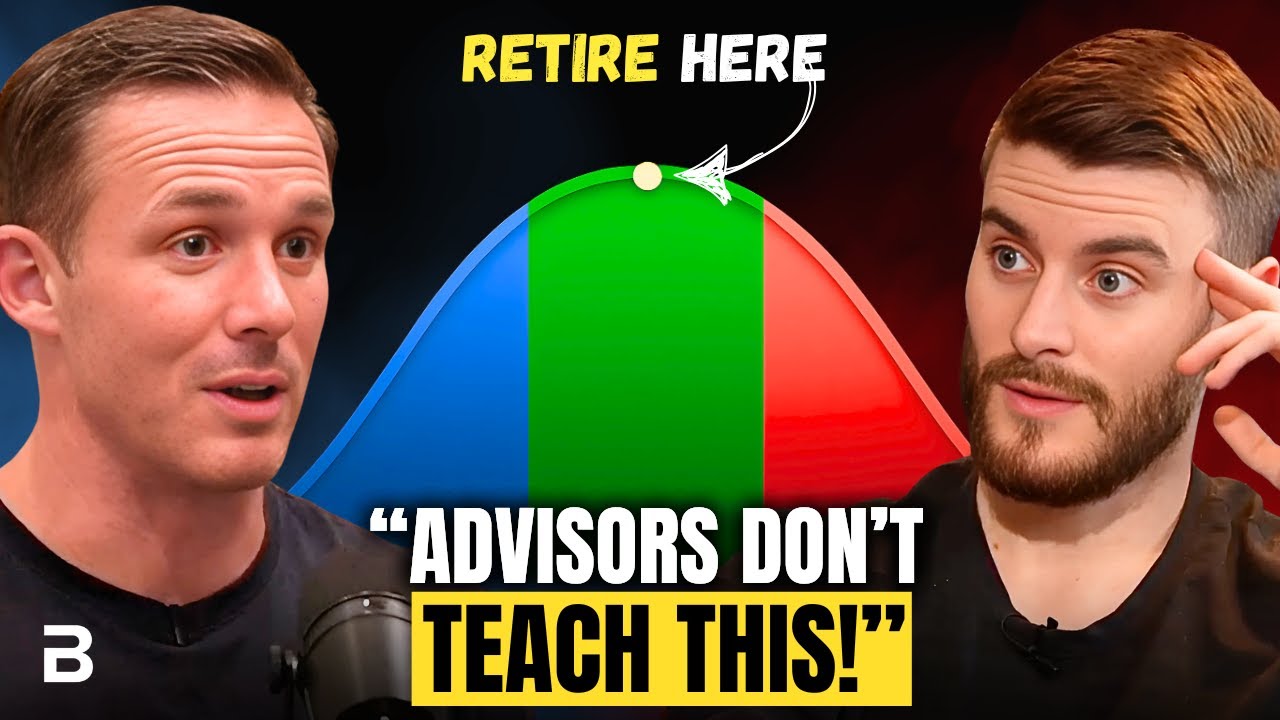
Through the "Sequoia system," a structured approach used by Root Financial, clients are guided with personalized questions about what matters most to them—what spending they cherish, what they want to avoid, and their ultimate life vision. This clarity shapes the rest of the financial plan so that cash flow, investment allocation, tax strategies, and legacy are all designed to support that vision rather than just chasing market returns.
Intentional living means constantly reviewing your lifestyle goals and financial needs at various life stages rather than deferring enjoyment indefinitely. This mindset shift is crucial to overcoming the fear many retirees have of running out of money, enabling clients to spend confidently and purposefully.
This episode references several essential concepts and entities relevant to retirement and wealth building:
Inflation erodes purchasing power, so retirement expenses should be adjusted upward annually, typically around 3% per year. Actual retiree spending often grows about 2% annually due to lifestyle changes with age, but planning for inflation protects your cash flow over the long term.
Annuities can provide a guaranteed income stream and reduce market risk but should be evaluated relative to alternatives. They can be suitable for those seeking stable income but need to weigh costs, surrender terms, and how they fit into an overall retirement strategy.
Alternative investments, including private equity, real estate syndications, and credit funds, can offer diversification and potential higher returns but often lack liquidity and carry higher risks. Allocation should suit your liquidity needs and investment horizon, starting with a clear understanding of your financial goals.
While financially investing often yields higher long-term returns than paying off low-interest debt, paying off a mortgage can provide emotional security and peace of mind. The best choice depends on personal comfort with debt and overall financial situation.
If you're overwhelmed by retirement planning, worried about running out of money, or frustrated by tax inefficiencies, you’re not alone. Our team specializes in creating personalized strategies that balance your financial goals with your life vision. From maximizing tax advantages to building resilient portfolios and protecting your legacy, we can guide you every step of the way. Click the Big Yellow Button to Book a Call and let's explore what it would look like to keep, protect, grow, and transfer your wealth the BETTER way.
Below is the full transcript.
Full Transcript19,968 words
Some of our clients that have built the largest retirement portfolios are the ones that have the biggest trouble spending it. You are where you are because you are who you are. You don't flip a switch, no changes. A big part of our work for our clients is actually encouraging them to spend more money. What are you going to do when you pass away with $30 million? Is that really your goal? To die the richest person in the neighborhood? The goal is not to have a higher net worth. The goal is have more fulfilling life and that's impossible to measure on an IRR calculator. Finances aren't everything if you don't have them. It's kind of like oxygen. You don't realize you need it until you don't have it at all. A financial planning thing is not just portfolios or insurance or numbers, but it's truly the thing that can allow you to live the life you want to live. I think retirement planning should really be called future cashflow planning. You're earning a great income while you're working. Before you retire, you're probably at your peak earning years. The message we have is it doesn't even start with retirement. It starts with what does an ideal life look like? The sign of a good financial plan is a life well lived. James, welcome to The Better Wealth Show. Thanks for having me. We met in 2021. I was in Colorado. I was doing something called Scale in 6 at the time where I was training people on how to scale their business. You did not go through that program, but you saw me speak on a virtual thing. We got connected. And you at the time had a podcast, I believe, and you were thinking about going on YouTube. I'll take my 1% of credit and saying, hey, James, you should put this on YouTube. You freaking blown up. you have, what is it, over 120,000 subscribers? Of 180 something. 180. So you're coming up on 200,000 subscribers. You have a lot of videos that have over 100,000 views. You've freaking blown up. And I'm so proud of you, number one. And I'm just so grateful that you would take time to drive up to Laguna Beach, where I'm at right now, to have this show. We're going to talk about all things retirement. We're going to talk about what you do at Root. We're to talk about. We might, we might. argue or debate on some things around 401ks, retirement distribution. We might talk a little bit about life insurance and retirement, but I'm so grateful for you taking the time. And it's fun to see where you're headed. And I have no doubt that this is just the beginning. Like what you've accomplished to date is only the beginning of where you're going. And I'm very grateful to be able to have this show where I get to talk to people like yourself. Yeah, well, thank you. I think we both have a similar desire to help as many people and serve as many people. And we do in different ways. I think that that attracted me to you. Yeah. Scaling six was great. I actually did go through that program. Okay. You did. Okay. Okay. Yeah. I loved it. Okay. And here we are. I'm happy to be here. I love it. I love it. All right. Before we get into the details of just different questions around retirement planning and all, what is your view and like, what is your vision for like why you do what you do? So I grew up and my dad was a pastor and my mom stayed at home to raise four kids. And I remember that as my dad was doing that, it was a small church. So not a lot of people, which means not a lot of income. And as a kid, you don't know anything about the money stuff, but you could feel like. Things are tight. Things are stressful. Things aren't always happy-go-lucky in terms of when financial decisions need to be made. And my dad at some point stopped being a pastor just because it wasn't working financially. Family of six in Southern California making about $30,000 a year. It's tough. You're not going to be able to sustain that. So he went from making about $30,000 a year to making nothing per year for two years in a row. And as he made nothing, debt piles up, stress piles up. And that continued until I don't remember exactly how old I was, but my parents found this book. called Financial Peace University. Shout out Dave Ramsey. Shout out Dave Ramsey. And love him or hate him, that book changed my family's trajectory of all of a sudden you had a plan, like you had a plan with your money. Not the only plan, but it was a plan and things started to feel a little more calm. Things started to feel a little bit more, okay, we're going to be okay. Business started doing better. Things picked up. And I remember as a kid realizing there was like this inflection point. And later on as an adult, you realize that inflection point was getting your finances in order. Finances aren't everything, but if you don't have them. It's kind of like oxygen. You don't realize you need it until you don't have it at all. You don't realize how much that matters until it's just chaos, until it's in disarray. And my parents are super hardworking people. So it wasn't a lack of effort or work ethic. It was just, we needed a plan. And I think that later on in life, as I grew up and talked to them about that and realized that that was a turning point, just a simple book that gave hope for what's possible on the other end and a basic framework to get there. You realize that this financial planning thing is not just portfolios or. insurance or numbers, but it's truly the thing that can allow you to live the life that you want to live. And so you get kind of addicted to helping other people experience that transformation and you want to do it for as many people as you possibly can. How long have you been in this space and how long have you been running? Graduated business school in 2012. We're in 2025. So 13 years in this space full-time and have been running Root for seven and a half of those years. So half the time here at Root. Okay. And one of the things that people love on this show is almost talking about like a master class. the masterclass on how you view retirement, how would you go about it if you were taking, like zooming out and saying, I'm going to give you the framework of how we view retirement planning? and how we help people, like what would that be? I know you have videos that you publish every week, so I'm asking a lot, but what I'm looking for is like a simplicity of like how you view what you do and how you help people. Yeah. I think that people think it's all about retirement. They have this view of retirement planning or financial planning, like, okay, you have your working years where you sacrifice, you save, you invest so that one day in retirement, you can enjoy everything you sacrifice and invested for. And there is truth to that. But I think that The message we have is it doesn't even start with retirement. It doesn't even start with investments. It starts with what does an ideal life look like for you? What do you actually want to do? What does success look like? And so I think that a big part of our message resonates with people is it's not in the numbers and the finance, it's the perspective shift of how do we actually think about what a life well lived looks like and then design the financial plan to help you get there. For some people, that's the very traditional. I'm going to work the nine to five and I'm not going to love it. It's a corporate thing, but it's what puts food on the table. And at some point I want to retire and travel the world. Awesome. Where are the best tools available, resources available to make that happen? For others, it's I stinking love my job. I never want to retire, but I still need to optimize everything with investments and taxes and all the cool different strategies. But how do we now approach that? So I think that retirement is not even the main goal as much as how do we balance saving in a very prudent way for your future needs and your future self. as well as making sure that we're doing things today in a very intentional manner to take advantage of what's in front of you, which is different at different seasons of life, but cannot be neglected just for the sake of preparing for the future. That sounds great. And I would love to know what questions you ask to help people identify what they want. That's my first question. And then I'll transition to what you do after that. I'll give you a very practical example. A lot of people that do come to us are closer to that quote unquote retirement age. They've- saved, they've invested, they have money in their 401ks, their IRAs, their brokerage accounts, what have you. And when we take a client through a process to design that financial plan, it's not just, hey, Caleb, what do you want to talk about today? What's on your mind? It's very specifically, there is a natural progression to how you should think about your finances, to how you should lay out a plan. And for us, we call it the Sequoia system to say, we've met lots of people of our career. You've met lots of people. What is the thing? How do we organize not just your finances, but the way of thinking about things in a way such that there's a natural progression for everything. You know, not everything is based upon some little minor, your car insurance policy, for example, is not the foundation of your financial plan. It's a little detail versus your vision for what a life well lived looks like. That is absolutely the foundation. So when someone starts with us, when we go through this equation system, it's you go to a kickoff meeting and the kickoff meeting is all kinds of questions designed to pull out those things about you that are not finance related. It's everything from the past 12 months. What's the favorite thing you spent money on? Versus Caleb, what do you hope you never have to do another day in your life? Versus Caleb, what is your vision? Like five years from now, 10 years from now, what do you want to do? Versus what I journal a lot about and think about a lot is you're sitting on your rocking chair on your front porch at the end of your life with your spouse by your side. You're fortunate to both be there. Like what happened between now and then for you to feel like you're smiling and thinking about what happened? And try to get in this like different frame of mind because so often it's, okay, I got to do my financial plan, which means we're going to talk about You know, what are domestic equities doing versus how are international equities doing versus what's up with this tariff stuff? How's that? That all matters, but only when it's in proper context. Walk me through what life looks like. Then from there, it's okay, what's our cash flow plan? Both today and in the future, to me, where's cash flow going to come from to do that? If you're, say, the traditional 65-year-old, you're retiring, what role does Social Security play in this? What about withdrawals from your 401k? What about withdrawals from your brokerage account? What about withdrawals? So, like, how do we tie together the cash flow plan? to maximize what income could be, not just for the sake of maximizing income, but to maximize what you can do with that income. Then it's investments. How do we now need to reallocate your investments to support that income? Then it's a tax piece. How do we get the most tax efficiency out of this withdrawal strategy, out of how the way you're invested? Then it's legacy considerations, estate planning considerations, insurance considerations. Not to say any of these are more or less important, but that's the way we view the natural progression of how do we build the right plan on top of the foundation, which is your desire. for that life that you want to live. I love it. I'm going to tell you back a framework and then you tell me if I'm off or on. So the first thing that you believe is identifying what a life well lived looks like. We call it intentional living, but it's this concept of what does success look like? Because it would be a shame for someone to take someone else's definition of what their life should look like and not think deeply about what their life should look like. And so. You take them through a series of questions. You identify what success is. And then you look at cash flow. And I'm not going to put words in your mouth, but cash flow is what finances a life now and the future. I think retirement planning should really be called future cash flow planning. And if that was called that way, maybe people would get less emotional about it and just be like, all we're doing is we're planning for... future cash flow. And so you figure out what kind of what does that look like in the short term, medium term and long term when it comes to cash flow. So things like inflation, other things factor into that. And then from that cash flow is created by active income, but also it's created by assets, which the third aspect is looking at someone's investments and making sure that their investments are not just serving them now, but future future wise, you're also looking at taxes because taxes could be an insane eroder. You could, you know, taxes could crush your cash flow in the future if they're not planned well. And then you look at legacy because at the end of the day, we'll all die. But we also, legacy is more than just what we're leaving when we pass away. It's, you know, values and what we're instilling in the people that we love the most. So to summarize, identify what their intentional life or life well lived is, make sure that cash flow, like we're figuring out what it's going to take from a cash flow perspective in the short term and long term, and then align investments. to give us the best chance to financing that and making sure that taxes give us the best, it's most optimized to let that out. And then to make sure that legacy is one of those things that can be the ripple effect of that. How did I do? Nailed it. Yeah. Legacy, we think more of like the security meeting. It's insurance, it's estate planning. It's a whole piece to ensure that what we are doing is protected from the things that could go wrong. And also making sure that what we're doing is we're thinking really long-term about how does this impact our family for future generations. That's awesome, man. We're actually very similar to how we view. Our framework is get really clear about their clarity aspect, which is intentional living. Understanding that cash flow is the thing that makes the world go round and it's finances your current life and future life. And then money only does two things. It's consumed or it's saved and invested and making sure that both of those areas are optimized. So are we overpaying in taxes currently? Are you, you know? You have things that you're consuming that aren't actually helping you live the life that you want, but then making sure that your investments or where you're putting your money is working best. And then the risk management's like the legacy estate planning, making sure that you're protected along the way. And so within that, I think it would be awesome if we walk through each one of these areas. And I'm sure within some of these areas, we'll have disagreements in, or we'll go back and forth, which I'll appreciate. Anything that you want to mention before we go to cashflow? No. Let's do it. Someone identifies what they want. And obviously that changes things. But when it comes to cash flow, how does inflation play a role? Or how are you mapping out cash flow now and in the future? Because one of the things, just inflation alone, you have to spend more money just to maintain what you're currently spending today. How do you guys teach that? How do you guys factor that when it comes to sitting down with somebody? We don't start by... I think it gets really confusing for people to think, hey, let's use a 40-year-old as an example. what's it going to cost for you to retire? They start thinking, okay, inflation, where's that going to be? Taxes, where that's going to be? What does it cost today? Let us do the work of the inflation piece. So it's more envision life today. What does that cost? And we do that. We go through that exercise to say, okay, what's going to be an extra expense? What expenses do you have today that will go away? All you have to do is show something. Okay, you want to spend $100,000 your first year of retirement. Cool. When you're 65, that's going to be $300,000 by the end of your retirement, whatever the number actually might be. So just that perspective that, oh my gosh, like... When I think about retirement, so often people go to, and I'm skipping ahead a bit to the investments piece, I got to protect what I have now. I can't afford a downturn to my portfolio. I need to go super conservative. And you look at that and say, yeah, you're absolutely right. You've protected your first two, three, four, five years of retirement, but you've done a horrible disservice to yourself 10 years from now, 20 years from now, 30 years from now, when the cost of everything that you want to buy has doubled or tripled, and your investments have been way too conservative and not kept up with that. So I think that. just showing people that given that perspective that this is not a battle that ends this inflation battle, we have to continue to be positioned to meet your future needs, right? In combat inflation, while also having some more stable, conservative assets, too. So yeah, and we're jumping a little bit ahead to investments. But what you end up doing is you're taking today's dollars. So for example, let's say if you're meeting with me, and I said, James, I need I want to spend $100,000 in today's dollars. You as the planner are saying, okay, Caleb, well, you're... 29 years old, if we're going to do a plan over when let's say you're 60, you're obviously going to have to spend a lot more than 100,000. But you're not you're you're doing that planning. And you're and you're taking today's dollars. And then you guys factor that in what type of inflation adjustment are you usually? We start with 3%. Okay, but then you can show higher and lower just 3% tends to be the long term average, right? But it's cyclical. It's been way higher, and it's been way lower. So showing that as a baseline. And then when I quote unquote hit retirement, stop working, do you find that people are continuing to spend? More money or do you find that a lot of your clients or people that you're working with are actually going to spend less money in retirement? That's actually a really, so typically we'll show baseline inflation of 3%. But if you look at a lot of actual retirement research, it's, I think it was Wade Fowler, I think he did this, maybe it was someone else, talked about the retirement spending smile, where they talk about the fact that if on average or the duration of retirement inflation increases by 3%, retirees actual spending increases by maybe two, because you think the first 10 years. You're traveling, you're active, you're doing stuff. When you're 80, you're not necessarily buying less expensive milk or cars or electricity, but you're probably not taking the same trips, you're probably not doing the same things. So your spending tends to taper off a bit more naturally, and then starts to increase again, depending upon end of life medical expenses, what type of expenses for the last one, two, three years do you have. So on average, retiree spending increases at 2%, or increases, I should say 1% less than whatever the inflation rate is. The hard part is that's an average. What's average retirees doesn't necessarily mean that's going to be Caleb's exact experience. So having that perspective. Do you find that there's scarcity that, that people like this idea of running out of money is there's like a fear and that fear translates into people's lives? Some of our clients that have built the largest retirement portfolios are the ones that have the biggest trouble spending it. And it's this whole sense of, of you are where you are because you are who you are. Yeah, that's good. That's good. You don't flip a switch, not changes. A big part of our work with a lot of clients is actually encouraging them to spend more money. And trying to look at this from a whole bunch of different perspectives. Because you don't have to spend your money. What are you going to do when you pass away with $30 million? Is that really your goal? To die the richest person in the neighborhood? Or is your goal to actually do the things you expressed to me in the kickoff meeting you actually want to do? So this goes back to the progression of it all. Have you read the book Dial Zero? What are your thoughts on that book? Some of the tactical things I think about differently. but the overall concept I agree with. The overall concept, he, in my opinion, maybe takes it a bit more extreme than I would, but I think it's good because so much culturally is on the other end of you have too many people built up so much and are too scarce, believe it or not. I know there's a retirement crisis, people who are undersaved. There's also a crisis of people who are over saved and terrified to spend it. And so I think it's a good, maybe resistance to that or good perspective shift of the realities if you actually die to the zero. Like there's gonna be a whole lot of anxiety in the latter. And he knows that I know, but I think it's a good, you're going to cause your death. Yeah. I like the concept. Right. Right. Okay. Now let's talk about the investments portion. And I just want to be very clear. This is not investment advice. You're, this is for educational purposes only, but this is where I want to get into the strategies. And this is where I imagine a lot of your videos on YouTube have done well talking about strategies like Roth and. other things, assets and all. So why don't you give me like tactics and strategies on how you help? Like when you're really clear about someone's what a life will live looks like, you figure it out from a cashflow perspective. So you have kind of that desired financial result. How do you back into that? And this is where your genius really comes out. So what's the next step? And how do you view those strategies with investing and what people should do with their money? I think this might actually be the most simple part of it, but maybe the one that has the most opportunity to be. It should be very simple. The reason we do our investment meeting after cash flows is because I've worked with, Caleb is my client. Okay, Caleb, we know that you need X amount of dollars from your portfolio the day you retire, you're retiring right now, for the next 30, 40 years of your life, however long you're going to live. I know that the market on average does really well over time. The S&P 500 last 100 years has averaged 10%, more than 10% actually, but just call it 10%. Super simple number. Obviously, that's a nominal number. There's been inflation, but that is what it is. Why don't we just invest everything in the S&P 500? If you get 10% per year, that's pretty darn good. You can build a significant portfolio on that rate of return over time. Well, if you have that portfolio, you're not just getting 10% every single year. You have some years where you're down 20, 30, 40%. So that's no big deal when you're in your working years in saving and investing and buying these companies and dollar cost averaging. It doesn't matter. markets down, you're putting more money into your 401k, your Roth IRA, your investments, whatever it is. When you retire, you cannot afford for the market to be down 40% and also be taking out a good chunk of that. So we have to have a portion of your portfolio that is allocated. We call this our root reserves bucket internally. We have to have your root reserves. We have to be sure that just looking statistically, the average bear market in the S&P 500 lasts about two and a half years from the time it reaches its peak to the market bottoms to it It breaks even at its peak. And on average, that's two and a half years. It has been longer since the Great Depression. I think the longest has been about five and a half, six years or so. peak to trough to breaking even again. So what we want to do is we want to have five years worth of living expenses set aside in something that is insulated from the market. So what that's doing is, Caleb, you're going to see your portfolio drop sometimes when you're retired and you're pulling money from it. When that's down 20%, 30%, that being the market, a part of your portfolio is down 20% or 30%, but part of your portfolio should be up or at least should be stable so that what you're drawing from isn't actually cannibalizing this principal balance that you have. And it's just a way of saying, how can we allocate your assets in a way that you have some really great growth assets, right? We need to combat inflation. We just talked about that. That's what your growth assets will do. But also, we need to almost build this moat around your portfolio, this reserves, almost like an emergency fund. People call it volatility buffer, essentially. All those things, exactly. To ensure that when there's a downturn, because there'll be multiple downturns in your retirement, we have engineered your portfolio appropriately on the front end to not have to panic, to not have to change the plan. but simply to change where we're drawing assets from. And according to the fall, if you had five years of money that's not correlated to the ups and downs, that you're able to be more aggressive pulling out more money. Not that this again is financial advice, but on average, if you have five years of your root reserve, as you call it, what is a typical safe withdrawal rate that you would recommend people taking out knowing that they have five years. I will say it still depends upon what is the overall makeup of their portfolio, the stock to bond, whatever allocation. There's a lot of research on this. It started as the 4% rule of Bill Banging. Came up with this research, says, okay, you can take 4%. And through thick, through thin, if you adjust that for inflation, you're going to have a very, very, very high likelihood that that lasts for 30 plus years, assuming you're invested in these mix of US treasuries and S&P 500 research. You then revise that to say, well, what if you had small caps? You can increase that. Other research was done. There's an approach called Guyton's guardrails. It says, look, what if instead of just. blindly putting your money in and then taking out 4% per year. What if you increase the diversification? What if you increase the number of assets you're invested in? So it's not just large cap stocks and US treasuries. What if you also own some small caps, some international, some emerging markets and real estate? So you've given yourself more flexibility. And then number two, what if instead of just blindly pulling 4% per year, you were a little bit more intentional about, do you have, going back to the approach I talked about. If the market's up, great, like spend the assets are up. If the S&P is up 20% or your equities are up 20%, there's no harm in pulling from those. You're pulling 5% it grew by 20. You still have a nice margin there. If those are down 20%, we don't want to touch that. Is there another part of your portfolio that's allocated to something more conservatively that we can pull from? And there's some dynamic rules-based things on at what point are we giving ourselves inflation adjustments? At what point are we free? So there's a whole framework. It sounds like you're a fan of flexibility. If you being flexible and knowing that The 4% rule, what it's failing to acknowledge is we're not robots. You know, we're going to ebb and flow, but I cut you off. I want to kind of... Well, that, I'm actually a fan of optimizing what everyone's worked so hard for. The 4%, and by the way, the 4% rule is great foundational research. A lot of this was then built upon. If you retire in 1975, that exact portfolio that this 4% rule was based upon, when back-tested over many, many decades, you could have actually spent 7.5% per year. of your initial portfolio base and not run out of money. So you look at that and say, okay, cool. There's some safety built in. I look at that and say, well, if you have a million dollars and you retire, what that practically means is you're only spending $40,000 per year when you could have been spending $75,000 per year. What would life have looked like if you were actually spending that extra $35,000? How much good could you have done? How much meaning marks? So it's how do you take what someone's worked for and yes, give some flexibility, but in doing this, it allows you to take a higher initial withdrawal rate from your portfolio. There's a lot of assumptions built into this. There's a lot of nuance to it, but you can increase to closer to five and a half percent. So is that your goal? So that's our goal. With a five-year, just to be clear, with a five-year root reserve, at least, you would feel comfortable withdrawing five percent, five and a half percent. Yes, with a big disclaimer. Okay. If you're, I don't want you to withdraw five and a half percent. You have to, that money needs to last for 60 years. Versus if you're 80 and doing this, I want you to run a whole lot more than five and a half percent because you might only have. 10, 15 years left to live. So there's so many of these, we hear these rules sometimes when we get locked into the rule and there is our deeper understanding, like what are the assumptions underlying it and how does this change under certain circumstances, but a traditional retiree who wants to say, I need to take a standard amount for my portfolio for the next 30, 40 years, that is a great place to start. Assuming that you're accounting for the various nuances and what I will say, the more dynamic approach of how do you make adjustments as certain things happen in the market with inflation with your scale. So I'm. And I'm really seeing that you have like a one-two punch. Majority of the money is in equities and investments. you have five years root reserve, would you say if you tap into the reserve, do you then fill up the root reserve? Like, let's say tap into the root reserve two years. So now you're down to three years. Do you essentially take money from your investments when it's when you when you're back up to fill? Like, how does that work? Practica? And then I would love to know, again, not investment advice, but I would love to know where your your investments are, like held, and then where you're choosing to put the root reserve and like what type of investment slash assets you are choosing? So to your first question, yes. Like if you start drawing down root reserves, they need to be replenished at a certain point. Ideally, once the market's broken even and then some, they can be replenished. But I think the core of this is unfortunately, there's no silver bullet perfect approach of you can work this out to a formula that works 100% of the time to say this is how things will go. The main goal is can you dampen the blow? Can you buffer the blow of a 40% downturn? If you can absorb 80, 90% of the shock of that, that that's going to happen to portfolio by having an approach like this. That's what we're focused on. Are the precise numbers going to change year to year? Of course those will change, but yeah, that's the general approach in terms of where the assets held. Are you asking like what specific, it tends to be ETFs and we tend to like to have, we have an ETF that's owning large cap US stocks. We talked about historically those have grown over 10% per year. It's no guarantee that's going to continue to happen, but that's a good starting point. Do you have some in small? US stocks, small company stocks, same thing internationally, same thing with emerging markets, same thing with real estate. So it's nothing that's insanely or incredibly, only we have access to this stuff. This is stuff that anyone could do. It's not the fact that it's an access thing. It's the engineering that goes into the front end of how do we design this in such a way that you're going to be okay through various market scenarios. And we have contingency plans of where we'll draw from, what we'll do under certain circumstances. And we have that I'll map that ahead of time. Yep. before I get into the root reserve, you guys, you guys, your model, you have asset center, like people pay a fee, and usually based on the assets that they give you, what is your thoughts on the people out there on social media? You know, Ramit Sethi is one of these people, I think Caleb Hammer's another one. And they look to they essentially say like a 1% fee is one of the worst things that you can do, because you're just eating up all this portfolio. Like, what would you say to that? I think number one, sometimes they're measuring over a long period of time. And the reality is not everyone's investing over the next 40 years in that same fee structure. But what would you say as relates to people that say you should never charge fees for investments? A lot of people shouldn't. If a prospect comes and says, why should we hire you? I don't know that you should. I think that the traditional 1% AUM fee advisor, I would agree. I've seen a lot. I would never pay half a percent of these people, a fraction of a percent. And I think that the mindset is, it used to be what you're paying for is asset allocation. I am paying you 1% to go allocate my money, and that's it. Like that was traditionally what advisors did. I mean, even before that, all they were doing was commission-based stock selling. And then it was, okay, people don't need us to buy and sell stocks to them. Now our value is in asset allocation. And then even with that, it's like, okay, that's not valuable enough anymore. People can do that with Wealthfront or with Robinhood at a fraction of the fee. Our value needs to be more in planning. I think that's kind of where the industry is. I think I'd like to think that we're even a bit more, this is kind of cheesy, but the way that I'll think about it is you have pickers, planners, and protectors. Pickers, the old school industry model. Kev, you hire me because I'm going to pick the right stock for you. I'm going to get a commission. No one needs pickers anymore. You have planners. Like thankfully the industry evolved and now it's kid, come to me. I'm going to run a Monte Carlo simulation for you. I'm going to tell you how much to save to be on track for retirement. Cool. There's some value for that. I don't know if that's where our real value. lives. Protectors is what I'd like to think we are. Protectors is the sense of I know you maybe better than anyone else outside of your family. Maybe even better than your family does because you've shared things with me that you just don't share with others. I know your most cherished goals. I know your darkest, deepest fears when it comes to planning and it comes to everything that's in front of you. And I have this acute awareness of all the financial aspects of your life that need to get done properly to optimize everything that you've worked so hard So it goes beyond just planning, beyond inputting. numbers into a spreadsheet and having a result. It goes into you're going to live better because you're working with me, which is a big claim. But we'll always say the sign of a good financial plan is a life well lived. If you're not living the life you want to live, I'm not doing my job in a lot of ways. And so this protector is a sense of it goes beyond a traditional. Exactly. Do you follow basketball at all? I do. Yeah. Allen Iverson had an interview once where he said, he said, someone said, you're a point guard. He said, I'm a killer. Like what I do. it extends beyond this traditional role. Yeah, I don't play this role on the court. I have this role that's not the perfect analogy, but like, no, we're not planners. Like we are doing something that I believe is so insanely valuable that you're gonna look back on your life one day and think I had a better life because. I worked with this advisor at Root Financial. To that, who wouldn't pay a 1% fee? Yeah, I think we have to look at results. And a lot of times people that, you know, say that, you know, asset, a 1% fee is like it rose. That's true. What are we comparing it to? We're comparing it to net worth. And there's an aspect of it that says, I don't want to make an assumption, but I would imagine a lot of people that come work with you are more older. They're not maybe in their twenties. So there's a difference between, Hey. The goal is just to accumulate over the next 10, 15, 20, 30 years. If that's the goal, yeah, we want to eliminate any friction like a fee. But if the goal is life well lived, cash flow, making sure that that's in place and that's the result, now we look at it a little bit different. Now we don't have, we're maybe looking at a shorter period of time and the result is cash flow based. Having someone in your corner that can be less emotional but can create that plan and that cash flow. It could be an amazing heck yes. You know what I'm saying? So it all depends. I just wanted to hear like, because you're on YouTube, you probably are very aware of that message out there. And I just wanted to hear kind of how you approach. And again, I agree with him a lot of cases. And I agree, like for most people that are young, don't pay an advisor 1%. Like you're in situations probably not that incredibly complex. Keep costs low, save the right amount, save to the right places. You're probably fine. The last thing I'll say is a lot of our clients probably will have more or fewer assets in their portfolio by the end of their lives. than they would have had if they not worked with us. That's not because of the fee. It's because, again, a big part of our job is helping them. Your life coaches. Even though it's like if we're comparing that thing, they're going to look back and I'm grateful that I didn't have 50 million in my portfolio when I die and say, what else could I have done? Yeah, it's not. The goal is not to have a higher net worth. The goal is have a more fulfilling life. And that's impossible to measure on an IRR calculator. That's what's tough. I can't take credit for this idea, but this idea of like, creating an experience portfolio. Okay, we have a portfolios in our investments and all but why wouldn't it be cool if we could start highlighting like the experiences we have with the people that we love the most? And yeah, maybe I have less net worth over my lifetime. But I have this, this portfolio of amazing experiences that I've did versus the person that might have a higher net worth their portfolio, they're valuing other investments, but they're but their experience, they don't have as many experiences. And so I, I love that. Let's talk about root reserves, five years. Again, I'm sure some people that work with you have less, some people have more, but five years is kind of the standard. Where is that being held? That's usually in fixed income, bonds. Anywhere from ultra short term to duration of five, six, seven years, depending on the makeup. So that is fixed income and bonds. Okay. So this is where the conversation of... life insurance and annuities come in? What are your opinion and your view on life insurance, like using life insurance as an alternative to that? And annuities, I asked you two questions, you can address one at a time. So someone has a million bucks. Let's assume they need, I'm just going to call it 300 grand in what we'll call our root reserves. What would that process look like to get that 300 grand put into a life insurance asset that could replace what root reserves does. So yeah, that's a question. That's quite cool. I guess I should give some context around that question. Well, let's first of all, what type of rate of return are you hoping to get in a root reserve when it comes to bonds? So it depends upon, of course, where interest rates are. But let's say long term, anywhere between 4% and 6%. Okay. And that's taxable? Taxable? Or is that usually a tax-free? It depends. So if all their assets are in a 401k or I should say a traditional IRA, a Roth IRA, depends. So. That versus a brokerage account. So part of it depends upon where is it actually held. But for the most part, it's either going to be held in an IRA or it's going to be held in a brokerage account. Okay. So this, this, yeah, this is where we'll have a discussion. So I would say this is where like, this is where potentially annuities could come in. If someone's coming to you and doesn't necessarily have a ton of years, like they're, they're coming to you and saying, Hey, I want to retire in the next five years. Life insurance may or may not be a factor depending on how you can fund it. Sometimes you can front load life insurance policies where you can put majority of money upfront in life insurance and then pay small portion ongoing. And, or sometimes you could just make a contract and just put all in one. You don't necessarily get some of the tax benefits that you would, but it's like, you don't have to have that ongoing. And usually it would be a long, long period of time. It would be very competitive, especially if you factor in. So I think that's the point where we probably would see different. So long period of time, right? I guess I think of, there's a concept, there's bond-like returns. and a life insurance policy plus additional benefits. Creditor protection, death benefit, tax-free loans, things of that nature. I absolutely agree. If you're looking at it from a certain point of view, and that certain point of view over 20 years, over long periods of time, bond like they're there. Like you've personally shown me illustrations. When I think bond like returns, at least in the context of what we're doing. is I don't care what this bond is going to do in 20 years. You want it now. I need it. Right. Now, and I know you can fund policies in a way where you're prioritizing the cash value accumulation. But you won't get a positive IRR and a life insurance policy for the first three years. Correct. To prove your point. So I think that's probably, if you're an investor saying, okay, for the next 20, 30, 40 years, I want a very stable return, call it four or five, six, whatever percent. I think there's a lot of validity into what you're saying. Tell me where I'm wrong on this. The way I'm looking at it, Caleb comes to me, he's got a million bucks. We need to put 250 grand into something that it's fully available in the next five years. Like if there's a serious market downturn, I'm not waiting 20 years for this thing to hit its IRR target. I might need it now. The IRR in many of these things, maybe probably all these things is negative the first two, three plus years, correct? So I think from that context, if it's being used the way we're looking at it, almost like an immediate emergency fund in the event of a market downturn, I don't. see how that plays a role here versus if it's someone that's saying, because what I'm looking, I think of in both terms of what is someone's risk tolerance as well as a risk capacity. The difference there is that five-year bucket, I think of it from the terms of risk capacity. And again, huge disclaimer, like this is not universal. There's a lot of other stuff that goes into this, but risk capacity means how much risk can we take because we have the financial mechanisms in place, the root reserves in place to buffer you from the likely downturn. You might come to me and And maybe you have... a $10 million portfolio and you only want to spend 50,000 of it. Now, my first piece of advice is, Kevin, I'll spend more. Let's assume like, no, I got awesome pensions and social security. Like, I don't need anything. 50,000 per year on a $10 million portfolio is a half percent withdrawal rate. You could theoretically stick all that in the market and get a dividend yield of two, two and a half percent. And you're already at 200 to 250 grand just in dividends alone. Like, I don't care what the stock market does. Dividends typically remain pretty resilient. Not always, but typically 2000, 2002, for example. Market dropped 50%. Dividends were cut on average of 1% to 2%. So it's like that dividend rate remains pretty sticky. I might say if you're comfortable with it, you could have a 100% stock portfolio because your income need is being met. Your risk capacity says that you could have 100% equities. You as an individual, very good chance you're going to say, James, I don't feel comfortable being retired with 100% of my equity. Especially, yeah. So that's the difference. So risk tolerance is more of a feeling, more of an emotion, more of... What type of fluctuation are you comfortable with? Even if from a financial standpoint, you would be totally okay with an overwhelming majority of your assets in the market. That is a different conversation where it's not just a five-year bucket. We might layer on top of that more to dampen some of the volatility, more to ensure that we're not hitting the severe lows that an all equity portfolio might have. That's where I could see something like that. If you have the next 20, 30 years, we need something to get these types of returns. and also has additional benefits like life insurance, more so than a root reserves type concept. Let's first talk about someone in their 20s, 30s, and 40s. Knowing what you know about life insurance, you know a lot more than the average person when it comes to insurance. You say that knowing that the root reserve concept is valid and knowing some of the other benefits, you shared some of the talking points that you have tax beneficial growth when set up and used properly, it protects your family, which we... We'll talk about legacy in a second and taxes. It's interesting that taxes and legacy are part of your process. You have credit protection. You could factor in, and this might be a stretch, but if you factor in all the benefits you're getting, I could confidently say that you're probably getting a result of maybe like a 7% to 9% return on those dollars if you look at the other benefits when you're factoring in like what the cost of term insurance would be. In that time. So nothing, you're not hitting any crazy home runs, but. Let's talk about that. I would actually love to know some of you, because I have a lot of respect for what you all do, because I've seen some of the work and it's clearly superior to a lot of the other people. Yeah, which the bar is not set high. The bar is not set high, of course, you guys clear. I personally, obviously it's not a recommendation. All my actual liquid investments are a hundred percent stock market. Yeah. I have like emergency fund and cash reserves, which is a combination of either just cash in the bank or like short-term treasury bonds. walk me through how And let's even assume it's in a brokerage account. So like I do my Roth 401k, that money's there, that's obviously tax free. But if I'm going to put money in a brokerage account, let's assume it's going to get long term returns of the market. I think what you're saying is, well, when you factor in like the tax hit of that, when you factor in some of the other things you don't have, maybe insurance protection, what you're paying for term, because I have two term life insurance policies, there's a case to be made for life insurance. Is that right? You're right. I know it's not apples to apples. Like how could that be superior if we're more talking about the investment piece then. just say a brokerage account where I'm investing in great companies all around. Yeah. So this is where you're in your 30s. So what is the question? So 7% to 9%, I think I heard you say, correct? Yes. Sorry, let me clarify. How am I getting 79% equivalent compared to I'm assuming you're making some tax assumptions. Yeah, I'll walk you through that. So in a in a life insurance policy, we're overfunding it a lot of I don't want to be an apologist for the life insurance space. Because as you know, there's a lot of bad policies actors out there. So assuming what what we're doing is we're max funding an insurance contract to give early liquidity and really give a cash like A lot of our clients get immediate cash value and it's a lot. And usually we're breaking even, which means you have more money than what you've put in in year four or five and beyond. When we're looking at internal rate of returns, this is like after everything, this is like actual cash on cash growth. We're looking from anywhere from three and a half percent on the very low end to like five to five and a half percent on the high end. But yes, you have to look out 15, 20 years. Now that's assumed when you look at an IRR calculation, That's not just saying in year 15 or 20, you're finally earning four or 5%. You have to look back. That's assuming every single year. So one of the things to just to even address when someone's early in retirement, yeah, you're taking a hit the first couple of years. But life insurance is a contract that ultimately leverages your death in a sense. And so if you can think long, long term, whether you're starting retirement or whether you're in your 20s or 30s, you have to understand this contract. it's valuable knowing that you will die someday. And so that is one thing I want to address. So how do I get the 7% to 9% if I'm admitting that whole life insurance is only going to earn 4% or 5% internal rate of return? Well, when life insurance is set up and used properly, that money grows tax-deferred, you can use it tax-free with a policy loan, which we can talk about in a second if you'd like. And then you're obviously the death benefit is income tax-free. And so when you just factor in taxes alone to like assets. that normally you have to pay ordinary income. I get if in some assets, you would maybe pay capital gains. But if you look at assets that have true liquidity, like a high yield savings account, you have to earn, you have to pay ordinary income on those assets. So you factor that everyone's in a different tax situation. But now you take that four or 5% tax free. And now you just you would have to earn greater in an alternative account just to keep up because you have to factor in taxes. Does that make sense? So now we could, depending on if you're in California or if you're in any state, states are a little bit different. Now you're bumping that up to six, seven, or potentially 8% based on that logic. And we're not even touching on, now you have a permanent death benefit that term insurance, most likely you're just going to drop that off eventually and self-insure you'll have enough. You wouldn't want to pay term insurance when you're 70 or 80. It just would not financially make sense. And so you have a permanent death benefit that I would argue that is amazing and superior to estate planning. And you have other benefits like creditor protection, other things that are like it's impossible to necessarily put a value on the value of safety or creditor protection or all. That's where you start factoring in and that's where you kind of get this like wishy-washy number of being like, well, IRR is a really poor way to measure insurance because we're just comparing it to other like investments like bonds. But if you understand life insurance as a contract, as a protection element. That's when it's like it could check the box of a bond and do some of these other things. That's where for me, I was like, I that's where I wish it would be used more talked more about in financial planning, because I do think it could act as your root reserve, but also enhance some tax advantages in the future and legacy and estate benefits in the future. And by default, potentially allow you to spend more, knowing that you might not have to self-insure. And we'll all even ask you things like reverse mortgages. They can have a bad rap out there. But if you had multiple millions of dollars of permanent death benefit, and you could potentially spend out an asset more efficiently in a tax advantage way and give your kids options between money or the house, that opens up. Whereas if you didn't have that, a reverse mortgage would almost be off the table. So I would almost look at a life insurance policy can create more options in the future because you're not just leveraging or hedging interest rate growth. but you're also leveraging and hedging your mortality, your ability to die. And you have a contract that kind of shares both of those risks. Yeah. I'm not opposed to reverse mortgages. So we'll come back to this. I think my biggest issue is sometimes when those comparisons are done, you invest in a brokerage account. Sure, you get growth, but you pay tax on that growth. If you are a really uninformed investor and you're constantly turning your account and all these gains are short-term capital gains, you're paying the highest federal marginal rate, I think that's true. But I think that's also solved by like just be a better investor. And I think you have this trend of like just buy, you know, buy the S&P and chill. isn't maybe the best thing, but kind of a much better thing than what people used to do, which is actively trade everything. You want to know what's the tax equivalent return. Let's assume I do get 10%. Again, that's just past 100 years. This is 1926. The S&P's average, I think, like 10.3%. That's including the Great Depression. That's including the 2000s, where it lost money. That's including the 19th century. That's including all the really bad years. The annualized rate of return is over 10. Let's assume it does that going forward. No guarantee. Who knows what happens? That's a safe assumption. Just to use this. Let's assume that of that 10%, 3% is a dividend. And you take that as a qualified dividend because you've met the holding requirements. So for every 10%, 7% of that is capital appreciation. 3% is a qualified dividend. The capital appreciation, you don't pay any taxes on until you actually sell. That's right. So let's assume I'm investing. I'm investing for my future. I'm not touching that. 3% of it is a dividend. If it's a qualified dividend, I'm paying taxes at 0%, 15%, or 20% of the federal level. plus potentially the Obamacare surcharge and investment income tax, if my income is over a certain amount. Depending on what state I'm in, I may or may not have state income taxes on that dividend. But let's assume that dividend is taxed at 20% because it's all qualified dividends are taxed at long-term capital gain rates. 3%, 20% of that is taxed, essentially it's like 1.5%, no, 0.6%, I'm sorry, 20% of 3. So your after-tax return, you could argue, is 9.4% in that case. Not bad. Are you factoring in paying taxes? I'm saying you defer taxes. You defer taxes, but when you defer taxes, you have to pay that eventually. It's paid eventually. But let's just assume I keep growing this thing. I mean, obviously, there's all kinds of things you could do. Charitable giving. Do you gift your appreciated assets down the road as opposed to gifting cash? When you're retired, there's a 0% federal tax bracket for long-term capital gains. If you're married, filing jointly, your taxable income is under 96. I think it's 96. thousand seven hundred dollars or something and by the way taxable income is after the standard deduction has been taken so like you can have six-figure income and pay nothing in taxes on the first level of long-term capital gains you're realizing so i mean if you're smart about the way the timing of when you realize some of these assets we're talking about life insurance the death benefit like that's not for you that's for your future generations well what if we made this brokerage account part of that future generations thing they're getting a step up in basis so even if I bought Tesla. a dollar and you know, my $10,000 investment is now $4 million and they inherit that. That's all tax free. So I think there's, I think there's, I think you're absolutely right in a lot of ways, but I think a lot of those issues are alleviated if you just, if you invest smartly, if you invest smartly and know the tax consequences of what you do or don't do, or the timing of when you do it. Yeah. So that, I mean, that was one of the things that I want to definitely get into when we talk about taxes is there's, you clearly have wisdom around like how people can invest and do it in a... tax advantage way. Going back to life insurance in your in your research, because I know we've talked, is there any play that you would be like, life, permanent life insurance plays a role? Or is it your humble opinion, even if you're 20 or 30, knowing what you know, by term, invest wisely. And at the end of the day, you're getting that's a choice that you believe you're going to have a better elf, you're going to get a greater return, have more cash flow. And like you're making a bet that you're actually going to be better off. And you're still protecting your family with term insurance, but you'll get to a point where your retirement will be better in your opinion. And then you will ultimately, and you won't have a permanent death benefit to give your family, but you'll have a portfolio to be able to roll over. I don't want to put words in your mouth, but is that- That is my opinion on a lot of the cases. Okay. Taxes are obviously a huge part of this. Like once you're over a certain net worth amount, estate taxes become a huge thing. They're unavoidable, and that's a 40% tax. like this irrevocable life insurance tax. And you're on a trajectory if you're not already to have an estate tax problem. Right. And also you don't know what it's going to be in the future. So I think there are some advanced planning cases where a hundred percent makes sense to consider this. Probably the core issue is what you and I have talked about. There's a lot of people selling these insurances that don't really know how they should be sold or where they fit. And so everyone gets one and typically it's their buddies out of college that are just starting their job and don't need this policy before there's other things they've done. Yeah. there are absolutely cases for it. I think that I see far fewer cases where it's a value add than I do. This is actually hurting you. Right. If you take the concept of almost self-insuring or using your assets to give on to the next generation and you step up the basis and all, you feel like you actually spend less versus like you could make the argument if you had $7 million of permanent life insurance with cash value component, and let's just say it earns 4%. So it's that root reserve concept that allows you to potentially get 5% or 6%. spending down. But you could even make the argument that no, you have $7 million that you that is a part of your estate now. So maybe can we spend 9%? Again, not financial advice, but you don't necessarily care about keeping principal, you can maybe spend down more aggressively knowing that you have a life insurance asset. And that's that's what's so difficult is yeah, we're looking at the internal rate of return, which might be similar to a bond, but now you have you have the death benefit that's hard to factor in what would be your response to that of like, Would you agree that if someone had a permanent death benefit, they could choose to potentially spend more aggressively versus the person that didn't if they cared about legacy? If you don't care about legacy, then it's kind of like a horse apiece. If you care about legacy, do you feel like you have more options with having a permanent life insurance as a part of your portfolio versus not? I think theoretically, that's a very good point. I'm just thinking like practically speaking, the thing that prevents most clients I've worked with from spending is not this fear of spending down the. inheritance their kids are going to receive. It's more of just like a part of who they are. So I don't know if it's like, hey Caleb, your kids are going to be fine. Like just, that's not the thing that's preventing them. That's not to say like that couldn't be a very valid thing for a lot of people. I also think a lot of people don't necessarily have a, and this is where it's not universal. Not many people like, I want to leave every, like I want to leave these massive amounts to kids. It's like, I want to leave enough to like, they're supported, they can help their kids. So I don't know. It's a good question. I can't think. of someone where I'm like, yeah, that would have 100% helped them, but that does not mean universally, that's not a good thing to have. What are your thoughts on annuities? Because annuities and life insurance kind of get put in the same bucket. I know lots of people and I've interviewed lots of people on my podcast and show that are big fans of annuities in retirement. They use that as a tool to get certain income levels. And then they're not anti-stock market and all, but they use like the stocks either fixed index or like SPIAs. And then they use life insurance. And what they would say is a combination of those gives options, but also like people would prefer to have income stream that will never run out. And again, that can be problematic. That's the pitch for life insurance. Sometimes you could potentially annuitize at seven, 8%, have a death benefit to say, if you die prematurely, it's going to be able to, you know, and so you could make the argument that instead of maybe getting four or five or maybe 6%, what if we could help clients? take a chunk of their net worth, seven or eight or 9%. The downfall is if you die prematurely, you might lose out on what that net worth could be. But if you have a death benefit, it gives you the permission to potentially spend. And now we now we're de de risking what the market could go up and down. I know I'm saying a lot, but what is your was your thoughts on using annuities and that even that strategy to potentially spend more, more money or as an income strategy in retirement. I think you've got a lot smarter guests on this podcast than me. No, no, no. They're saying it like I'm sure- There's different opinions. There's different opinions. Like if I interviewed 100 people on health, I would get 150 different scenarios on what our morning routine should be. I think it comes back to like, what are we comparing it to? If we go back to that individual who's retired in their portfolio and is super conservative and has just bonds, I am pretty sure like, yeah, this type of an approach you're talking about could have pretty significant, like comparably much better. I don't always love studies and the research because it has to, again, it's like relative to what? It's nothing exists in a vacuum. So could that be a solution? A hundred percent, that could be a solution, especially for the persons maybe a bit more, I don't want to say timid, but just when we look at retirement planning, there's the whole concept of how do you optimize a Monte Carlo probability of success type thing. What's missing from that is not just what's the probability of success, but what's the severity of failure. What happens in that instance where it's a 90% probability of success, but that 10% fails? For the individual that wants to spend $8,000 per month and they've got $7,500 per month coming in from Social Security and pensions, severity failure is not that bad. If you run out of your liquid assets, it's a little bit of a clip that you're taking. You're fine. Versus individuals that got very little of that and everything's in the market and they're spinning it down aggressively like that, severity is huge. So I have no doubt that this is a very good solution for certain people, but it kind of comes back to what is the alternative that they would have done that I would. base that against? Like, what are their options? And this is very clearly a good option for a lot of people. You have very smart people looking at this and you have very smart people doing this. So it's not, I would say like the first thing that we look at for clients, because I think there's other strategies that we want to consider first, but I'm not a annuity hater in that regard. Well, and one thing would be fun is to get you on maybe an exchange or like do a three-way podcast with another person who's like maybe dr wade fowle or like Tom Wall or somebody who we can, there can be a discussion around retirement, because at the end of the day, I do agree that there's a lot of different ways to go about it. And unfortunately, talking from a lens of doing life insurance an optimal way, which 95% of people or more are not doing. And you're also talking about an optimal way of, you know, where 95% or more people have no clue how to invest the way that you're talking about with the plan, which hence, you guys definitely earn your keep when it comes to the fees that you charge to make sure that people are optimizing their retirement. I think that's the thing is like, there's one person that's listening to this, but most of the time. People aren't even listening to either these conversations and they need help. And that's where life insurance in general can be a terrible thing because most of the time where life insurance is sold is an investment. Put your money in this IUL or put your money in this insurance policy. Don't put your money in the market. Yes, it's going to be because all the time they're almost the pitches. Put all your money in insurance and it's going to perform better. And you and I would both agree that that that would not be a great, great strategy. And yet... That's what a lot of people that sell insurance do because they don't have any options to do other things. And so I'm not a big fan of regulation, but you want like you also I'm like, well, there's a reason why regulation has a has a place because depending on who you talk to could be you could be pushed in a direction. And sometimes that direction could be really hard to unwind. Would you be open to having a part two sometime on life insurance annuities and investments? because what I would love is... talk to people and really come up with different frameworks. And maybe we have like, option A, B, and C, here are the pros and cons of having all your money in the market, pros and cons, here's the pros and cons of having maybe a blend. And then here's pros and cons of pension tizing, like you could you can make the argument that you invest all your money, and then put all of them either in life insurance and annuities. And there's pros and cons to that. And it would be really interesting to be able to hash out all of those because I will be the first to acknowledge. the way that you're you're viewing is a there's not many things that i can poke holes in like it's it's solid and i would say if that works for you and you're like i'm not here to try to say like you can do a better job because it's just everyone's so personalized let's do a part two let's have like a specific case study yeah because some of this is just theoretical until you have something to anchor it to it's hard to see exactly where one uh comes out ahead We're so glad to be able to do that. Subscribe if you want to see. case study part two. Let's talk about reverse mortgages. Do these come in on the tax side of your framework or the investment? Because you said you're not anti-reverse mortgage as a tool. Where does that fit in? Or is that mainly in step number four when it talks about taxes? It comes in as like, when can it be good? It can be good, especially during latter years. Like I just had my wife's grandma needed this. Like, hey, end of life, you need something, you've got income to draw from, you've got an asset base. It can be good for if you want to delay social security I've seen lots of studies where you take that out and the rate of return, essentially, you know, your Social Security being delayed is exceeding the interest rate you're paying on your reverse mortgage for those. So it's just kind of like a most like an arbitrage opportunity. That might not be the case anymore as interest rates have gone up. I saw the study before rates went up, but I think it's something good to have. I don't know that it's again back to like the first thing we'll recommend. I wouldn't recommend taking it if you have no need for it. fully funded in your retirement assets and your income needs are met and all that stuff. But it's a good thing because a home is a lot of people's most valuable possession. You can't spend a home. You either have to sell it, rent it out, or you have to take a mortgage out against it. And a reverse mortgage tends to be better in your retirement years than just a traditional 30-year mortgage where now you're making payments on whatever you took out. I think that's well said. It's not the first thing that you're recommending, but it's part of the tool. toolbox, especially in California, that could be a pretty significant that the homes could live in a shack that's worth millions, millions of dollars. And it unlocks an ability to, to, to live maybe a better, better retirement. What are your thoughts on alternative investments? I've, I've interviewed people on, on the show that are pretty anti-stock market and they're all like, they like credit funds and real estate and syndications and. I was the first to say, I was like, when I hear alternative investments, I think Ponzi schemes, because I know a lot of people that seem to lose a lot of money in like alternative investments. But you also like Robert Kiyosaki, his whole platform is downplaying a lot of times like traditional stock market investing and putting your money into real estate and all that stuff. And a lot of people make a living by saying that this is a superior way and don't put your money, all your money in the market because there's better ways to grow your wealth. You and I are a potential example of this. We have businesses and that business is an asset on our balance sheet that's providing a lot. And so what is your thoughts on alternative investments and what would you say to clients who want to do real estate or want to do... other things like where do you draw the line what do you tell them what's your framework when it comes to alternative investments yeah i think you have to look into their like robert kiyosaki done a lot of great things there's also like he's been been in the sense of like how often as you said markets can take markets markets can take for the last 20 years yeah the market is just like and so it's not like an either or in my opinion like when you're investing in the market there's this i think people lose sight of where you're actually investing in like the market just means like we walk outside this room right now and walk down the street We're probably going to see an Amazon delivery truck. We're probably going to see a Ford and a Tesla drive by. We're probably going to walk by, I don't know, a McDonald's or something. Those are what you're investing in. You're not investing in this random thing that by chance is going up and down, driven purely by whoever's in office. It's like you're investing in real companies. That being said, most companies in the United States are not publicly traded. So private equity, for example, is an alternative investment where can you get access to invest in real companies with real revenues and real cash flows, but you can't go buy a ticker symbol, some index attracts them on a publicly traded market. So I think they could be great. I think it can be a wonderful thing. But I think that especially the wealthier you get, you tend to want to have these things other people don't have access to. And so it can feel good to say, I've got this private investment. I've got this thing that other people don't have. And honestly, like you do see a lot of Ponzi schemes, the wealthier people get because you want to have access to something that feels like it's not basic, that feels like it's somehow elite just to have it. That's a real thing. And wealthy people don't want to talk about that because who wants to be embarrassing from their friends that you fell for this? And a lot of people take advantage of that. That being said, yeah, alternative is so broad. There are good, there's bad, there's super high fee, there's reasonable fee, there's all these things. What type of portfolio, obviously, you probably wouldn't say put 100% of your portfolio in these alternative investments. What would you say from an allocation if someone was interested in investing things outside the stock market and wanted to do things like real estate, credit funds. you know, maybe angel invest. I know this is broad, but like, you got to go back to what's the money for, you know, if I need all this money in the next five years, probably not. Yeah. You, you need liquidity, private investments, alternative investments typically are not right. Liquid. If you are saying, gosh, I just sold my business. I've got a hundred million dollars that I need to do something with. And I want some of the tax efficiencies or some of the investing in oil or something. Sure. Like there's some private investments that are going to give you some unique tax benefits or some private investments where If you look at just an illiquidity premium, you should achieve a greater rate of return if you're going to have your investment locked up. And so I think market efficiencies, if it's the right investment, you should be getting a greater return. This is the whole Yale endowment model type thing of like, we have an infinite time horizon. How can we allocate to lumber? How can we allocate to commodities? How can we allocate to public investments, private investments? So they can be great, but don't start with that. Start with what do you need the money to do for you and then work backwards into. What's your thoughts on crypto right now? There's crypto is becoming... It's something. Yeah. You know, I hate to be the guy that says I don't have thought. I see really smart people, far smarter than me, really convinced that it's the next thing. I see really smart people, far smarter than me that say this is the next bubble. I'm not going to pretend like I know any more than them as much as I'm very, very curious. But I don't have thoughts, certainly not a recommendation as to what people do. Do you have any of your money? I have a little bit in crypto less than five purely less than five percent yeah purely just to have like a stake in like tracking like having an incentive what's it i can do and because otherwise i honestly the investments are actually the most boring part of the portfolio not a plan to me in some cases like they are the funding mechanism that's right they're the tool i don't care what gas goes in my car i just want to make sure it's that's a great analogy i want to make sure i'm going the right place and i love the car gas analogy because i i look at gas as cash flow It's like cash flow, but ultimately it's the thing. We shouldn't be obsessed about the cash flow mechanism. We should be, where are we going? What are we doing with it? And that's where, if you can look at this whole thing that we're all talking about as just a tool, all tools have different ups and strengths and weaknesses. And it's like, how are we using those tools to live our life? Gold and silver, which these tend to be hyped. This is, again, there's a lot of people that overpay or kind of get fear, like they use fear to... buy gold and silver. What are your thoughts on it? Do you feel like there's a play to having precious metals in a portfolio? There's the risk-free return, which is typically thought of like the 30-day treasury bill or something like that. What's the return you get for zero risk? I forget who it was, but someone once called gold return-free risk from the sense of you're not getting any return, but you're taking on a tremendous amount of risk if risk is defined by standard deviation, which is a common thing of how volatile is this asset going to be. If you actually look at the history of gold, it blew up. in the 70s because we were removed from the gold standard. But from the early 1980s to now, it hasn't done much. So you can really make the art. And not only is it not done much, but if you have concerns about the stock market. And the fact that the stock market's going down 50% and gold has done that same thing. And then some like the volatility of gold, the uncertainty of gold, when you look at the price of it, significantly greater purely on a numbers basis than stock market. So very much becomes a story that we tell ourselves as with everything. I noticed that a lot right now with tariffs, depending on your view of the president, all of a sudden tariffs are the best thing in the world or I hate tariffs. And it doesn't mean you don't need my tariffs. It means that just tells me everything I need to know about who do you like or not like. people aren't making it based upon. financial reasons. In a lot of cases, there are some people who are gold popped off in the 1970s because they've been artificially pegged super low because of the gold standard and was backing it, in my opinion, kind of caught up in the 1970s of artificial suppression. And since then, it's had good years and bad years. But on average, it's been pretty poor. So I'm not a big fan of gold, unless it's for an emotional reason. And I would never tell clients, oh, this is an emotional thing we're going to put in your portfolio. But like, if you really believe in it, there's something to be a Ramsey thing. Like you can't discount the value of momentum. and incentivizing the right action. And if that's going to make you stick to your portfolio, there's something intangible about that that I'm going to support. And on Dave Ramsey, like a lot of people think I am anti-Dave Ramsey. I've had videos in the past where I've talked about areas that we disagree in, but I have so much respect for Dave Ramsey. He's been super consistent. He sticks to his baby steps. He's helped so many people. He's inspired so many people to take action. And for that, it's inspiring to take someone who's been on the radio for 30 plus years and just continuing to help people. I don't agree with all of the tactics and what he says, but there's something amazing to say about momentum and staying consistent. I mean, there's things that I think Dave Ramsey probably doesn't even agree with that he says deep down, like even in college, if you look at like the conservative Christian person who Dave Ramsey is, and then he still talks about college planning, but he stays consistent. And for that, I admired that. What is your thoughts on Dave Ramsey? I mean, some of this is just like the numbers are wrong. It's not even like debatable. I disagree. But if you look at it from the standpoint of like who has impacted in a positive way more lives than any other single person from a financial perspective, I don't know of a single person who's greater. So I think that if I could do a fraction of what he's done, awesome. I disagree with a lot of the actual specifics. But it makes two of us. What are your thoughts on debt, by the way? Like when I look at investments. you could invest in assets or you could essentially invest in paying off debt. Do you think people should be paying off their 30-year mortgage? What is your debt framework? How do you view? Yeah, the textbook answer is what's going to give you a superior rate of return, tax-adjusted rate of return. The real-life answer is people say, I've never known anyone who's thrown a party for getting an extra $100,000 in their portfolio. I know people have thrown parties for paying off their mortgage. And so you can't discount the feeling in the real-life thing of taking all that into account, I guess, when designing. framework of what to do. One smart thing that I think Dave Ramsey's done is this debt, debt scream, debt free scream. And they're, they're on a cruise right now. And I just saw on Instagram that they had the largest debt scream, you know, ever kind of deal. Cause everyone on that cruise, I think is quote unquote debt free. And I think there's something powerful about that where it's like, your opinions could be different on, is that the most efficient or not? But this is a community of people that made intentional decisions and are living more intentionally probably living healthier, whether that Like I look at someone who's like aggressively paying off their mortgage or maybe like taking a 30 year to 15 and like I get anxious because I'm like, okay, from a risk management standpoint, like you're going back to cash flow, like you're forcing yourself to pay off more. You're like paying off a mortgage that you don't get guaranteed. Like that money is not liquid if you need it. But at the end of the day, like don't underestimate momentum. So anything you want to say until we get we'll go on to tax tax section. No. Are you? still good this is heavy all right so let's talk about taxes this is where i think you really popped off and where you you're next level when it comes to like you have videos around tax-free retirement plans and how they work and it's interesting because you're using those words tax-free and you're not pro-life insurance so i'm here to learn james talk to me about taxes and how you view things like ross how you view things like social security how you're using this concept of tax-free nature in investing. Let's make this a masterclass. I don't know how this is going to be edited, but this is where I think you go to the next level. And I have a lot to learn from you in this area. I did a couple of videos. How do you pay zero taxes on $100,000 per year in retirement? And I did that one to show people it's possible, but then two to like a bigger picture. The goal is not to pay zero taxes in one year in retirement. The goal is to minimize your lifetime tax liability throughout year. retirement. And sometimes those are at odds with each other. Of what I would hate to see is someone pays zero taxes, zero taxes, zero taxes, and then spikes up. What I'd rather see is most people specifically in their retirement years, have what's called a tax planning window. You're earning a great income while you're working. Before you retire, you're probably your peak earning years. You're maybe in the higher tax brackets. And so if you can imagine, just imagine the tax bracket stacked on top of each other, 10%, 12%, 22%, 24%, so on and so forth, you're up there. And then all of a sudden you retire and your tax bracket drops significantly because of a number of things we can talk about in a second. And then later on retirement, you pop right back up because you have two social security benefits if you are Married, you have required distributions from your 401ks and IRAs, which even if you don't want to take the money out, you're going to be required to take money out of your IRAs. And that can be a significant amount specifically for people who've done a really good job of saving to their 401ks and IRAs. And so you can kind of visualize this tax planning window where high taxes when you're working, low taxes in those medium or those middle years, call it early 60s to 73 to 75, and then you pop right back up. And so what can we do in that valley? What can we do in those middle years? Because when you start to look at the tax plan landscape in retirement, a lot of people are like, I can't do much tax planning. They think tax planning is for business owners and people with a lot of real estate. That is the case in your working years. But when you're retired, if you have an IRA, a Roth IRA, a brokerage account, social security, every single one of those things is taxed differently. Social security, a lot of states don't tax it at all. At a maximum, 85% of it is going to be included in your income that's taxed. at the federal level. And Trump might change that. And that might change. And that was changed for the first 50 years of social security. It was not taxed. Then it's like there's this thing called provisional income that was added. And now you're in a position where about half of people pay tax on their social security. A brokerage account. We talked about this earlier. Are you receiving dividends for that? Are they qualified or non-qualified? Are you realizing capital gains in that account? Are they short term or long term? Are you investing in municipal bonds? are you investing? So all of these things have tax consequences. consequences. And what you can start to do is you realize the tax consequences or lack of, lack thereof, I mean, they're tax free, like things from a Roth IRA or other things. And then you compare that to the way different things are taxed. So for example, I think, correct this if it's wrong in the editing, but I think $96,700 is the example I used earlier, where until your taxable income exceeds that threshold, if you're married, family, and jointly for 2025, you're not paying any federal taxes on long-term capital gains or qualified dividends. I'll give an example. Let's assume if you retire today and your mortgage is paid off and you live in a reasonable cost of living area, 8,000 per month, it's probably pretty good life for you and a spouse. No mortgage, no consumer debt, 8,000 per month. That's pretty solid. Round it to $100,000 per year. Well, if you're living on $100,000, you might expect, okay, I'm going to be paying, I don't know how much in taxes, 10 grand, 15 grand, 20. It depends. Well, let's assume that a big chunk of your money is in a brokerage account and you bought some stock or some investment that did really well. You've put in $250,000 to an investment and it's grown to a million. So for every dollar that you take out of that, 25 cents is just a return of what you put in. 75 cents is a long-term capital gain. So you retire and you say, okay, I'm going to take $30,000 from my IRA. Well, that's income that is taxable, but the standard deduction for 2025 is $30,000. So that kind of cancels that out. So you have $30,000, but so far you're at $0 in taxable. income. Then with the remainder, you, let's say, sell $70,000 from your brokerage account. Okay. Well, of that 70,000, not all of it's taxable because remember 25% is what you put in. 75% is growth. I know we're getting into the numbers here a little bit more. 25 times seven, I'm trying to do the math at the top of my head. I should be able to do it. It's like 17,500, somewhere. I'm just going to call it 18,000. That number's wrong, but just about 18,000 of that 70 is your money. Caleb put that in, it's return tax-free. Let's call it 52, is long-term capital gains. So between the 70 from your brokerage account and the 30 from your IRA, you have $100,000, a little over 8,000 per month that you can live on. Your tax bill is zero. The standard deduction offset what you took from your IRA, so that kind of canceled out. The remaining tax, the 52,000 of growth, and again, it's not exactly 52, but more or less, that's under the threshold until your taxable income exceeds 96,700. you're in a 0% federal tax bracket for long-term capital gains. And explain the $52,000 again. Of the $70,000 you took from your brokerage account. Yeah, why is the under $96,000 tax-free? Because it's not tax-free if it's ordinary income. So it's not ordinary income. Ordinary income tax brackets are the 10%, 12%, 22%, 24%, so on and so forth. There is a separate tax bracket for long-term capital gains and qualified dividends. Those tax brackets at the federal level are 0%, 15%, and 20%. Married, filing, and jointly. until your taxable income exceeds 96,700, 0% is your tax bracket. So your brokerage account kind of becomes like a Roth equivalent in this regard to where you take that. I'm actually going to encourage you, if this is you I'm talking to Caleb, to say, take that because it's tax-free. Sell more because you can sell up to this limit before you pay any taxes. I don't know what state you live in, so we have to consider that as well. Like realize gains up until that limit because complete tax-free, any amount you don't need, reinvest it into what it was just sitting in. Because now you've stepped up your basis. Is it one of those things where if you go over, let's say you do 120, is the whole thing taxable or just the difference? It's just marginal. Okay. So that's an important thing to know. Most people are very familiar with tax loss harvesting. Right. Sell some stuff, write it off. I call this, not I, lots of people call it tax gain harvesting. Can you realize gains up to a threshold? How common is it to have a ton of money in a brokerage versus like an IRA or 401k deal? It is not as common. But what's most common is if someone's got... $2 million portfolio, 1.4, 1.5 of it is in IRAs, let's say the rest is in brokerage accounts. So this isn't something that every single year you're doing this. I understand. This goes back to your analogy of you might be able to do this one or two years, but what you could be doing is not tapping into your deferred bucket. And then eventually you're going to get to a place where you can't just, you can't get away with only taking 30 grand. Exactly. So that's one thing. Now the bigger thing, like that's an example of how you keep taxes. zero for one year. I don't actually find that a lot valuable because what you've done is you've let this deferred bucket keep growing. If you have a $2 million IRA going into retirement at 60, and you don't tap that until 75, which is when a required distribution start, that $2 million portfolio, if you just let it sit, might be $6 million. Your required distribution from a $5 million portfolio is going to be about $200,000 the first year. No, it's higher than that. Yeah, $200,000 and growing, and now you've got nothing. The actual thing is, can you keep your taxable income low in that tax planning window and then start doing Roth conversions, start shifting money from your IRA to your Roth IRA to fill up the 10% bracket or 12% bracket or whatever bracket you can do today that's going to be lower than where you'll be in the future. Talk to me about your framework around Roth conversions because I know you've had videos, you have videos on this. Talk to me about your view of Ross and how you apply that to planning. Ross is awesome, obviously. I'll give you a quick example where it's not and I'm going to show you you wait. I had a client that was 62 years old, working in California, making great income, maxing out his Roth 401k. He was going to retire and move to Texas the next year. I said, stop doing the Roth 401k because literally put that money in your IRA this year. When you're in the highest federal tax bracket in California, pull it out next year when you're in Texas at a much lower tax bracket, no state income. So in that case, it does not make sense. But for most people, what you want to do is I want to see if you're retiring today, Caleb, I want to run a projection. What if we don't do any Roth conversions? I want to get... a sense for like, what's the landscape, the tax landscape that we're entering into over the next 20, 30 plus years? What is your taxable income going to look like? It kind of model what that looks like. If you're never going to be in a really high tax bracket, I don't care about doing Roth conversions. Why pay taxes today if there's not going to be a tax problem in the future? For most people, especially people that have prepared and saved really well for retirement, there's a big tax liability that comes right around when required distributions kick in. I want to avoid that. And so when I can project out and say, you can't predict the future. But it's not unreasonable to think you might be in a 30 plus percent tax bracket later on. Why wouldn't we convert up to the 10 or 12 percent bracket today? And it's just tax arbitrage. Pay taxes today, but at half the rate that you'd pay in the future. Do you feel like Trump could lower taxes permanently? And if so, the Ross could actually be a problem, like game the system. Like right now, Trump's talking about 150,000, I think, ordinary income being tax free. Not sure if it's going to have any legs to pass. but Is there a world where people would regret doing Roth conversions because we just don't know what the future holds? And also they could, the exact opposite could happen. Like taxes could increase and now you're stuck with all this money at the mercy of whatever taxes are going to be. Yeah, it could happen. Here's though how I like to think about Roth conversions is I like to think of them as tax insurance. Like I have two-term life insurance. That's really good. I hope I never, I hope they're always. Yeah, I hope. Me too, dude. I hope they... I'm going to be okay if these Roth conversions within reason are a waste of money because it means the rest of my plan is going to function better because of overall lower tax rates. I think that's good. That's a good analogy. What are your thoughts about deferring taxes? Are you a fan of right now, say we're talking and I'm making good income, what would you tell me from a standpoint of should I put money in a Roth? Should I put money, should I defer it right now? Like how is your framework? I put all my money in my Roth 401k. Let's say I have 20. $20,000 to invest. Well, let's use $23,500, the max that if you're under 50, you can put into a 401k. If I put in $23,500 to a 401k, the pre-tax equivalent of that is $23,500. So you're actually able to put in more money? I view it that way. I can put in $23,500 to a Roth. The pre-tax equivalent kind of depends on your tax bracket, but might be more like $40,000, $45,000 that I get to put in to this thing. Not to mention that it's just, I like having optionality for the future. Yeah. Who knows what tax breaks are going to be? I like that word. Yeah. Do you use that a lot? Yeah. Okay. Flexibility, optionality, whatever it is, like the best thing you can do is prepare yourself to not have all of your money's in Roth. you probably did it wrong. If all of your money's in pre-tax, you probably did it wrong. And there's cases where that's not true, but can you give yourself options? Because in retirement, you get to, I don't think I finished this thought earlier, for people that have no tax planning ability in their working years, because it's nine to five, you got your 401k, maybe an HSA, there's not much you can do. In retirement, there's a ton you can do. You get to create your tax bracket year to year, and it comes from where you're going to pull money from and how much and having the options to do that is huge. Hence. why having a planner that knows what they're doing is worth it. Because if you're not doing tax stuff in retirement, you're missing a huge part of the things you can actually cover. I agree. I agree. Oh man, there's so many questions I want to ask. My question to you is above the Roth 401k, are you now opting into doing brokerage, like just putting your money in brokerage accounts? Are you trying to defer your money? Like, do you have any of your personal money going to deferral plans that's postponing tax? Yeah, like the Roth 401k. Yeah, but outside of Roth, are you investing any of your money in wrappers and getting you a deduction? If you're a business owner, here's how I think of it. If you're going to put $23,500 into a 401k, all that's doing is it's reducing, you're not paying taxes on $23,500 of income. Now, you own a business. If you put that $23,500 back into the business, that's an expense. It also means you're not paying. So I view the business as the greatest potential return on investment. And whether I put... $100 into a traditional 401k or $100 into the business, the tax impact to me personally is the exact same. I'm deferring those taxes. One just happens to have, in my opinion, a greater potential rate of return than the other. One's also riskier, like one individual business. So it's a balance. And one's deferring and one is technically a true deduction that hopefully it's deferring because it's growing in value, but it could even be taxed differently depending on how you exit. Okay. So you personally, this is not investment advice, but as a business owner, you're maxing the Roth 401k and then you're investing in your business. And then if there's outside of what you put in your Roth 401k, you're putting in a brokerage account. A brokerage account, that's actually my conservative investment. It's just short-term treasury bonds. And I do that for flexibility to say, I want to invest pretty aggressively in the business. to do so means I might need to be in a position where I'm not taking anything from the business. And so my short-term brokerage account is almost like my extended emergency fund. I'm all equities in my 401k and my Roth IRAs. There's not a single bond in that. The bonds I have are that short-term. It's not an emergency fund. It goes beyond that to say, so that I can afford to invest aggressively in Root and not put Root at jeopardy of having to lay people off for me. I have a brokerage account on the personal side that says, okay if I needed to take my income from this for some time because I'm not taking it. It just gives me flexibility. And right now you're getting right now Robinhood is getting liquid accounts four and a half percent. Are you getting that or greater in in your short term? OK. Yeah. I mean, when when when banks have high yield savings accounts, they're just investing in short term treasuries. And so you're doing that. Yeah, I'm just doing that directly. Yeah, it's same thing. OK, awesome. Yeah, I'm I'm similar mindset, by the way. I have heavy emergency funds mainly because. the ROI of running business well and having a peace of mind, it means a lot to me. And so a lot of times you could look at probably someone could look at both of our emergency money and say like, hey, you could get a better return. What's the return of thinking long term, potentially making moves when people are afraid. So anything else, James, on the tax side, I mean, we talked about your views of Roth's, we talked about, I love the optionality concept of giving yourselves options in the future. Anything else? I know you talk a lot about in videos, like anything else when it comes to taxes? There's a lot for everything from donor advised funds, qualified charitable distributions, just the tax efficiency of how the investments are managed, asset location, which is okay, you have the investments that you want to own to meet your plan goals. Like, where do you own each of those? Because some are taxed differently. So do you want to shift some to tax free accounts and some of those investments? So there's probably too much to get into here as much as Really, if you're preparing to retire, just know that taxes might be the biggest. You have no control over what happens in Washington, but you have a lot of control over how you personally are realizing. I love it. As we land the plane, let's talk about legacy estate planning, bringing this all together. What what do you have to say in this in this category? Have a trust, have a will like they just don't have it. We just gosh, who's the guy that just passed really famous in Arizona found him his wife. Oh, I know who you're talking about. Like no will. It's like I think an $80 million estate that's now going to go through. You just have something. Yeah, this for whatever reason tends to be the thing that people don't have because it's a pain and they and this is not a strategic thing. This is more of a stick up. psychology just making sure that are you protected if you become incapacitated or your wish is going to be carried out if you pass away as your spouse and your kids and other people you want to take care of just have that strategy in place is the most basic thing and then once your net worth exceeds a certain level there becomes a lot of things that you can do from an estate planning perspective to to plan around things like taxes around things like how do you control assets around all kinds of stuff there anything else do you have on no i'm looking at my i view the estate plan piece more is like protect, like you build the plan. You have the life that you want to live. That's just the way that ensures you're not going to have anything that could be avoided happen that you shouldn't have. What's your prediction over the next five, 10 years when it comes to taxes in this country? I don't know. The current tax system we have was from Trump's original administration, set to sunset. I know there's talk of, okay, do you make taxes? Nothing for people who have under a certain income. The number that's been thrown out is 150,000. To what degree do these tariffs stick and become part of an ongoing policy? In which case it replaces part of what? revenue the IRS generates versus are these things that a few months from now aren't, I have no idea. And I don't think that people should try to get too caught up or hung up on that as much as we talk about optionality and flexibility quite a bit of how can you control what you can control to be prepared for whatever comes regardless of what that is. Because even if you could predict the next four years, that's not to say that things, years five through eight are going to be the same or years nine through 12. Like there's going to continuously be new legislation and laws passed. You just have to look at the history of this country to see where we used to be, where we are now, to realize nothing is permanent. What would you say to the person that's watching this, listening to this, and feels overwhelmed and feels behind? Like they're 55, 60, they desire to have cash flow of X, but they have very little to their name. What would you tell that person? How would you begin if you were to sit down with them and help them? Where should they be focused on and how does this conversation really look? Before actually getting too deep with the manager slightly, let's run a projection. You want to have a cash flow of X. Let's run a projection. I show, hey, Caleb, to be there, you've actually got to save 50% of your income. Not saying we do that, but until you have something to anchor to, you have no idea what the trade-offs involved might be. So I say, Caleb, you've got to save 50% of your income to get here. Or you've got to work five years longer than you want to. And so you can start having those conversations. And really what planning is about is about saying, how do we dream, dream big, what we want to have happen? And then how do we start to prioritize? Okay, we can't have all this in this case, because I'm starting late. What is more important? Do you want to be done working by a certain age? Here's what that would need to look like. Do you want to spend a certain amount in retirement? So just starting to get a sense for, some people actually enjoy what they want to do, enjoy what they do. And it's like, cool, let's take the early retirement off the table. And let's just say, can you, like most people, social security gets a bad rap sometimes. You'd be like, ah, so like, that's nothing. But the max benefit of social security when you're 70, it's a lot. Like two spouses with max social security, that's $9,000 or so per month coming in that in a lot of states is tax free and at the federal level is pretty tax advantage. So people that are delayed, hopefully you enjoy what you're doing for work. There's all kinds of things. I think that's the main thing is if you're no matter how old or young you are watching or listening to this, if you don't love what you do, I think the encouragement would be find something that you love to do because it would be a shame to live part of your life on deferral. Like I'm just going to defer what I really want. to someday. It's like, no, if you actually love what you're doing and it's life-giving and it's helping you live a life well-lived or an intentional life, all this stuff can be a tools, but it's really hard to diversify around something that you just don't enjoy. James, is there anything else that's on your heart, on your mind? This has been amazing. I really appreciate you doing this with me and I'm excited for what's to come, but I feel it's very life-giving to talk to someone who's crushing it on YouTube, knows what they're doing. Business is growing. And it's clear to me why you're growing so quickly is like, you know what you're talking about. Thank you. The biggest thing, we talked investments and taxes and strategies. And this is the one part I cannot emphasize enough to clients. I don't care how well you do with all this. You find the perfect alternative investment. You find a way to pay nothing in taxes throughout retirement. Your income stream is double anything you could possibly imagine. Like you never got around to figuring out what do you want to do and who do you want to be? Who cares about all that stuff? Like there's the missing link is people get so obsessed about the right investment tax rate. whatever that they miss out on. Who am I and what do I want to do? And what does my perfect life look like? And so figuring that part out, there's a quote that I say a lot. It's from Naval Ravikant. It's like the hardest part isn't doing what you want. It's knowing what you want. People have gotten so caught up in the nine to five and raising a family and paying off a mortgage, like doing the things they're supposed to do. Sometimes that sense of who am I and what do I want to do gets squelched. And so it's like, how do you revisit that? It's almost like it's time to dream again. As you're getting closer to the retirement years, what do you want that to look like? That's the biggest part. of the planning puzzle is getting that. And then number stuff is the easy part. What is that for you? How you define your perfect life? Like, what is that metric for you? Well, I think you and I are, I think you and I are aligned. Like we love what we get to do. And there's a service component and something that's bigger than us to what we want to do that I don't ever want to retire. I want to be in a position where health-wise or something happens and I can't. Yes, you have to be prepared for that. But I think that I want to keep doing this forever. And the same way I think about, you know, compounding interest. We see it all the time in investments. How do you apply that same concept to your relationships, to your health, to your faith, to whatever? How do we make sure that this investment concept that makes sense because it's tangible, is that being applied in other areas of your life? And if you're doing that in an intentional way, then you're going to have success. James, we'll put your YouTube channel, which I would highly recommend everyone watching on our channel, subscribes to what you're up to and just follows your journey. Is there anything else that you would like as a call to action? as a people listening to this? No, I think that's it. Thanks a lot for having me. It's fun. Thanks, Jim.