
Answering the Internet’s HARDEST Infinite Banking Questions (The End Gets Ugly) | Mr. Brrrr

This summary is brought to you by BetterWealth's AI

Infinite Banking Deep Dive: Answering Your Toughest Questions with Devin Burr

Last year, we sat down with Devin Burr, a seasoned real estate investor and infinite banking strategist, for an enlightening discussion that has captivated nearly 40,000 viewers. The video sparked an intense conversation in the comments, with questions ranging from trust setups and tax strategies to accessing cash value quickly for investing.

This follow-up interview tackles the hard-hitting comments head-on — the good, the skeptical, and even the downright spicy opinions. Devin dives deep into life insurance, infinite banking, and their role in tax strategy and retirement planning, offering clarifications and actionable advice for entrepreneurs and high-net-worth individuals. Whether you’re just starting or questioning if it’s too late to join this strategy, this episode has answers you need.

For a foundational understanding of life insurance and wealth-building tools that Devin discusses, check out BetterWealth’s comprehensive And Asset Vault, your free resource for mastering life insurance strategies.

In This Episode, You’ll Learn

Devin explains the practical minimum policy amount for effective infinite banking, recommending a starting point around $10,000 to enable meaningful cash value growth. He emphasizes the importance of budgeting and prioritizing savings, highlighting everyday expenses, like daily Starbucks visits, where savings can be found to fund your policy. Age plays a crucial role, as younger individuals have a longer runway for growth, while those over 50 might need customized strategies.

Additionally, Devin demystifies trust structures that maximize wealth transfer via life insurance, including irrevocable trusts and succession plans that protect family legacies. He candidly discusses the ongoing debate around the tax treatment of policy loan repayments and shares his efficient approach using third-party lenders and lines of credit for smoother access to funds and potential tax deductions.

We also address the hot topic of indexed universal life insurance (IUL) versus whole life insurance, with Devin providing a devil’s advocate perspective and underscoring why whole life is preferable for infinite banking due to its guaranteed growth and no-risk profile. If you’ve ever wondered how insurance companies make money on policy loans or questioned if loans can exceed the death benefit, this interview clears up those misconceptions with clear, data-backed explanations.

For more detailed insights into life insurance as a wealth building tool, visit our blog on what the wealthy know about life insurance, packed with research-backed information.

Understanding Trusts and Legacy in Life Insurance

One of the pillars of successful infinite banking and estate planning is the use of an irrevocable trust to own whole life insurance policies. Devin Burr explains how a carefully structured trust acts as a central beneficiary that receives death benefits and uses those funds to purchase additional policies for heirs. This “family bank” concept creates a growing, tax-free pool of capital that benefits multiple generations.

This trust structure, combined with a thoughtfully designed succession plan, controls how and when beneficiaries receive distributions, preventing rash financial decisions and preserving wealth long term. While establishing such trusts involves significant upfront costs and planning, the payoff is a powerful legacy vehicle protected from creditors and taxed minimally. For entrepreneurs and investors seeking to secure their family’s financial future, trusts play a strategic role beyond mere policy ownership.

For example, a client starting a policy at age 75 has limited time for cash value growth but can ignite generational wealth by educating the next generation—like her sons in their 30s and 40s—to carry on the infinite banking system, compounding family wealth for decades.

Mentioned in This Episode

This interview features key thought leaders and resources that were referenced or are relevant to the discussion:

“There’s nothing magical about infinite banking fees or returns. It’s about understanding the net benefits and controlling your money in a way that aligns with your long-term goals.” — Devin Burr

Key Takeaways with Devin Burr

  • A starting policy size of around $10,000 is recommended to achieve meaningful cash value investments early on.
  • Younger clients have more time to grow their death benefit and cash value, but it’s never too late to start, even past 70.
  • Properly structured irrevocable trusts and succession plans help build generational wealth and protect benefits.
  • Policy loans are an insurance company’s low-risk way to make money, as any unpaid loan is deducted from the death benefit.
  • Whole life insurance is preferred over indexed universal life (IUL) for infinite banking due to its guaranteed returns and no downside risk.
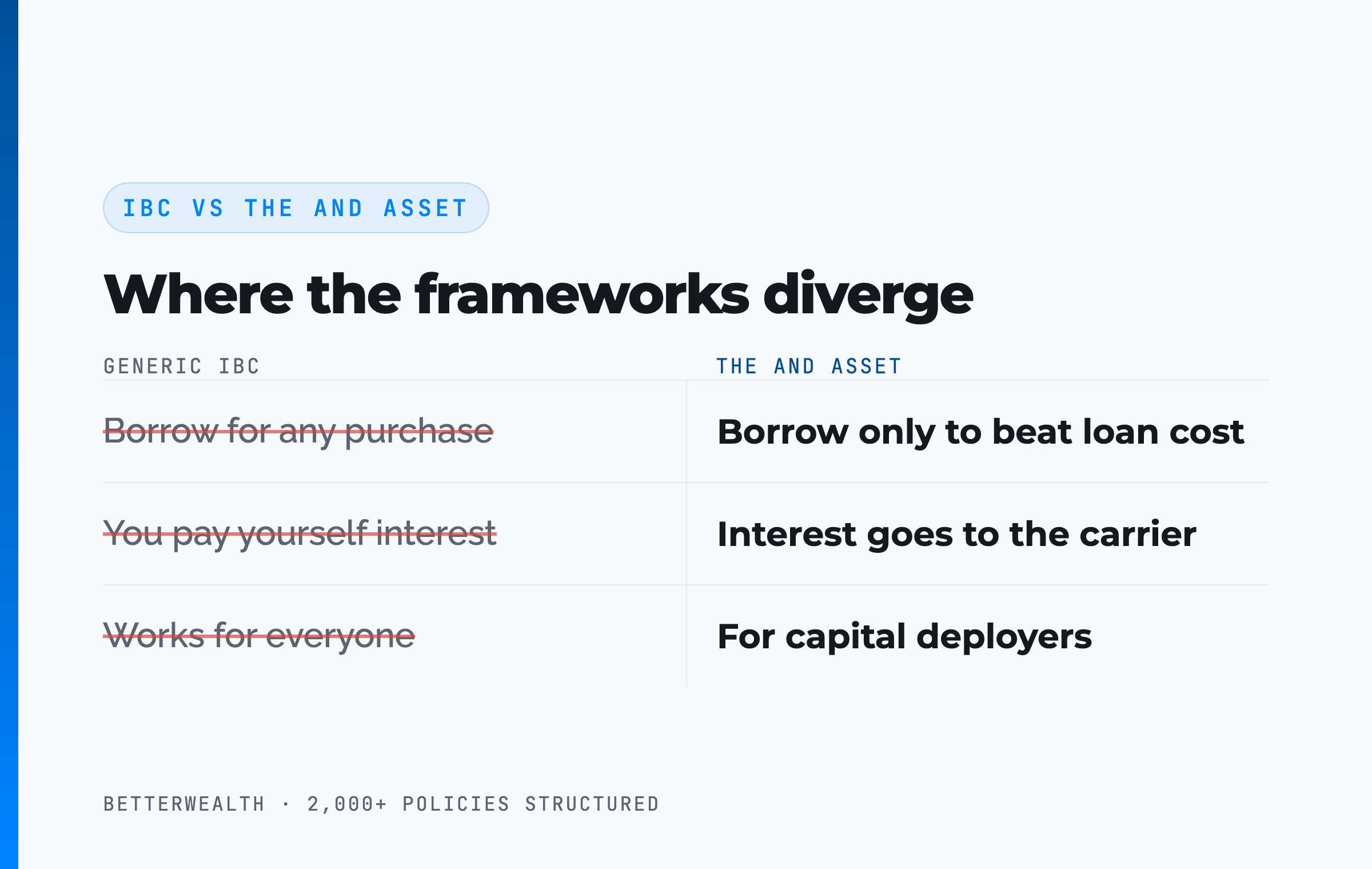
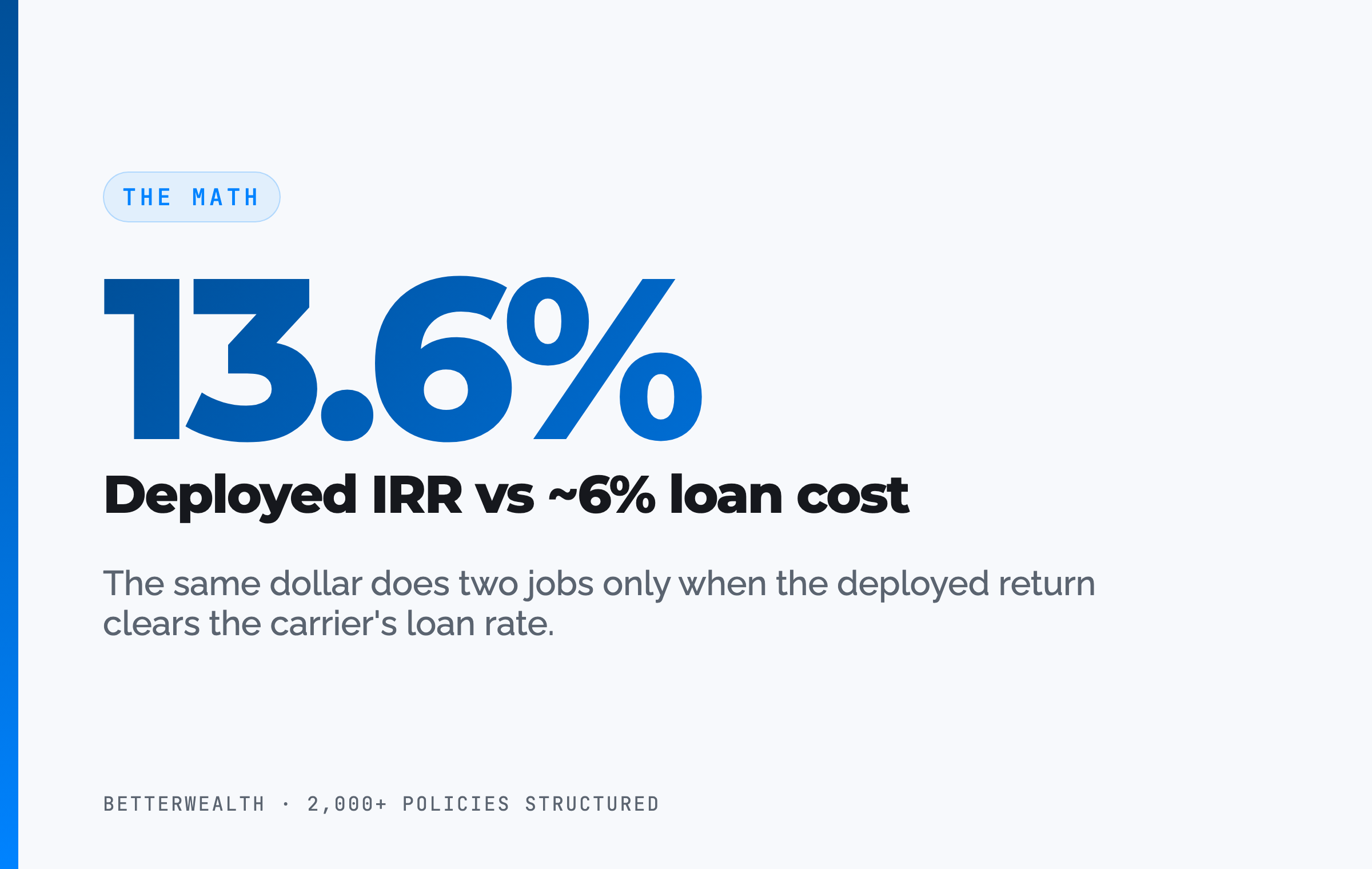
  • Using a third-party lender or line of credit improves loan repayment logistics and may provide tax-deductible interest for business use.
  • Although infinite banking isn’t a product but a concept, selecting the correct policy design is critical for success.
  • Infinite banking and life insurance offer unmatched tax advantages: tax-deferred growth, tax-free loans, and an income tax-free death benefit.

Resources

FAQ: Frequently Asked Questions

How much money should I start a whole life insurance policy with for infinite banking?

Starting with around $10,000 annually is recommended to ensure your policy builds enough cash value to borrow against effectively. Smaller amounts may grow too slowly to offer meaningful investment opportunities or borrowing power.

Is it too late to begin infinite banking if I’m over 50 or 60?

Absolutely not. At 57 years old or beyond, you can still benefit from whole life insurance’s tax-free growth and legacy benefits. While your death benefit might be smaller, policies can still improve your financial situation and help build a family legacy.

What is the difference between whole life insurance and indexed universal life insurance (IUL)?

Whole life insurance provides guaranteed growth, level costs, and no downside risk, making it ideal for infinite banking. IULs offer potentially higher returns but come with market risk and rising costs that can cause policies to lapse if not properly funded.

Can I deduct the interest I pay on loans taken from my life insurance cash value?

Interest paid on policy loans may be tax-deductible if the loan funds are used for business purposes and properly documented. Many advisors recommend using a third-party lender or line of credit for clearer tax treatment and easier repayment management.

Why do insurance companies allow policy loans at rates potentially lower than cash value returns?

Policy loans are a low-risk investment for insurance companies as unpaid loans are deducted from the death benefit. They invest collected premiums conservatively and can profit by lending money at reasonable rates while maintaining profitable operations.

Why do some people say infinite banking or whole life insurance is a scam?

Infinite banking is a concept, not a product, and is not a scam. Misunderstandings and poor policy design cause some to be skeptical. The key is working with knowledgeable specialists who design policies for high cash value and liquidity rather than just commissions.

How does whole life insurance protect against inflation concerns?

Whole life insurance growth is often slower than inflation in the short term, but it offers long-term tax advantages and guarantees that complement market investments. It’s best used in tandem with other assets, helping diversify wealth and provide liquidity in any market condition.

What are the key benefits of infinite banking for entrepreneurs?

Infinite banking gives entrepreneurs control over their money through cash value builds in whole life policies. It offers tax-free loans, a foundation for legacy planning, and the ability to fund investments or business opportunities without relying on traditional banks.

Want My Team’s Help?

If you’re a high-income earner or successful entrepreneur feeling frustrated with losing control, overpaying taxes, or locked into restrictive financial products, our team at BetterWealth can help. We specialize in estate planning, tax strategy, life insurance design, and retirement planning tailored to your goals. Click the Big Yellow Button to Book a Call and explore how to keep, protect, grow, and transfer your wealth the BetterWealth way.

Connect with Caleb Guilliams

Instagram | LinkedIn | BetterWealth Instagram

Below is the full transcript.

Full Transcript

Last year, I sat down with Devin Burr for an hour-long interview talking about everything you need to know about infinite banking. With nearly 40,000 people who have tuned in to watch the video so far, it's safe to say that the comments section blew up and the internet did what the internet does best. It gave its opinion. Some people asked sharp, thoughtful questions, curious about trust, tax strategy, and how to get access to their cash value fast. How much is a good amount to start a policy to get access to cash value quickly for investing? Others were far more skeptical and some were downright spicy. Devin lost all credibility when he said the 401ks are the worst thing you can do with your money. Dude's a hack. So in this follow-up interview, I didn't just bring Devin back to teach Infinite Banking 101. This time, we're going straight into the fire and responding to the good. The younger you are and the older you are, you put in the same amount, you're going to have a lower death benefit. He's skeptical. Would I do Infinite Banking if I had to pay 30%? or if I even could pay cash, I would say I would pay, and yes, even the ugly. Whole life is a scam, and infinite banking is a scam. The only people who believe in it and get rich from it are the ones selling it. I hate that word scam. I think it's so loosely thrown around. Let's dive in. All right, thanks to our producer. What he did was he put together all of the top comments from our last interview that we did together, and he ranked them in the good, the bad, the ugly. The good ones, I think, are very thoughtful. The bad ones are a little bit more critical. And then there's some ones attacking you and me hard, hard in the paint. And we'll address all of them, and we'll just see where this goes. So first question is, how much is a good amount to start a policy to get access to cash value quickly for investing? Gosh, that's tough. It depends on the person, I think. The more you put in, the more you can invest, obviously. The more you put in, the more cash value you have. So there's not much you can do investment-wise, in my opinion, under like $10,000. There just isn't many things you can do. And even if you could, you're not going to make that much money off of it. There's not a lot of money working. So I would say kind of a good starting point for most people is like $10,000 into a policy. You can do less. It's just going to be anemic. It's not going to grow much. And it's going to take a while to have enough cash value. What would you tell someone if someone came to you and said, okay, I can save $200 a month? Would you have them start a policy or what advice would you have? I would tell them to look at their budget, look at things that they're spending money on, and find places where they can save more. And it depends on the age, too. If someone's 18, 19 years old, yeah, let's start you a policy for $200 a month. That's plenty because you have such a long runway for that money to grow. but if they're in their 50s and they're saving 200 a month like a policy is just not right for them right now so i would say are you going to starbucks every day turns out that it comes out to about seven dollars a day on average people spend at starbucks wow so you figure if you're going seven days a week that's 50 bucks a week you're spending on starbucks do the math it's a good amount of money over a year that you could save just right there um what are you spending your your money on when you get close. Are you behind designer when you probably shouldn't? Things like that. Just look at where you spend money. Most people have no idea. What you track can be improved. So if you just sit down, I do this once a month, sit down, I look at everything I spent money on, on my credit cards, with my bank accounts. Where is money going? If too much is flowing towards that thing, I need to scale it back a little bit. Most people have no clue. That'd be first thing is just sit down, see where your money's going. and try to save more yeah two two categories track your spending ask the question are do you value what you're spending your money on that that alone will you'll find thousands and thousands of dollars on a yearly basis that you're unintentionally spending yeah the other area i would address is making is there an opportunity to make more money right we live in the united states of america if you're watching this and you live in america or canada lots of opportunity there's so much opportunity out there and i find that not everyone is maximizing that right so those are the two areas i would agree on the the ten thousand dollars as a as a minimum is our like unofficial minimum obviously if there's exceptions that we make people come especially if you're younger kids and all that but ten thousand dollars is like if if we can't save that on an on an annual basis my recommendation would be maybe whole life insurance is not it. place to start maybe we need to look at some other areas you'll get a better return on result looking at other areas starting a life insurance policy a permanent life insurance policy is not going to be the magic fix yeah all right next question Is it too late if I just turned 57? I feel sick over missing the boat. No, 57 is still young. I mean, in my opinion, 57 is still young. With modern technology and AI, I think people are going to start living a very, very, very long time unless AI becomes Terminator and starts killing us. But if that doesn't happen, I think we're all living a very long time. You can't get back. lost time, unfortunately, but I've got policies on both my parents, my in-laws, and their late 60s, early 70s. So you can still get a policy. It's just, here's the difference, really. The younger you are, if you put in X amount and the older you are, you put in the same amount, you're going to have a lower death benefit because the money has less time to grow. Younger you are, the bigger the death benefit. The cash value portion is basically the same. The only thing that's going to differ there is how much term has to be on the policy could affect how much cash value is liquid right away. But it's going to be pretty close. You put in 10 grand at 20 or 10 grand at 60. The policy is about the same, except the death benefit is much, much smaller in the older individual. So definitely not too late to start. Yeah, I look through the lens of optimization. And if you're 57, It's less of it is it working or not. It's more about what's your situation now and can we make it better. And in most cases, life insurance can make your situation better. Now, if you have no money to save, we go back to question number one. It's like we have bigger issues. But there are if you're 57, if you're in your 60s, and let's say you have millions of dollars invested, there could be a way for you to use life insurance and or annuities as a way to just Shift over some of your assets de-risk them and increase more income, right? So that's a strategy that we do all the time when people in their 50s and 60s Just from not looking at necessarily infinite banking, but looking at it from a income generating retirement planning scenario, and so no I mean we have I think our oldest client is almost 80 And dude, they're not necessarily getting life insurance because of the banking function, but they're getting it as a repositioning some assets say if we actually make the policy in that case scenario but then also the death benefit even an immac policy gets paid income tax free right so there's just some really cool and exciting things definitely not too late but our producer said that like multiple people asked this question in different different ways and so i would add i would add to it then it's like at that age if it's for infinite banking you want to look at it more than just like the banking function You want to look at it as like you're starting a legacy. So I have a client, my oldest client, she got her policy when she was 75. She's like two years in now, but she's been teaching it to her sons. Both sons are around my age. I think one's like 36, the other one's 41. So now she's teaching her kids how to do this concept. They've got policies now. What are they going to do? They're going to teach their kids. So now the family's just going to get wealthier and wealthier and wealthier because what's going to happen when she passes away? Death benefit's going to go to the family, and I've already told her this is what I do. Again, not financial advice, just what I do. Death benefits go to a family trust as the beneficiary. That trust buys more policies on other family members. They grow tax-free. Tax-free money going into a vehicle that doesn't get taxed. It's like, and then those people are going to die. So again, it's building a legacy more so at that age than just the banking function. When you're young, you got your entire life to use it as a banking vehicle. The older you are, you don't have as much time, but you're building a huge legacy for your family when you pass away. Good. Which brings us to the next question, which is, you just mentioned trust. I would love to learn more about how you guys structure your trust with your whole life insurance. Yeah. I'm not a trust attorney, so I would definitely reach out to one. I've got some resources if you guys want to use them. Basically, the way mine's set up, it's an irrevocable trust. I've got, and there's so many different trusts. That's why I say it's good to reach out to someone who knows these things inside and out. Mine's an irrevocable trust, and I have a succession plan. It's basically just a roadmap of how I want money spent when I'm gone. So part of that succession plan is when the death benefit goes to the trust, because the trust is the beneficiary, all that money's sitting in the trust bank account. The succession plan states policies have to be purchased with that money. But now policies get put on my wife if she's still alive. They put on my daughters, my grandkids, if I have them at that time. All those people will have policies that are built for high cash value. And they'll have basically just a pool of money they can borrow from as a family bank. They're going to pass away. Then more goes to the trust. The trust just keeps getting bigger and bigger and bigger. And because of the fact it's an irrevocable trust, things can't be taken out of it. So once it's there, it's there. It's set in stone. So the irrevocable nature is just... just like once you pass away it's almost going to guide like you're still alive how long did it take you to set that up i i we also know somebody that we can recommend to you who does like rockefeller style trust and what he says is all a ton of people come in wanting a rockefeller style trust there's a lot of work not from the trust set up but from like the how you how things will will get set up 50, 60, 70 years from now, how it will actually work. So a lot of people go in wanting a Rockefeller trust and then their takeaway is they have a similar but it's lesser. And I wonder if yours is similar to that, like where it's like, yeah, you're not like but I don't know how intense yours is. But it sounds like we both have worked with people that have that. For me, I probably have a step down at this point. I do have I use a trust mainly for estate planning purposes, but I have not done the work yet on what things are going to look like or how how I want life insurance being bought. And also that's that's work that I I'm calling myself out. I still need to do that. I have the basic estate planning deal set up. Yeah. But I've not done the work yet around like having an irrevocable trust determined that they're going to buy life insurance on the next generation. Because in theory, I get it. But there's a lot of steps that need to be in place. And who's going to be the trustee? How this works? Yeah. There's a lot that went into it. We spent a lot of time. How much money did you spend? Because it's not cheap to. Oh, yeah. It was very expensive. Give me a ballpark. It was, let's just say it was five figures. Okay. It was not cheap. Okay. So, but that's the thing is like not everyone needs that. Like a regular off-the-shelf truss, you can get one for a couple grand. Yep. You know? And it's protection against certain things. Truss layers of protection. And a succession plan is something you can add to it. I just think a succession plan is so important because it's just dictating how you want things done. And that could be even just something as little as you pass away. Let's say you get a million dollar death benefit and you and your spouse pass away at the same time. So now there's two million dollars. You can have the succession plan state that instead of your kids getting two million bucks right away, boom, they'll probably blow through it. They can have 10 percent. At 21 or whatever. At 25, they get a little more. At 35, they get a little more. So you can just have it be that basic terminology. It's just something that takes planning. It takes time and planning. But if you do that, I sleep so freaking well at night because I know, a shadow of doubt, anything happens to me, not only my wife and my daughters are taken care of, their kids are taken care of. Their kids' kids are taken care of. Hopefully, at some point, they're in the... burr mansion and there's a above the mantle of the fireplace there's a painting of mr burr grandpa burr we're here being they're they're drinking out of like crystal glasses just freaking super wealthy smoking cigars who knows right and they're like it's all because of grandpa burr powerful man that's powerful legacy that's all it is guys is takes a little planning but it's all about the legacy piece all right this next question let me know if we want to draw on this Maybe in part two, Mr. Burr can show how he structured ownership of his policies to get tax deductions for the loan repayments. I don't think there is no tax deductions. On the loan repayments. So you don't get a tax deduction going in, but I think you may have mentioned that paying back those loans, you could deduct the interest. I guess it depends on what the loan is for. Right. That's huge. Yeah. So if you just go use the policy loan for personal uses, there's no tax deductions there. What I tend to do, my policies are owned personally. So when I take a policy loan, it goes to my bank account. This is very important, guys. When I first learned this stuff, I thought the policy in my name, I could just have a policy loan go to my business bank account because that was my intention was to go use it for business. And the loan got denied. And I was like, it's a scam. I thought that loans don't get denied. If I have cash value, I get it. It's because I was trying to send money to a bank account that wasn't in my name personally. policies in my name loan has to go to a bank account in my name so once i learn that it goes to me personally which is a good thing because then i can now be the lender for my business so what i do is i create a note from me to my business the money goes to my bank account now i've got a note that i create chat gpt thank you i just pay the the business let's say 100 grand Now the note states, I have to pay back a certain amount. And since I'm the bank, I create the terms. So I generally do 15% with my business. So 15% will come back to me personally, goes back into my policy. That's my structure. And you write off, if it's used for business use, your CPA will let you write off the interest. Correct. Awesome. Just to be clear, money going into a policy, there's no deductions going in. But your money can grow tax-deferred, you can get it income tax-free getting out, and then the death benefit gets paid income tax-free. Now we're talking about loan repayments, and I'm going to answer this two different ways because there's a debate around this. There's many CPAs that say, okay, if you take a business loan, so if you take a loan, let's say at 5%, if you take a loan at 5%, and you're going to go invest this into some type of real estate, and you're repaying that loan, that this 5%, you can deduct it from your tax. Because that's actually like, that's the cost that the insurance company is paying. And so you can write that off of your taxes. And so that's what some people will say. Some people will say, well, you actually need a third party. A third party. lender to instead of the insurance company because they feel like the IRS won't appreciate that even though you're borrowing from the insurance company the IRS sees it as like you're borrowing from yourself and so they like a third party to say hey if you're going to want to deduct it use your your policies over here growing third party lender uses your cash value as collateral, they lend it out, let's say they lend it out at 6%, and now you... you're repaying that loan back at 6%. Well, that 6% is documented for business purposes. It's an actual bank loan, and you'll be able to write that off. What you're saying is you're actually creating a note charging 15% to you're just charging 15%, and then your CPA is writing that 15% off for business use. It's, it's, there's a little bit of a gray area because if this is coming back to me, the 15% on the note, it's going back to me now on the personal side. Yeah. Right. So there isn't a huge benefit to it doing it that way. I was doing that really, really heavy the first two years I was doing infinite banking. And because of that, he was like, it might make sense to do it some different ways. So it's funny you just touched on this because this is actually now what I do. I've got a cash value line of credit, and I do this because I've got 15 policies. Way easier. Oh, my gosh. Dude, when I had 15 policies, two policy loans here, seven over here, three here, four there. It's like repaying them was a logistic nightmare. Now they're all bundled together with a line of credit with the bank. I have a checkbook. I just write checks. I can wire. And now it's one place where all of it is just bundled. So now, yeah, if I borrow from this, it's that third party. when I'm paying back that. And it's funny, it's actually 6%. That's what it is. When I pay that back, that's an easy deduction off of the books. It's so funny you went over this because I was going to touch on this is what I actually do now. I just don't like to get into it too much because it just adds another layer into infinite banking where you have to remake a payment to the bank. Interest only. Right. Policies, you don't have to make a payment. Don't make a payment. It just comes off the death benefit. when you pass away. This, you have to make a payment. It's quarterly, but that's actually a good thing. That is a good thing. If you don't repay policy loans, it can have a negative effect. Insurance companies like this because it creates one more separation and there's fewer laps because it's harder to lapse a policy versus if you're max loaning directly from the insurance company. Yeah, it's flexible, but sometimes flexibility can hurt you. I do believe that this is a powerful strategy. If you're going to do this, I think it's... I think it's a no-brainer because the checkbook access, the ability to wire, it's a lot cleaner user experience as well. It's definitely worth. paying slightly extra and it's a lot cleaner from the irs standpoint if you are going to deduct the interest it's a lot cleaner every cpa will agree with that there are cpas that will be comfortable deducting from the insurance company uh loan directly but there's other people that swear that say that that you can't do that so there's a debate hopefully that makes sense but um if it's used for business purposes you obviously can't deduct it if it's for a personal decision so if if you're going to buy a personal car. Although Trump's new tax plan, I'm not sure how that works if you're taking a loan against your policy, maybe with the new personal car loans that you can based on the new big, beautiful bill. But historically, you weren't able to do that on personal stuff. Yeah. One thing to add to this, if you guys want to end up doing this where you're using the bank as a line of credit. It makes a ton of sense because if you have a policy and you're getting policy loans from the insurance company, insurance companies aren't in the business of lending money. That's not what they're in the business of. They're in the business of protecting lives and calculating risk and all that. So can you get policy loans? Yeah, but it's clunky. You go on their website. It takes forever. Policy loans take a few business days. Banks are in the business of lending money. When you take loans from that, it's quick. It's easy. That's what they do. They're not in the business of life insurance. So it is much, much smoother using those than using policy loans. Hands down. I agree. The user experience is much, much better and quicker access to money. And across the board, I agree. Getting a third party lender set up makes a ton of sense. Especially if you have multiple policies. And if you talk to third-party lenders, they'll lend against your stock portfolio, but they won't do it 95%. So they'll lend against your stock portfolio, but it's a lot lower from a standpoint. So if you have a million dollars in the index, they might do 60% or 70%. In cash value, they'll do 95% of your cash value. And then in IULs, some will do... lend against IULs, but they won't do nearly as much as whole life, which goes to show like that alone speaks volumes to what we're talking about when it comes to whole life versus IUL. Okay. Next question. Is it possible that your loan will accrue interest and can be more than your death benefit? No. Right. I'm trying to like play that out in my head. I don't think it ever could because there's the corridor in place where your cash value is. always substantially lower than your death benefit until you hit 121 years old. One person has ever lived that long in history. Yeah. Your loan will never be greater than your death benefit. You can get to a place where your loan can be greater than your cash value and then you're in trouble. If your loan equals your cash value and you have no room, then you have to make every single payment on time. And if you don't, then your policy could lapse. Just to be clear, lapsing a policy, if you have interest, then that interest would be taxable. But it's not like you get necessarily a bill from the insurance company. It's just like your policy is no longer. And so that's obviously worst-case scenario. But your cash value and or loan will never be greater than your death benefit. Okay, next question. And our producer's like, Caleb, I'd love for you to play devil's advocate on this. So let's see. Okay, what's the question? I've been looking at an IUL, properly structured, if that exists. How does it compare to whole life? I'm all in on the investment and compounding aspects. And then our producer would like me to play devil's advocate in favor of the IUL, depending on how harsh you get. Oh, so just so you guys have like a background story. anyone who hasn't followed me for a while, I got duped into two IULs before I knew about insurance. I got someone that was whining and dining me as an agent, literally sent me wine to my house, two bottles of wine from me and my wife. This was early 2020. We did two policies, one on me, one on her, for $18,000 a year. Zero cash value the first year, zero the second. By year three, we had like four grand. So that was not built well for infinite banking. Can they be built better? Yes. But what I don't like about an IUL is it's assuming positive growth every single year. That's what an IUL illustrates as. So it assumes, they'll assume 6%, 8%, whatever. It's assuming that's going to happen every single year with no down years. We all know markets do not just go up. They go down, they go up, they go down, they go up. If there's a down year and there's zero growth within an IUL, you're going to lose money, especially the older you are, because the cost of insurance continually rises. It's on a one-year renewable term insurance. So as you get older, you're more expensive to insure. If there's no growth and the costs are through the roof, how's it getting paid? Especially if you're practicing infinite banking and you've got a bunch of cash value out working for you, and you've got no cash value to cover the cost, you've got to inject more money into it just to keep it from lapsing. I do not think an IUL, this is just my honest opinion, should ever be used for infinite banking. I've had... So many agents tell me, you have no idea what you're talking about. You don't understand this. You don't understand that. I understand enough to know there's risk with an IUL. Banking should have no risk. Whole life has zero risk because it's guaranteed to do one thing. And that's just go up. Level cost never goes up. Compounding never stops. There's no risk in that. The older you get, the less, it's just more efficient. That's what should be used for infinite banking. Not an IUL. I don't think it ever should be. Whether it's properly structured or not, there's still risk involved. I agree with what you're saying. My devil's advocate take on this would be when we had a part two to our car discussion earlier, and I believe that might come out first. We talked about person A is saving their money. a savings account person b is doing life insurance person c is buying term and investing in the difference and then we assume that you cannot utilize that policy outside of where you're putting that money if you're looking at life insurance in that category and you're looking at whole life versus iul and you go with a properly structured iul i do think over 20 30 years if it's properly structured properly funded which is a big if and it's with the the right type of company, I do think the play, the IUL could. outperform a whole life, especially if all those things are equal. I would give it maybe a 1% higher over whole life from that standpoint. You're saying if you're not using it. You're not using it, just like the purpose is to park your money. So if someone's looking at it from a, this is a retirement supplement. I don't want to put my money in the market. I want to park my money. I don't want to lend against it. And I'm going to properly structure it. I trust the person I'm working with. There's a lot of ifs. I'm cool with IUL. There are people that I know that work in family offices. They're like, they're really, really understanding how these things work. They like IUL chassis because they can manipulate some of the death benefit. There's a lot more moving parts. And so there's aspects of that that can be attractive even from an estate planning purposes. The problem I have is now when we're talking about borrowing, now you're adding in more factors. Why would you want to, why would it be worth you increasing a little bit of, like, why would it make sense to increase a lot more moving pieces and potential risk? For what? To be your own bank? Like, it's, for me, why would I, if I'm trying to build a foundation, why would I want to build, like, a semi-weak foundation but give myself potential to get ahead? I want a solid foundation. That's what I see whole life. And so that's the pushback, is if we're using this as infinite banking, I just don't see the pro- purpose at all to try to play like that this can maybe outperform and you're adding a lot more factors and it's like my ability to build wealth is not going to be because i get one more percent in this thing maybe it's going to be because i'm utilizing the external returns and if i'm doing this how terrible would it be if this thing crumbled if my foundation crumbled that's that's like be trying to play play both sides but if i'm looking at this purely from uh i want to park my money into a place. I'm going to see where, you know, properly structured IULs very much could outperform whole life if they're structured well. The other problem I have is there's a lot of yahoos out there getting their insurance license in MLM setups, selling IULs. They're going to be in and out. There's no, they're not getting it. The policies aren't being properly structured. The companies aren't that great. No one's looking at this. These things are going to blow up in your face. and for those reasons, IUL gets a terrible rap because of those activities. If you're getting into an MLM setup, it's very, very rare to see MLMs use whole life. Why? Because IULs are way more sexy on paper. And so if you're going to try to sell someone a bill of goods, why not sell them something? And then... use arbitrage on top of that and just make it look even greater um but there's someone that we know that that that does this it looks really really good on paper and time will tell to see i think time is going to be on our side to be honest on it's going to how this is going to play out so that's like my situation around is iul is a scam no can iul be done well yes would i use it for infinite banking no for the reasons i mentioned and majority of iul is being sold incorrectly poorly and it's gonna blow up in their face, in the insurance company's face, in the client's face. And as a result, they're not if you really, really know what you're doing, you should be livid at the people out there selling IUL incorrectly because it makes it gives everyone a bad name, but it gives the people in the whole life space to say, like, hey, this is a problem. This is why we don't like it. I know I'm rambling, but that's kind of my take on the IUL conversation. Yep. Couldn't agree more. It should be looked at more of an investment. To your point, if you want to park money there and use it as a retirement vehicle, I think it's got its place. I really do. But I think you and I would rather just invest in the market than put it into a IUL. That's where it's like, why invest in something that has a lot more quote unquote fees and stuff? I agree. It's like, I think I will actually outperform putting my money in a brokerage account in the S&P and putting my money in an IUL with caps and cost of insurance and who knows what what else You know what's crazy? If you really think about what an IUL is, it's basically taking what the insurance company knows they could make. Let's say it's 4%. That's what they were going to pay as a guarantee, let's call it. They take that. Instead of using it, they put it into options, right? Yep. And if they can get the upside of, let's say, if it's 20%, and then they have a cap of 12, they pay 12 to your policy for cash value, they keep the other 8. So it's kind of just like a profit center. for the insurance company. But if it loses, they don't have to credit anything. They didn't really lose anything. They just took what they were going to pay anyways. If it is so good, if it's just this amazing vehicle, why wouldn't they take every last penny and do those call options? That's a great take. Because if it was so great, why don't the insurance companies do it themselves? Right. Insurance companies act as... whole life carriers even the iul ones when it comes to their money right right right partly that's because of regulations but partly it's they're they have to be in the game long term right and it's it's interesting it's like do what they do what they do not what they say yeah it's very that's i like i love that take all right next question and now we're getting into the skeptic so we we passed the good now now we're getting into uh we're waiting into the in into the uh More skeptic zone. Why would an insurance company lend you money at such a low rate without being able to borrow at less than your cash value earns? Infinite banking collapses. Okay, let me read that question. Why would an insurance company lend you money at such a low rate without being able to borrow at less than your cash value earns? Infinite banking collapses. Not sure I understand. I think what they're saying is, let's say infinite banking. earning six and they're lending to you at five. How is that going to work long-term? Yeah. The follow-up question that our producer wrote is why do insurance companies even allow policy loans? Question mark. What's in it for them and how do these rates actually get set? All right. So I think the question is why would an insurance company lend you money at such a low rate? And then, yeah, let's just talk about that. And then without... being able to borrow at less than your cash value earns, infinite banking collapses. We'll address that as well. So this could be a whole video in itself. Let's address that whole policy loan deal. Yeah. So policy loans are just one way an insurance company is profitable. Just one way. So when you pay premiums, when I pay premiums, when your neighbors do, it all goes into their general funds. There's billions of billions of dollars in here. And what they're going to do is they're going to invest the money. So they're going to buy a bunch of long-term treasury bonds. They're going to invest in steady eddy growth, things they know are going to do well over time. They're not putting money into Dogecoin, right, and hoping it goes to the moon. That's not what insurance companies do. They invest in things that are just steady eddy, 5% growth, 6%, 4%. So what's one steady eddy way they can make money? Without a doubt. For sure, zero risk for them is lending to you as a policyholder. Zero risk because you're going to pay that policy loan back with interest tomorrow. Or are you going to pay it back when you pass away? Because if you do not pay it, they just deduct it from the death benefit. There's zero risk for the insurance company lending to you as a policyholder. Absolutely zero. And again, that's just one way they make money. Another way they make money, IULs, Profit Center for the company, like I said. If it goes above the cap, they keep the difference. If it drops, they didn't lose anything. Also, term insurance. People pay term. It doesn't pay out more than I think one and a half percent of the time. Let's stay on the policy loan thing. And you make a really, really good point. Insurance companies are the only institution out there that can give a loan and not require you to have to pay it back. Right. Because they have a couple risks. They have interest rate risk. Then they also have mortality risk. You will you the death benefit is a liability on there. books. And so they are able to hedge both. And you said 100% will get their money back. So if they have all this money in a general fund, they're investing that money. And a policy loan is just another investment for them. Now, I will push back and say that there is some risk to policy loans. And the risk is cash flow. If 100% of their money was in policy loans and nobody repaid, insurance companies would have a cash flow issue. And but that's not even that's not even a problem. I mean, it's a fraction. We're talking like less than 10 percent, in most cases, less than 5 percent of the the general fund is in policy loan. So that's that's not that's not a problem. But you're totally right. Like from a liquidity standpoint, they are they're good because they're hedging both sides now. So that's that's why insurance companies will lend money. And it's important for you all to understand that because it's not just like a feature that they're tricked into doing. They're doing it because it makes sense for the business, but that's also why interest rates can vary because they don't want to lose money giving a loan because that would be unfair to everybody else. So the loans have to be beneficial to and you want it to be beneficial because you don't want the insurance company that's allowing this policy to begin with to be unprofitable. So that's the standpoint there. And the other nature is they want to give you a loan because that's just another benefit to putting money with them. And so even if they didn't want that feature, every insurance company will do it. There's some insurance companies that are not a big fan of policy loans, but they still give the ability to do policy loans. They just make it less attractive. Then the question is, does infinite banking fall apart if your cash value earns less than your policy loan? We actually talked about this on the other video. And the answer is, if all you cared about was... internal growth rate versus what you're paying, you could say that if you're paying greater than what you're earning, mathematically, it falls apart. What we talked about in the last video is all the other benefits that your life insurance policy gets. When you factor in all those other benefits, it far outweighs the cost of borrowing against. But let's just say, would I do infinite banking if my policy loan was 30%? Putting my money in, let's say I'm earning... 5% with all the other benefits, I say that my policy is earning me, let's say a value of 9%, but it costs me 30% to lend against. I wouldn't do it. There's nothing magical about this. Unless you can take it and go make 35, 40. Yes, sure. Yes. You're right. And assuming that I wouldn't be able to get cheaper money, but you're right. So you're totally right. I'm really glad that you pushed back on that. But would I do infinite banking if I had to pay 30% if I could get money cheaper or if I even could pay cash? I would say I would pay cash in that scenario versus pay 30%. I would rather forego earning 9% value versus paying 30% if that makes sense. The reason why we don't do that is life insurance gives us a net benefit. versus our control costs. That's the point I'm making. And so just because you're not getting the cash on cash arbitrage doesn't mean there's not value arbitrage long-term. Anything that you want to add to that? It's funny because infinite banking is not a policy. It's not a product. It's a concept. So to the point of if a policy loan is 30%, would you not do infinite banking if you could go get a loan from a bank at 5%. Well, if you took that loan at 5% and you went and paid off a 10% loan, recaptured the money into paying that 5% loan back. You're doing infinite banking. You're just using the bank instead of a policy. Right. So you're still doing it. The only reason, to your point as well, that we do infinite banking is because of all of the other benefits. Yes. That's it. In life insurance. That's why life insurance. That's why it's the best view. I'm going to probably have someone on that's going to talk about why putting money in bonds and lending against bonds is better than life insurance. And it will be a fascinating conversation. And I bet you... the cash standpoint, he'll be slightly ahead. But I also bet you that there's other things in life insurance that are not being valued in. And I'm fascinated to have the conversation, but that's going to be like, you don't, there's a lot of different ways that you can do this. And it's, that's why the more I learn about this, the more I want to be, I want people to understand the power of life insurance, because if people don't value life insurance, it's, it's a, you could ask the question, like, why, why is it even worth it? Yeah. I made a video about that. Cause everyone kept asking me like, well, It was people that were out of the country. Can I do this in Spain? Can I do this in, I'm like, you can't use a policy for it, but you can do it. So then I made a video of like practicing infinite banking with a line of credit from the bank, practicing it out of a high yield savings account, practicing it from whatever. You can practice the concept with a lot of different things. It just happens to be a properly structured whole life is just the best vehicle. That's it. All right, next question. What I can't wrap my head around is the growth rate. Whole life grows slower than inflation. So what's the point? What am I missing? Most people have no idea where to start or how to really evaluate whole life insurance. That's why we've built The Vault. It's all of our best life insurance resources and educational tools all in one place, all for free. We have calculators, handbooks, crash course, deep dive videos on numbers. If you wanna learn more, click the link. in the description or tag comment below to unlock the vault. All right, back to the video. If you're just looking at the internal rate of return at three to 5%, it's the only thing that you care about. You're not factoring in taxable equivalent. You're not tacking in all the other benefits. Then, and you believe inflation is greater than four or 5%, you have a point. And my question would be, what's the alternative? You're going to then invest your money in the market. And that's great. It's an investment versus savings. I feel like that question is not answering the whole inflation deal. It's like, okay, if I have control over my money, I can put my money in Bitcoin if I wanted, if I do this. So I can put my money in the whole life, and I can also put my money into Bitcoin. So it's like if rate of return is something that you're like, I want to get a better rate of return because of X, Y, and Z, great, go do that. You can actually do both. And over time... what Devin and I would say is over time, you will be better off having the insurance and the activity versus just having the activity. That's from a planning standpoint, I'd rather have insurance, even if there's a cost of borrowing, I'd rather have the insurance with the cost of borrowing and that activity than just having that activity. Yeah. Cause life insurance is an asset. I mean, it is, it's an asset that appreciates it's guaranteed to happen. Um, it's an and asset. This guy might've wrote a book about that, but yeah, it's an and asset. Like you do this and you can go do this at the same time. So if you're worried about the rate of return, yeah, do this. You're going to get all the benefits from it, borrow against it and go put money into gold, go put money into Bitcoin, go put money into your own business. You know, as well as anybody, your greatest rate of return is putting money into your own business. Nine times out of 10. So if you have your own business, if you just take cash value and funnel it into your business to go grow your business, you're going to get the biggest IRR there. So if that's all you're worried about, you're doing both. You're not doing one or the other. That's good. It's an and. I love it. I love it even more. Borrowing your own money with interest. That's like your bank charging you to use your own checking account. They do actually charge you to use your own checking account, which is funny. There's so many fees and stuff. Let's say you could save your money in a high yield savings account and not have any fees and get 3%. Yeah. So that's just not understanding the workings of a policy. You're not borrowing your money. You're using your money as collateral and then you're borrowing against it. It's no different than buying a house. The house is the collateral to get a loan from the bank. That's not your money in the house. That's the bank's money. The house is just the collateral in case you miss payments to the bank. So that's all your cash value is. It's the collateral to get a loan from the insurance company. You're using their money. You're not using yours. And this is, I'm looking at James right now as I'm saying this. This is why we need to do a better job sharing the benefits of insurance. All the benefits. We're actually working on some things behind the scenes to help people understand the benefits of life insurance because infinite banking, you said, can be done lots of different ways. And if someone doesn't value life insurance and they look at this. They for sure can pick it apart and probably find more efficient ways to arbitrage their money. But life insurance from a planning tool is such an attractive asset. And you're telling me I get this attractive asset and I get the ability to use my capital. Totally different than I have to, like, this is a drag on everything. And so it all comes down, all these three questions come down to better understanding life insurance. And after better understanding life insurance, if you still don't want to do it, don't do it. Like, don't do it. if you understand the value of life insurance not just from a protection aspect but from a planning aspect it should click for you and you almost the people that really get that get it they're like how in the world do insurance companies even pull this off yeah they're not complaining they're like how how in the world do insurance companies give me all these benefits and pay out that death benefit at the end of the day all right number 10 never lose money question mark I put in $95,000 over five years and my cash value is $63,000. It seems like I lost $32,000. Not accurate because if you passed away, guess what happens? Death benefit gets paid. So guys, when there's a gap in liquidity, like if you put in $100,000 and you got access to $70,000, you didn't lose $30,000. Your death benefit is getting paid for. That's the base premium that's paying for your big old death benefit. That's why base does not create cash value early. The insurance company has to be able to use that to go invest in order to make money. If they can lend to you at five, but they can go and invest and make eight, it makes sense for them to go make eight, right? So you didn't lose money. You just lost control of it for a little bit of time, which how long was it? It said over five years. Over five years. So 95% of Americans think the greatest thing since sliced bread is putting money into a 401k. giving up total control until they're 59 and a half. Get a job at 18, you start putting away for 40 years, losing control of it. You can use 50 grand or 50%, whichever is the lesser. That's insane. This is five years and you've lost a little bit of control. You haven't lost money. You've just lost control of it. That's it. Two things I would look at this is, yeah, this is the downside of life insurance. It's the first couple of years. You don't have all the money that you put in. It's your... as nelson would say it's like you're starting a business what businesses do you know that are profitable year one some some are um but very few very few and it's it's not like you need to think long term when you're when you're doing that so you're building the foundation i like the i like the example of a foundation because you don't necessarily see it it's not sexy right you're building foundation to be able to build other things on and but yeah you definitely it's they make a good point. And if you cancel the policy... You do. You would lose. Yeah. And so that's that's valid. And so that's why this is not a short term deal. It's not a quick get quick rich. It's get poor rich or it's get poor fast. If you put all your money and then cancel your policies like that's not great. And so you do need to be thinking long term. But you're totally right. There's other accounts out there that you might think you have access to all that money. But if you wanted to access it, there's fees, there's taxes. And so. your money in a 401k or in an ira it's not all there it's you you might see a balance and it might make you feel good but it's not if you try to get all that money you wouldn't it would be less as well a lot less a lot less so it's it that's that's that and the last thing i would say is it looks like the the policy that you're referencing we may want to just even take a a look at and see if it's efficient because five years to still have that big of an arbitrage tells me that the policy may have an opportunity to be designed better yeah that's just a point that i want to make but yeah those are those are good questions here all right you're ready for the ugly oh here we go good the skeptical and then the ugly okay devin lost all credibility when he said the 401ks are the worst thing you can do with dudes a hack i had to ask what does that even mean that dude's a hack and i I was told that it's that you're not that intelligent. So that's a welcome to the den. Oh, gosh. Well, guys, I just said it before. 95% of people do 401ks, think they're great. 95% of people are broke. Probably more, right? So if everyone's doing it and everyone's broke, is it good? Probably not. But like to my point before, you're locking money up. This is the biggest thing I do not like about 401ks is you're handcuffing the money. If an opportunity comes up where you can go make an amazing return that's backed by a lean position and has protection and everything. But you can't get access to your money because you can only get 50 grand out of your 401k. You can't do that investment. That's the biggest thing I don't like about it. Second thing is you're deferring taxes. So you're not paying taxes now when you know what they're going to be. You don't know what the tax rate is going to be in the future. It will probably be higher. Just a fact of the matter. You're not paying taxes on the seed to pay taxes on the harvest. That doesn't make sense. You're getting taxed at... earned income rates when you use it, even though the money is in the market. So you should be getting taxed at long-term capital gains rates, which is around 20%, I believe. Instead, you pay earned income tax. So you're paying more, most likely at a higher bracket, losing total control of your money when it's worth the most because of inflation, to have access to it later when it's worth less. Oh, and by the way, you don't own it. It's not your money. Right. If you are employed in the employer owns that plan and then you don't have access to money. So the money is out in Wall Street. Yeah. To be fair, in a lot of a lot of 401k plans, you can access that money through through some type of loans. It's not easy in some cases. You don't have a ton of control, but there you potentially could access that. And if you do get fired or leave that work, you can you the portion your portion is still somewhat available to roll into another. Yeah. So you can use a loan 50 grand or 50%, whichever is a lesser. So it's not a lot, right? There's different things. I think if you're over 55, you can get more. I forget the rule with that. It's, it's right. It's government sponsored. And so it's at the mercy of whatever the government wants and you're, you're in bed with them. Right. Let me ask you this for an entrepreneur, for an entrepreneur type, someone's like, I'd identify as an entrepreneur. Would. Obviously, above the match, you would be an absolute no. There's no need to put money in a 401k. Do you think that if they're still working in a place that they're getting a match, would you recommend putting money up into the match? I don't think so. As an entrepreneur? I don't think so. Okay. As a non-entrepreneur, someone who's non-entrepreneurial, they're working, their goal is to continue to make money, save and invest, but they're not going to go. the path, they may not look at opportunities the same way. Would you recommend that person at least take advantage of the match? This is tough because if they have no inclination to study and become efficient at looking at investments, then yeah, like go do the match. It's free money, so to speak, that's going to be invested for you. But I can tell you guys right now, you can do two things with your time. you can educate yourself or entertain yourself. The only two things you can do. Most people spend all their time entertaining themselves. They do not spend time educating themselves. If you go spend your time educating yourself, becoming more valuable, you can go make a heck of a lot more with your money than a little measly match. Because that match, again, is tied up until inflation is deroded the dollar, or eroded the dollar, right? I think I'm saying that right. But it's basically devalued the dollar so much by the time you're 60 that even if you got the match, it's not worth much. So you'd be better off spending time to really, really become more valuable on how to invest so you can take that portion you were going to put in a match and go make way more because now you have control. Control is the biggest factor I like. Yeah, I agree with you on the 401ks aspect. I would, if someone's not an entrepreneur, I would tell them to put money up, take advantage of the match because it is, it still is 100% on that, those dollars in that year. I agree that it's still deferring. Everything that you mentioned is still valid, but I would be, I would want to go on record to take advantage of the match. If you're an entrepreneur, it all depends on where you are in your journey. I think there's a lot of entrepreneurial type of people that should take advantage of the match, but there's some people that shouldn't and it just depends on their situation and it all is very personal. And I am with you on the 401k. There's many people that come to us that have money and they're frustrated because they want to do X, Y, and Z and they can't. That's a really frustrating aspect. And so I think putting money above the match in both scenarios, I would say there's better places. At least put that in a place that you have more control of and maybe have more transparency of the fees. Because historically... 401ks have higher fees than if you were to invest it yourself. Like a self-directed? Self-directed. But then again, like you have to, even like a traditional IRA or Roth IRA. I mean, I'm a big, big fan of Roths. And if you can take advantage of the Roth, I would do that. Do those scenarios before putting your money above the match into a 401k where you may have less control of where it's invested, less control of the fees. and more more um your hands are going to be tied more yeah um i would definitely do a roth personally if you're going to do anything that's but there's a lot more on a's out there that's what i'm saying if i was going to do a 401k it'd be a roth yeah because you want to pay taxes now yeah you want to pay them now not pay them later because again the tax code came around in 1913 i I believe. And the top tax bracket at that point was like 8%. It's over 40 now once you add everything in. So taxes do not go down. Traditionally, they go up. And from a planning standpoint, there's a premium that we have to put on unknown in a bad way. And so if I don't know what something's going to be in the future, that's an extra risk into a planning. And so from a planning standpoint, if I can take advantage of things that I know today, like today's tax rates, that takes another unknown off the table. I know people that believe that they'll just take our money from Roth IRAs. Like Nelson Nash in his book talks about like the government creates a problem like taxation, and then they give you a solution to the problem. Don't you feel a little bit suspicious? Yeah. I also think that's an aspect that we need to have in the back of our head. So anytime you partner with the government, just know that diversify your aspects of that, and I wouldn't want all my money in one sponsored plan. 100%. You have to ask yourself, from a control standpoint, who really does control that money? And if someone in Congress, some crazy person that becomes president in the future can change the rules on you, that can be frustrating because they hate rich people. And what if the narrative is you have half a million dollars is rich? It's a scary, scary thing. Okay, next question. Whole life is a scam, and infinite banking is a scam. The only people who believe in it and get rich from it are the ones selling it. I hate that word scam. I think it's so loosely thrown around. Yeah. What is the definition of a scam? What's the definition of a scam? Scam is generally defined as a dishonest scheme or fraudulent plan intended to cheat someone out of money, property, or personal information. So it's not a scam whatsoever. Like if you really stop and think about what infinite banking is, it's a concept. It's not a product. It's a... It's a concept of how to move money. Just most of the time, you're using life insurance. Yeah, so I don't think anyone would say saving your money, paying for things, paying yourself back is a scam. I think what they're addressing is the selling insurance. Right. Well, that's why I wanted to Using infinite banking, selling insurance. I think that's the crux. And then their whole is like the only people that like infinite banking or get rich off of it are the people selling insurance. That's why I wanted to clarify it because everyone thinks like infinite banking is life insurance. Life insurance is infinite banking. They're two separate things. Life insurance is just the best vehicle to practice infinite banking with. And I would totally disagree that it's only the people selling it because when I learned this concept, it was 2020, summer of 2020. I had four policies by the end of that year. And I was using them for all my real estate investing. I was using them to my cars, which... you don't agree with but i love cars um i was using the concept so much that i was geeking out on your content on chris kirkpatrick's on chris nogles i was watching everybody and just like just studying it i said before you have two things you can do with your time educate or entertain i tend to lean more towards educating myself so i was just going down rabbit holes learning all i could dude it was the greatest thing since sliced bread so i'm telling people And as I tell people, they're asking questions. Oh, how would that work? How would this work? And I'm just literally teaching them the concept. Eventually it got to the point where people were like, dude, how about. Like, how do I do it? So I'm like, yeah, go over to Chris Nagel. I was sending people to him like left and right. And then it hits me like a week later. I'm like, I'm just sending him free business. I'm the one that's selling it by teaching the concept. Why don't I just be the one that sets up the policy? So guys, I don't agree with that at all. Like before I was ever an agent, I was screaming this from the mountaintops because I saw how powerful it was in my life. So it's an amazing tool if you used correctly. that agents that are selling it generally are the ones that if it's the right agent, they're using it in their own life, right? I use it. I've got 15 policies. I think you have eight, nine policies? Not quite, but I have plenty of policies. I'm thinking of Chris. Chris has nine. But you have policies. You use them in your life. You're not just selling it. Anyone who's ever got on a call with me or someone on my team can attest that we don't sell policies. We just teach a concept. And if you understand the concept, you want to do the policy to use the concept. So we just teach, teach, teach, teach, teach. And eventually, mostly every call, the way it ends is, oh, this is amazing. Like, how do I do it? I'm glad you asked. Here's how you do it. Yeah, I think the comment makes a good point because like in anything, there's half-truths and lots of things. And there's for sure people out there that sell things, including insurance. And they're the main beneficiaries of this, even in the way that you structure policies. And there's a lot of different ways that you can structure policies. And the incentive is to potentially structure a policy that gives the client worse off. Now, I don't actually believe that's good long term because there's this thing called the Internet. And, you know, you want your clients to be happy long term. But all that to say, like, I can understand where this rap happens. And all I would say is, like, we've interviewed people on this channel on. on our other channel the and asset channel and we interview people all the time that are in agents that talk about this we have um lots of reviews we have i'll just say this we intentionally bring on other people that aren't in the space to talk about their experience because i um i think this is funny because what you're essentially saying is you're calling all of our clients and anyone that does permanent life insurance that's not an agent what are you calling them are you calling them an idiot and you know some pretty smart people so i we have some really smart people as clients we have people that um you could put you could put on the billionaire status from a standpoint of like we've we've had people at that level reach out to our company and talk about insurance and you know are they are they idiots well i don't know probably not so i i think it's at the end of the day these comments hold some water because because there's truth in it. anything that you mentioned like there's half truths in a lot of statements you make but overall um i think our you know what i love about you and i think probably why you have such a good following on youtube and people engage with you a lot is because the first thing you said was you know there's actually some truth behind this you always see things from a lens of not just like no this is what it is but like you try to always see the other part of it the other person's perspective. You know what I mean? Yeah. I think that's why I like you as an individual. That's why I like having these conversations because it's not always just I say something, you're like, yeah, you're right. It's like, no, no, how about this? And then it opens me up to seeing things differently too. So I really appreciate that about you because you're saying, yeah, there's some half-truths here. Now that you said it, I'm like, yeah, there actually is. There's some people out there that are selling this just to actually get the commission. That's the wrong person to do business with. And. The easiest way to tell is how liquid your policy is. If it's super, super illiquid and you're trying to do infinite banking, they're setting it up to have a big old commission check. If it's really, really liquid, their commission check's a lot smaller. I've learned a lot by reading comments, and I try to read it through a lens of humility because we're here to learn. And I also think we lose a lot of credibility if we're constantly attacking. I really appreciate people that can seek first to understand. And we've adjusted things in how we talk. And I've gotten better because I read the comments. So I appreciate you mentioning that. Yeah, I see it. So I'm sure other people do. And I appreciate that about you. Thank you, man. Last comment. This one's a hot take. This one's going to hit differently. Loaning out against your cash value at 15% while you say you're a Christian is crazy. They're referencing the interview that we had. And you mentioned you were a Christian and you also mentioned that. Loan out your cash value to other people at 15%. I guess I'd want more context to that, what they're meaning by it. Like how is that crazy? Take out infinite banking for right now and just say loaning out 15%. Does that make you a payday lender? There's some religion out there. Being dishonest. Yeah, there's some religions out there that would say that lending money, period, is a form of usury. And you're making money as a result of enslaving other people. And I think where they're drawing the line, I don't think that this person would comment if you were lending at 6% because in their mind, they would be more fair. But they're saying the fact that you're lending out at 15% and calling yourself a Christian is a hypocritical. I'm reading between the lines, but I would say that they're calling you a hypocrite in that activity. That's wild. Because I mean, if I was lending to someone at 15% is like a payday loan, I would probably agree. probably wouldn't be doing the right thing. I wouldn't stand behind that. So to clarify, anyone who's seen that interview between Caleb and I, and maybe I didn't get into much detail of what I was doing, if I'm lending at 15%, it's because that investor is taking that money and making a heck of a lot more than 15%. Otherwise, they wouldn't borrow from me. Why would they? It's the same. I'm assuming this is in bridge loans for real estate. Yeah. So why don't you explain that? So basically the way that works, guys, is If someone needs to close on a loan and they don't have capital to close right away, I can come to the table with X amount of dollars. They'll pay me to get that loan closed because they know they're going to go be able to make 40, 50, 60% rate of return on that investment. They just don't have all the funds to close at the closing table. So if I come in, they pay me 15. Like, ask you, would you pay me 15% to go make 60? Of course. All day long, right? I would pay someone 15 to go make 25. I would do that. So yeah, there needs to be context, I guess, behind our conversation is why I'm lending 15%. It's not lending to someone because they can't pay their bills. So I'm lending them at 15%, putting them in slavery. It's I'm lending to investors to go make more than 15%. And they'll pay it all day long because they know they can go make- And they're choosing. It's not like you're forcing them to take your- your money like they're the beautiful thing about capitalism is they're accepting that right and there's risk in everything there's risk to you not getting your money back i know you're structuring them in a way that it's pretty solid right but there's risk of it being delayed and that's that that's why that's at 15 and i would even say is if someone's paying 30 credit card debt and they had the ability to to refinance at 15 are they getting taken advantage of no They they you cut their interest rate in half. I'm not I'm not in donning their activity, their their behavior that got them there to begin with. But it's there's there's there's that aspect of it. But you're investing to two entrepreneurs that if they weren't able to get that money, they would even get a higher interest or not be able to take advantage of that deal. Right. So you can criticize the whole system. But I do have a problem with someone saying that. the fact that you're making 15% and calling yourself a Christian is crazy, but they're the same people that are okay putting money in the stock market, which the stock market's essentially a way to create liquidity for people to make killing. And yeah, I mean, if we want to go down the Christian rabbit hole, it's like, why are we investing in companies that hate our values? And there's actually, I think that's a way stronger talking point than lending your money out. at 15% to people that are wanting that money. But I would also say, and I think you and I would both agree, that we wouldn't just find someone who wants to buy a dumb purchase and say, oh, I'll give you the money for 15% and try to take advantage of them. I don't want anything to do with that. I'm sure you don't want anything to do with that. And I do want to acknowledge that if you're literally trying to say, oh, payday lending is a really, I'm going to take advantage of people that can't. that have no self-control and give them money, then you are part of the issue. You are part of the issue. But we still live in a free country that, like, yeah, I don't know. I really struggle with the whole, you know, people going after banks and credit card companies and all, and I get it, but I also am, like, supply and demand. Supply and demand. And it's, like, it's so easy to look through the lens of... victimhood and say like they gate like blame it on the banks and all and it's like okay And I just think you're a miserable human being if you're always looking to blame other people for the situation that you're in. But I also can acknowledge that there does need to be reform in some areas. And I think paying 30% credit card debt really makes me sad because that person will never be able to get out of it. And sometimes it's when they made decisions when they're young and they're paying for it the rest of their life. Well, a lot of it is the system is made to keep them there. Right. The system that that's not me. That's the system, right? I can be a Christian and still want to set myself up financially by lending to someone at 15%. That's going to go make a heck of a lot more. Could I go do the exact investment they're doing? Yeah. But it's going to be more risk. That's why they're getting the bigger upside. I don't want that risk. I want to be able to spend more time with my kids, my wife. I want to be able to be more passive. How do you do that? You lend money. Have your money work for you. That has nothing to do with my religion. It has nothing to do with my beliefs. The system is the problem. I'm not the problem making 15% helping someone else go make more. Right. You know? Devin, is there anything else you want to talk about? Any other hot takes? Any questions you have for me? As we wrap this up, these are all the questions that our producer gave us. Here's a hot take. Everyone's been thinking it. Why'd you decide to grow the beard? Oh, man. I mean, this is years in the making. You've had it for a couple years now, right? It started because of just kind of like a joke. I'm like, I'm going to see if I can grow some type of facial hair because I thought like I'm not like it wouldn't look that good. And it actually didn't look terrible. So I was like, okay. Like there's I mean there's still some areas that need to grow in. But then it's like so much easier to maintain. Oh, my gosh. So much easier. So from a time standpoint, I'm like, okay, if it doesn't look worse. I didn't do it at all to make me look older. That's what a lot of people are like. You need to wear a suit and tie and all that. You need to wear glasses. You need to put gray in your hair to look older. Could care less. Did you really get the gray? No, no. That's what people are telling me that you need to do. And I'm like, I'm not, that's dumb. I'm not going to do that. And, and so not wearing, I don't have a beard because I look older. I doing it because I don't look terrible and it's a lot easier and I value time. Yeah. So I save more time and Some people would even say I look better with a beard, but it's definitely neutral. And, and now it's kind of like, that's what I, that's what I know. And so that is, that goes to, to answer your question. I wish there was like a more philosophical framework, but that's. I love the question. I love it. Cause that's the answer. I couldn't agree more, man. Like I've been, I've had this for probably 15 years and all I do is I just trim this up right here, trim this up, done. It's so easy. It saves so much time. I guarantee you this. You've had this for now, what, two years? Two or three years. You cut it off, people are going to be like, dude, you look freaking weird. Grow the beard back. Because I cut mine off just with clippers. Didn't shave, but all the way down. And my wife was like, I don't like it. Grow it back. How many years ago is this? It was right before our daughter was born. I was going to say, it would be interesting to do it with your daughter and see if she freaks out. You've seen the videos. Oh, dear. where kids will like freak out when they're, you didn't see me when I had the beard, right? No. So this was a few months ago. I cut it off down to like, this is what it normally is, but I had it down to, it was a nice size beard. Um, and that's kind of all she knew for a while was that beard. She'd yank on it sometimes, which was kind of sucks, but dude, so easy to take care of that. Cause there was no cutting under here. Even it was just every few days, like cut the flyaways. And it just started growing down, right? Wifey hated it. She's like, you need to cut that tomorrow or we're getting divorced kind of thing. Wow. She was joking, but she just didn't like the beard. So I cut it off. And then my daughter came around the corner and saw me. And she was kind of looking at me kind of weird. But I still had like this. So it wasn't like fully shaved. If I was fully shaved, she probably wouldn't know who the hell I was. I love it. I love it. What else? Anything else? I know we've been jamming for a while. Um, what's in store for, for you and better wealth over the next couple of years? That's, that's actually a question I think Matt Love asked me. And it's funny cause you're going, you're going to see him later. Yeah. The goal for better wealth is to be the one-stop shop for entrepreneurs. Like I, I want to be the place that people come and have all their financial needs taken care of. Our vision as a company is to make intentional living the new wealth standard. So you're not wealthy if you're not living intentionally. That's, those are like the The vision is to make intentional living the standard, and the way that we're going to accomplish that is to help the value creators, the entrepreneurs, help them be efficient and optimize their financial life. We're leaning into life insurance right now because it's the most misunderstood asset out there, in my opinion. And I believe it's the most powerful asset for it being so misunderstood. So I believe there's arbitrage from the misunderstanding to the value that it provides. And I believe understanding that as an entrepreneur, we can lean in and say, this thing can not just help protect value creators, but can help them show up more powerfully and give them. give their dollars more jobs and as a result help them create more value as a result help them live more intentionally view so we're going to be leaning into life insurance in addition to helping people pay less in taxes and do estate planning and do some other aspects that i'm excited about but life insurance is going to be our core because that is the thing that's the most misunderstood and the most valid the most value we can give is really getting that right but i'm going to be happy to see. people live more intentionally and to be able to um live live life on what matters most like i i've been like really challenging myself like how do i identify or how do i how would i explain intentional living and it's and it's living your life to what in a way that matters most to you or it's investing your time your talents your resources into what you value most those are like the working definitions that i have and And that really fires me up because life insurance at the core, the reason I like it so much is I do believe it's the key that unlocks intentional living for so many people. And if I believe that, we're nowhere near where we need to be with that being the mission. And we've made a small, it's like a little drop in the ocean. I want to change that. I would love 10, 15, 20 years from now. people know exactly what Better Wealth is, what we stand for, and that we use strategies and products like life insurance that unlocks more efficiency and better living. How much do you mold Better Wealth after just your personal life? Because when I hear you say intentional living, I think of how you live, right? I think any type of business, especially if it's founder-led, is an extension of the founder and their values. And if it wasn't, you would see major disalignment. If I'm trying to live this way but Better Wealth was not a reflection of that, I would feel not in alignment. And there's elements where there have been that unalignment. It's like you're trying your best, but anytime you're running a business, there's challenges. There's things that come up. You have to make sure to not take hate comments too seriously because it's like they're attacking Better Wealth, but that's a function of me. And so, yeah, I'm very much. Better wealth needs to mirror my values for sure, but it's more than just me because better wealth is made up of more than just me. And it's made up of clients. I mean, we have over $2 billion of death benefit already insured for people, which is so cool. Just to think like even if everything went away, we did that little ripple that I mentioned is more than just a small little ripple. Like it's pretty powerful, and yet we're just getting started. So yeah, I'm a fan of businesses should be leveraged. for your values in life and what i mean by that is if i if i care about certain things business should just help amplify the things that we care about and if it doesn't then i would say that you're probably in a business that you should get out of because you have one life that's for those of you that watch most of my videos i have the one life behind me and it's just a constant reminder that life is super short spend it on the things that matter most to you I feel like we're on my podcast right now. Last few minutes. I'm asking you the questions. It's fun. I think the seats were about the same. Are these the same chairs? I mean, I very much couldn't have been. It's a similar vibe, dude. Very similar. Well, dude, it has been a pleasure being here in Nashville, Tennessee. I feel like I should have worn a cowboy hat. Maybe. Maybe some Wranglers. Yeah. Who was it that was giving me hell about it? It was my in-laws. They were like, so you're going to Nashville? Are you a country western kind of guy? I'm like, I don't think it's cool. quite like that, but who knows? I'm sure there are some really Western people here, but they thought that you'd be some like hillbilly. Yeah. I'm like, no, Caleb's just a normal guy. Yeah. Yeah. I think I'm the farthest thing from a hillbilly. And I wish I was a little bit more handy. So I think my wife wishes I was a little bit more redneck like and could fix things around the house. Hey, I'll tell you what, chat GPT fixes so much for me. I just take a picture. How do I fix this? It literally pulls up step-by-step instructions. It's insane. I love it. I freaking love that thing. Well, dude, I appreciate I appreciate you. And I'm grateful that you made the trip out here. Of course. Always good. Always good spending time with you, brother. If you're a high income earner or own a successful business, you're already creating real value in the world. The real question is, are you keeping that money, protecting it and growing it the way that actually supports your long term goals? At Better Wealth, we help people like you better keep, protect and grow their wealth through various tax strategies, estate planning, especially design life insurance, retirement planning. and even a fractional family office service if you're interested in one or more of the areas we can serve and want to learn more the next step is to book a free clarity call with us click the link in the description or tag comment below to get started