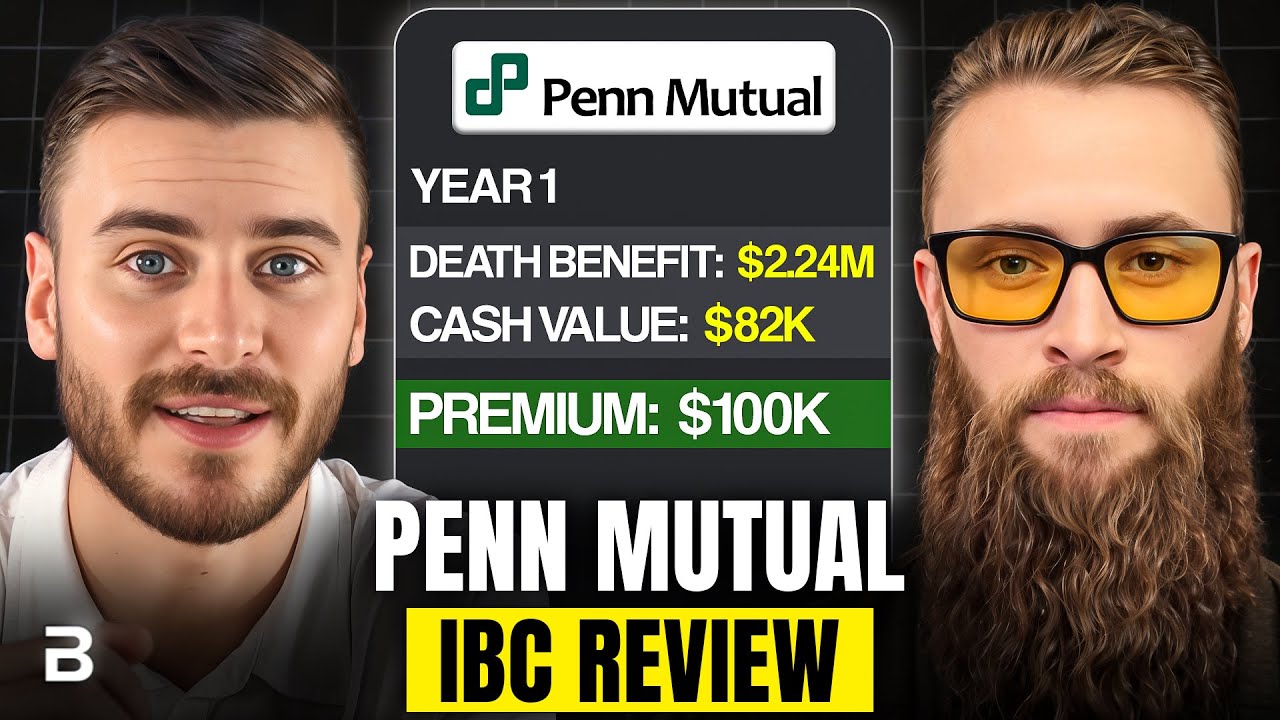
This deep dive complements our growing library of content where we help you understand the nuances of life insurance companies so you can make the most informed choice for your wealth building journey. For context on how carriers compare in this space, check out one of our foundational blogs on infinite banking basics.
Penn Mutual has a storied legacy dating back to 1847, marking over 178 years of reliable dividend payments and strong mutual ownership. Their consistent dividend performance, with $165 million declared for 2025 and a projected dividend interest rate of 6%, places them among the industry leaders. Crucially, their lapse ratio—a key indicator of policyholder satisfaction—sits impressively below the industry average at 3.4%.
Beyond financial metrics, you'll discover Penn Mutual’s positioning on infinite banking. Although they do not officially endorse this strategy, Penn Mutual enjoys a reputation for being friendly and supportive toward infinite banking agents, setting them apart from some competitors. This review explores their underwriting innovations, customer service investments, and the flexibility offered on policy funding.
For those interested in the broader context of life insurance company comparisons and infinite banking, our IBC company comparison summary provides additional valuable insights.
Penn Mutual's Accumulation Whole Life product, designed for maximum cash value growth, is exemplary of how whole life insurance can be a powerful wealth building tool. While sacrificing some early cash value access (usually 75-85% in the first year), the policy compensates with exceptional long-term growth, with internal rates of return ranging from 4.3% to 5.3% based on current dividend assumptions.
When funding paid-up additions to the policy, you're effectively purchasing additional permanent death benefit—this death benefit doubles approximately every 10 to 15 years. The byproduct of this structure is the increasing cash value accessible for tax-advantaged loans, fitting seamlessly into retirement planning and financial independence strategies.
This tax efficient compounding mechanism is key to understanding why many high-net-worth individuals turn to whole life insurance within their broader financial plans.
In this comprehensive review, we reference several key entities and concepts that are fundamental to understanding Penn Mutual and infinite banking:
For more detailed comparisons and insights, see our IBC company comparison summary.
Infinite banking with Penn Mutual uses their whole life policies to build cash value that you can borrow against tax-free. Penn Mutual’s policies feature flexible funding and a direct recognition loan system guaranteeing a fixed spread between dividend and loan rates, making it a practical choice for long-term wealth building within a tax-advantaged framework.
Penn Mutual is a direct recognition carrier, meaning the dividend rate on your policy adjusts based on whether you have an outstanding loan. This differs from non-direct recognition where dividends remain unaffected. Penn Mutual guarantees the spread between the loan and dividend rates to make retirement income planning easier, though both types can be effective depending on market conditions.
People often select Penn Mutual for their long track record of 178 years paying dividends, strong financial ratings, robust long-term cash value growth, highly flexible policy provisions, and innovative technology platforms like ACE. The carrier balances solid product design with excellent service and underwriting speed, which appeals to serious infinite banking practitioners.
Penn Mutual’s policies generally provide 75-85% cash value access in the first year, which can be lower than some competitors offering up to 95%. This means Penn Mutual favors maximizing long-term growth over early liquidity, making their policies best suited for clients prioritizing steady wealth accumulation over immediate cash access.
The ACE system is Penn Mutual’s digital underwriting platform that streamlines applications, often approving up to $10 million of insurance with no medical exam for about 40% of applicants. This innovation improves speed and convenience while maintaining rigorous underwriting standards, setting a high bar for life insurance digital processes.
Penn Mutual’s product offerings are limited in New York state, with only a couple of simple issue policies available. Most permanent whole life products, including the Accumulation Whole Life used for infinite banking, are not sold there due to state regulations, so residents generally need to consider alternative carriers.
If you're serious about using whole life insurance as a tax-efficient infinite banking strategy, but aren’t sure where to start or want a second opinion on your existing policies, our team at BetterWealth can help. Click the big yellow button to book a call with us. We specialize in building, optimizing, and protecting wealth the BETTER way—tailored specifically to your financial goals.
Below is the full transcript.
Full Transcript7,843 words
Welcome back to the Infinite Banking With series. My name is Caleb Williams. I'm here with Alden Armstrong. And the number one question we get is what company should we work with when it comes to infinite banking? There's so many great ones. There's a lot of not great ones. But we're going to be covering in this series all the top mutual insurance carriers that you should consider using infinite banking with. In today's video, we're going to be looking at Penn Mutual. And I can say this confidently. This series is the most thorough walkthrough of different insurance companies out there. And so you'll definitely want to get your pen and paper out. We're going to be looking at the company, the ratings. We're going to talk about their lapse rate. We're going to look at their positioning on just their view around infinite banking in general. We're going to look at a cash flow illustration. We're going to look at a front load illustration. We're going to look at how loans work. You know, Penn Mutual is a direct recognition carrier. So we'll even have a slide dedicated to what that looks like. And then we're We're going to look at their PUA. and how you can fund them and the flexibility. We're going to be looking at how their underwriting works, their customer service. I'm telling you, Alden, we are uncovering all the stones on this one. And I'm very, very grateful and just want to thank you for the work that you did in putting this together. Because again, this has been one of the biggest questions that we've gotten and we've done videos here or there, but this whole series will show people how different companies work and they'll be able to compare it. you know, with themselves. And then at the very end of this series, we're actually going to do a full summary, which will only make sense if you have contacts, because we won't be able to do in depth on each insurance carrier, but we'll have a summary showing you all the pros and cons. So if you're not subscribed to our YouTube channel, please do so. And I'll hand it over to you, Alden. All right. All right. Well, guys, we are excited today. I think it's gonna be a really fun video for everybody watching. We are going to be talking about Penn Mutual, IBC. Let's go. So starting off with just some high level, how long have they been around? Well, since 1847, so a long time, about 178 years of paying policy dividends, and they are 100% mutually owned insurance company. So these are big, big in our space, right? We want to make sure one, mutual, two, that they know what they're doing, and then three, that they have a very long track record of doing that thing. So when we dive into more of the financial strength and performance, there's some key metrics that I like to track across insurance companies. The first is, are they paying dividends? And the answer is, yeah, about $165 million worth. So that's fantastic. Paying that large dividend now is declared at for this year, 2025. And the projected dividend interest rate is 6%. Another metric, because you're familiar with the top two for most carriers. Another metric that we cover is the lapse ratio. So this is a new metric to the channel. This is something that I track personally. When we look at insurance industry as a whole, there's an average of around 5% of lapsed. policies year to year in the insurance industry. Lapsed meaning that somebody surrendered it, they did a 1035 from one carrier to another carrier, or it fell apart because the internal charges were more than the cash value. When we see a lapse ratio below average, that tells me as an insurance agent that this carrier is producing exactly what they said they would in those illustrations to a high degree. So a 3.4 lapse ratio with Penn Mutual indicates strong policy holder. satisfaction, which I think is pretty phenomenal. Caleb mentioned dirty word, direct recognition. And so we've done videos on this. We've done content around it. It's our opinion at Better Wealth that one or the other kind of comes out in the wash. But in certain circumstances, one can make more sense than the other. And we're going to dive into a little bit more detail on that in one of the additional slides. From a ratings perspective, Penn Mutual is in the top 7% of insurance carriers in the United States, a 93% Comdex score, which is a conglomerate score. across many region agencies. And then an agency that many of you may know, AM Best, they have an A plus superior rating. Fun fact about Penn Mutual that I was made aware of last year is that they have the longest standing record of having an AM Best rating of A or better. Right now, that record stands at 98 consecutive years. It's pretty phenomenal. It's kind of crazy to think about. How many companies do we know that's been around for almost 100 years generally? And they've... not only been around for over 170 years, but almost 100 years of being ambassadoring. I mean, I think that's, that's awesome. It just shows to you the long term performance that these companies have, because I say these companies, because Penn Mutual is obviously up there, but all the companies that we're, we're viewing have have like good positionings. One thing I'll just also note is Penn Mutual, if you just take a step back, like, oh, big 30,000 foot view, where they excel. is their performance. They've been really consistent and they just, they reform really well long-term. And so that is obviously one thing to just know. And then the other thing that's important is lapse ratios matter a lot to insurance companies. If they have high lapse ratios, it's not very efficient for them. They, they incentivize the agents to the level of like, Hey, if you have bad last lapse ratios, we may not even let you write with our company. Cause it costs them a lot because insurance companies takes them. in many cases, seven plus years to even make a profit on someone. So they're thinking long term. And so that's a big, big thing. And even with carriers that do highly cash value products, the disadvantage to that is sometimes it makes people lapse their policies more because there's, you could say there's less skin in the game from a standpoint of keeping your policy long term. And so overall, these are all really, it's a great overview when it comes to Penn Mutual and the type of company you're working with. Absolutely. Great context, Caleb. So since we're talking about IBC. How is the positioning, right? What does it actually mean to work with this particular insurance carrier? How are they friendly toward? Are they not? And so one thing I'll mention, Penn Mutual, they are well-known in the industry for IBC style policies. The biggest reason for this is because in the last probably about 10 to 15 years, they've been increasing their market share. They're selling more policies. They went down a whole different route of doing an additional career agency system. Lots of really good things happening for them. So they're becoming a very well-known name in the IBC space. Another aspect that's just helpful to know as a consumer is they are friendly and supportive toward IBC agents. However, what I'll say publicly is they do not officially endorse this strategy in any shadow of imagination. This is something that they take seriously. They don't endorse any financial strategy because for them, they provide value for their clients by maintaining promises on insurance, not on a system that might be used for it. I think that this is well said. Another thing that you just got to... know about Penn Mutual is there's some insurance companies that will go to, they'll pretty much like get anyone that wants to work with their carrier, they'll give them a shot. Penn Mutual is a lot more selective. And even in the past have said, you know what, we're going to sever our relationships with these like massive conglomerates of people that want to write maybe small policies, not very loyal. And so that's another way for them to commit to like, we want good business. And so we are going to work with fewer people, but work with, with it. in their opinion, better people that just do this for an actual living. And that's a that's something to note is because some insurance companies will, you know, let you know, any type of someone right with them and Penn Mutual is a little bit more gated with that. And I do think overall, that goes back to their lapse ratio. It's like, well, obviously, they have reaped some of the benefits. And when it comes to infinite banking, they're definitely not endorsing it, but they're friendly, which is important, because there's some insurance companies that are not friendly when it comes to to that. And I think everything you mentioned, Penn Mutual is valid. Well, diving into the product side, there's a lot of products at Penn Mutual. They have many different types of permanent insurance products, but the one that we use most often for IBC style is the Accumulation Whole Life product when it's designed for maximum cash value. This is actually a new product, their old Guaranteed Whole Life product that they did have that was retired last year. And so now we have the Accumulation Whole Life product, which is very good in a lot of ways. When we start looking at policy designs, the actual illustration, there's some general trends that we see with this carrier. So the first and foremost is cash value access in the first year is usually between 75 to 85%. Now, this is going to turn into a con of sorts for this carrier because some of the competition are able to push the 88, 90, 95% in the first year. So Penn Mutual is a little bit lagging in the first year. However, they make up in a couple of different areas. One is they're very flexible on their funding, meaning we've sold policies where the plan was to fund for one year or the plan was to fund for effectively 100 years because it was an infant, right? So we have a lot of flexibility. But what we find when we start running some specific mathematical numbers is about 10 to 25 years is the optimal timeframe for funding. The growth on these policies, while we are sacrificing early cash value, is very strong long-term, and the industry strong. And so... internal rate of return pops in around 4.3 to 5.3 given current dividend assumptions. Yeah. And I'll just say, as we go in, when we talk about cashflow strategy, that's our lingual for saying you're putting the same premium every single year. And in this case, we're paying for 20 years because we want to stay consistent across the board in this video series. And then when we talk about front loading, we're talking about putting more money in year one and then dropping it down after year, year one, two. us a level premium. And we do that just because there's different types of people that want to fund these policies. And those are two of the most common approaches that we see when we work with clients. And just know that there's tons of flexibility with either design. But if we went into all the flexibilities ins and outs, this video would be three hours long and every video that we review would be super long. So just wanted to let you know that that's why we're showing two policies. We'll jump into the cash flow. All right, one of the Kale just described annual premium on this policy. It's a 40-year-old male. We've got a preferred non-tobacco rating, so one level above standard, and we're putting in an annual premium of $50,000 per year. Now, this is a policy design you're going to see across all of our videos. We're doing an apples-to-apples comparison as best we can, and we're funding it for a period of 20 years at this level. After 20 years, I'm illustrating what's called a premium offset. So the policy itself is going to pay for the required premium. And it continues to plug and chug and increase that cash value and death benefit over time. So a couple of values, and I'm going to pull out here so you can do a comparison on your own before we do the comparison video, is early cash value, end of the first policy year, it comes out to about 82%. within that range that I mentioned on the previous page. Another aspect of it is the death benefit comparatively to the amount of premium you're paying is fairly small. The reason for this is we're trying to maximize the value to the client with regard to the cash. So we shrink that death benefit to as low as we can to then justify $50,000 of annual premium, which means you have a lot of cash value growth year over year. There are two other metrics that I'm going to point out on the screen here. The first one is what I call the cap. point or the capitalization point in the policy, this is when we have premium that's going in that is now more valuable in that year. So said another way, starting in year three, you put in 50,000, your cash value goes up by more than 50,000. So effectively, in loose terms, you could say you've overcome the cost of insurance. And so now every year you put in a dollar, more than a dollar is accessible to you in that policy. This is where things really start to take off. From a breakeven perspective, because that's another metric that we track on this channel, is right there in year five. You've put in 250, you've got 251, and the story just continues. That gap continues to get larger and larger over time. So Caleb, you want to give some insight into the performance here as well? Yeah. I would just say anytime I'm looking at policies and I'm comparing, I'm looking at first year cash value and usually running the number of what percentage that is. Looking at the initial death benefit, which you'll see that the initial death benefit is healthy. Like it's it's healthy and there's other carriers that the death benefit would be a lot smaller. And so that's that's, you know, it's cool to see that it's over one point one million. It's increasing. I love the fact that at year three, your policy is increasing by more than what you're putting in. And then by year five, you have more money than what you've put in. That's only important. Like a lot of people say, like break evens don't matter. They really don't if you're going to keep your policy long term, but it just shows you from when you're comparing to other insurance carriers, it just gives you different baselines. And then obviously looking out because you're setting this contract up, hopefully it'll last your entire life. So we want to make sure upfront is solid, but then you want to look forward and you're seeing in year 20, the death benefit is in this illustration is more than $3.6 million death benefit. you got a cash value number of 1.6, almost 1.7 of cash value. It's just cruising, man. I love looking at these policies as they get going. And I could just ramble on by like, once you build a foundation, these policies are amazing protection for your family, but also amazing cash value buildup for opportunities. Absolutely. And I think the last thing that I'll add is that whenever we're putting an extra premium into an insurance contract, into paid up additions. Technically, what we're doing, guys, is we're buying more permanent death benefit. The byproduct of buying that death benefit is the cash value you have accessible to you in that year. So over time, we have this death benefit grow quite rapidly. And so a healthy, in my opinion, a healthy, overfunded life insurance contract built on a whole life chassis should double the death benefit about every 10 to 15 years. So if it's not doing that, you may not be looking at the best designed product for that carrier. So over time, some serious growth and even after the policy is paid off, nope, is offset, there we go, even after the policy is offset, we still have an increasing cash value and increasing death benefit because the compounding base is so substantial in this policy. So jumping back over, guys, we'll take a look now at front-loading strategy. Every carrier we work with excels at some things and is not quite as good in some other things. And so when we're looking at a front-load with Penn Mutual, we... build it such that we want to maximize that initial value, give you as much cash in the first year, in the first couple of years as we can. And something that Caleb says all the time is the more money you put in, it increases the volume of money in that policy. So it allows your product, the product itself to generate more cash long-term. An interesting aspect of this though, is how can I get more money into the insurance policy? Well, I got to buy more insurance. The IRS... gives us a limit and we have to stay below that to maintain the tax favorability. You guys know that as the MEC limit, right? So when I build a policy to accept more premium to put in a front load, right? The overall efficiency is actually going to go down because I have to buy more insurance. There's more internal costs. And so while we can accelerate funding early on by putting in more money, we have a long-term internal rate of return that's slightly less than what we were seeing on the cash value side of things. So keep that in mind as we start looking at the actual numbers here. So on your screen, we have a front load of design with Penn Mutual. First year, we've got an illustrated $100,000 going into policy. then we're dropping that premium to the $50,000 we saw in the last design. What you'll notice initially is that the amount of cash available to you, well, the percentage really hasn't changed. It's still around that 82, 83%. Our death benefit, on the other hand, has doubled because now we're putting in double the premium. So we have to have more room in the policy. When we look at the efficiency, this is what I was talking about with the internal rate of return. The efficiency year over year is slightly less, even though you have more money in the policy. In the last product if we looked at the cash flow. In three years, we got to a point where this number was positive to where now we can put in a dollar and we have more than a dollar of access and value in the policy. When we front load in this carrier's instance, it pushes it out slightly. So it pushes it out one more year before we get to that point where we put in $50,000 and we have more than $50,000 available to us. The other thing it pushes is also our break even moves from year five to year six. Yeah, I have thoughts. I essentially I When you look at when you look at something like this, the thing that you care most about is early cash value, then Penn Mutual is is a carrier that's maybe not going to excel in this area, their death benefits super healthy, you can see that it grows, the long term performance of this is excellent. And so if you're somebody that, you know, early access to money is important, but maybe not the most important and long term growth is an important factor. You see a lot of people loving this product because we're going to. show you later the flexibility you get with funding in these type of policies and the customer experience and is off the charts and the growth rate long-term is hard to beat. Absolutely. And it's something I'll mention just from a design perspective. We'll mention this in another slide as well. But the numbers you're looking at your screen, they have minimum premiums baked into it and then maximum premiums. One of the really cool things about Penn Mutual and their flexibility is that I'm showing a hundred grand the first year. Technically, you could do that your three, four, 10, you could continue to have maximum fund up to that 100,000 because we've bought enough insurance to make that possible. We're just not illustrating that reality. So keep that in mind as we start looking at flexibility. And something you'll learn about me if you don't already know it is flexibility, in my opinion, is the name of the game. When we're building insurance policies, we don't do it in a vacuum. We look at what could change, how that affects you, and what is your interaction with the insurance policy. How might that change year over year? Quick access to cash value. That's something we value when we're starting to leverage against insurance policies. Penn Mutual gives us about a 30-day timeframe after we fund it initially before we can borrow against it. They are a direct recognition carrier. We'll go into more detail on that in just a moment. One thing that is very nice about Penn Mutual is that you can access up to $50,000 by a phone call or a quick communication to your agent. It's a very quick process to get a small loan. Larger loans, which is almost typical across the industry, require verification via signature. Some carriers... allow DocuSign such as Penn Mutual. Some carriers don't. So we'll walk through that and this review as well. Last thing I'll mention on this slide, daily interest accrual. Guys, all this means that some companies do this slightly differently. But with Penn Mutual, when you log into their portal, you can see outstanding loan balance and the interest that you owe. If you log in the next day, that interest grew a little bit. So it's growing over time and it's very transparent in what you're being charged in interest when you do borrow against the policy. You're going to see a theme here where user experience is amazing with Penn Mutual. And this is just a way where they just make it a lot cleaner. There's some insurance companies that front load your interest. And then if you, let's say you pay back your loan six months early, you still get credited back that money, but it's harder to see exactly where you're at. Whereas Penn Mutual is one of those companies that is very transparent to the day on where you're at. Flexibility. Guys, to me, again, this is very, very important. One thing that's nice, very nice about Penn Mutual is that they're paid up additions writers, technically have two of them, but both of them allow what I call anytime payments, which means as long as you've made your minimum premium for that year, let's say you've got a maximum premium of 50 grand, you could put in five today and 20 tomorrow, and you have the ability to do that. So over the course of the year, you can fill up the tank all the way up to the maximum at any point. Not a common theme of among the insurance carriers. Not all of them offer that flexibility. One minimal restriction that we do have with this paid up additions rider is that they have effectively a minimum requirement in a five-year timeframe. So to explain this, think of the maximum premium as $50,000 that you could put into paid up additions. That $50,000, at least half of that, so 25 grand, has to be paid in a five-year period. How you pay that and in what amounts you pay that, It doesn't matter. It's a rolling average. So in this example, if you paid $25,000 this year, you could put in zero for the next four years before you had to pay again to keep the rider alive. And so for policies that we set up and structure, the likelihood is you're going to be hitting that minimum every year without problem. But it's something to keep in mind. Rolling timeframe, at least half the total annual amount available to that rider. You want any clarification on that? Yeah, I would say, I would say, number one, this is probably where Penn Mutual is shining, just this slide. And I just want to, again, give you your flowers, Alden. A lot of people aren't talking about this. They look at dividend rates. They look at early cash value. They look at loan rates. I rarely ever do you mention like the flex PUA flexibility, but this is like real. And this is something that matters to clients. And I would just say that if you're going five years with not hitting half of a PUA, we got we got bigger issues. And I and I say that nicely. It's like maybe that's not the biggest problem. Probably the biggest problem is is your lack of funding. And that's a that's a bigger deal. So while this is a stipulation. So this is a way more flexible than other carriers out there. Absolutely. One last thing I'll mention about the PUA riders at Penn Mutual is they have what's called full catch-up ability. Think year to year. You're in year three. You have a bad year with your business. All you can do is the minimum premium. Year four, your business takes off. You sell a couple of properties, whatever that looks like. And now you're cash rich. You can fund the PUA for that year and go back a year. So this ability to catch up or backfill. is very unique in the industry. Some carriers offer it to a lesser degree. Some carriers don't offer it at all. But the ability to have a backfill like this is a big deal when you have variations in your cash flow year to year. 10 out of 10 love the fact that Penn Mutual does this. All right. The dreaded slide is here. Penn Mutual, direct recognition carrier. Now, in the insurance industry, we've got a large number of carriers that are direct recognition and then a number of carriers that are non-direct recognition. This is not a video about that, but what I'll just say briefly is if I had a crystal ball to tell you where interest rates in the economy were going to be for the next 20 years, I could tell you which one is best, which recognition system is best. Because I don't have that, it's going to be a wash. Every year, how it affects your policy is going to change. So the big misnomer with direct recognition is the assumption is always the dividend is adjusted down. Three years ago, dividend at Pemutual was adjusted up because of where interest rates were. So the cool thing about this whole structure, guys, is direct recognition, while it does affect your dividend, it guarantees your cost of borrowing. So on your screen, we can see years one to 10 and all Penn Mutual whole life products. We have a guaranteed spread of 0.65% between the loan rate and the dividend rate. Starting in year 11 plus, it's guaranteed to 0%. So when we think about this from a company perspective, why do direct, why do non-direct? Penn Mutual, a large portion of their business is working with financial advisors. who sell life insurance as an asset for retirement planning, whether that's volatility buffer or actually something we want to use as almost a pension or an annuity to take income off of tax-free over time. So in that light, this decision makes a lot of sense. And here's why. Let's go out and I'm 65 years old. I'm going to start pulling money against my policy. The loan rate at that time, let's say generally is 7%. And the dividend generally is 5%. So I have to pull money out from an income perspective at a 7%, my policy is not growing that much to keep up. That's the sometimes problem with taking money out of a non-direct recognition policy at the wrong time. That spread can be quite substantial. Penn Mutual, because of their focus of who they market to and what kind of policies they like to sell, they make that a very easy calculation. Whatever the interest rates are, wherever they are in the future, they're going to guarantee the spread between the dividend and the loan rate to make your calculations for retirement income all that much easier. So perhaps another take on direct recognition you might not have heard before. Again, six this way, half doesn't, the other doesn't matter. But as long as you understand it, I think either could work for you. We have plenty of videos breaking down the pros and cons. And I used to be someone when I first got in that thought non-direct recognition was the only way to go about. And I'm now at a place where work with a solid company. properly fund your policy. And it really does not matter because there's so many different levers on both sides and insurance companies are never going to put themselves in a place where they're compromised. So if you have a non-direct recognition carrier, their big lever is loan rates. Whereas the other one, like they can keep loan rates, maybe more competitive and maybe adjusted on the backend overall long-term it's, it's not going to matter. All right. So this is a slide I'm thrown in here. We're not going to see something similar to it in any of the other carriers we look at because Penn Mutual came out with the ACE system, so Accelerated Client Experience, some time ago. They're industry leaders in this space. What it is, it's effectively an e-application system. That allows them to provide instant offers or sometimes low-touch offers, what we would call it. So when we think about this from a high perspective, if we go back 15 years, some of the people watching this video may have some gray hairs and have been selling insurance a long time. Do you remember going up to a house with a rate book and taking a paper application, mailing that into the carrier? Those days are gone and Penn Mutual is paving the way for a new future. So this system... is trying to be replicated by many carriers. I have a short list here, Mass, Transamerica, PacLife, Emeritus, and many others are experimenting with this idea of how can we create a rapid underwriting system that underwrites fully and sometimes can get through without a medical exam. It's a pretty cool system. Penn Mutual right now is approving up to $10 million of insurance with no medical exam by going through this process. They pull medical information bureau, Sometimes I pull additional medical records. and you put in all of your information in the health questionnaire. And that's it. For about 40% of applicants, they get through without any fluids. So no medical exam, you don't have to stand on a scale that gets touched by a needle. That's huge when it comes to speed in placing these applications. The other 60%, either low touch or full underwriting. And just play devil's advocate here. You have to think on both sides. You want insurance companies to Save money, but also underwrite conservatively because you don't want them taking on a bunch of risks. And so when this first came on the scene, I think there are a lot of people that were like, hey, this is scary because they're it's like they're innovating. And that's that's there's some unknowns. And I mean, we've seen nothing but really, really good results here from the insurance company standpoint, from their risk. But they've been able to save so much money doing it this way and have created a much better. speed. I mean, we have people that would not have insurance if it wasn't for this process, because they're terrified of getting needles in their arms. So it's just one of those aspects where I just want to give hats off to Penn Mutual for their innovation, but also their commitment to still covering their butt when it comes to the risk profile. Absolutely. They've been doing this since 2008 was when it kind of broke the scene. And it's taken a long time for other carriers to get comfortable with the idea, which is why we see just now, last couple of years, people starting to replicate the system. It's a really good point, Caleb. This goes into just some stuff that might be interesting to know about Penn Mutual. Two big things to understand about Penn Mutual. Caleb mentioned that they're very lean. They do that on the technology side. We just looked at Ace, right? The other side of this, guys, they are a 100% remote company. Now, this wasn't just because of COVID. They've had this plan for a very long time. And arguably, they have the lowest overhead among any other comparable mutual insurance company because they have no physical offices to staff with people. The other benefit to this, which isn't on the slide, but kind of think through this. If you have a top tier mutual insurance company who pays well, who doesn't require to go to the office, you can work in your flip-flops, you think you can attract talent really well. Penn Mutual in the last year has taken dozens and dozens and dozens of very highly qualified individuals from other insurance carriers who have a new mandate to come back into the insurance office, right? To come back in person. Penn Mutual is like, hey, just come back with us. It's a little bit easier. So I think that's a pretty cool feature of this carrier, which speaks to their innovation in the industry. A downside and something just to be aware of is if you live in the state of New York, Penn Mutual really can't help you. There's only two products they can sell in the state of New York. One's a simple issue, I think Universal Life. The other one's a very simple non-convertible term. So any of the policies we sell, if you're in New York, we're going to be looking at another carrier. Advantages and cons, right? Disadvantages are things to consider. First up, advantages to Penn Mutual. They've been around and doing this. actually have the longest standing record among top mutuals for paying dividends of 178 years, 77, excuse me. So that's fantastic. The other aspect is their product itself is industry leading. So they're the best long-term performing product in the industry. And they've actually maintained that trend for the last five years, at least. Perhaps beyond that, I just haven't pulled those illustrations. Ace, super fast, streamlined underwriting. They have very flexible PUAs, paid up additions, as we discussed. And they also have a diverse product lineup of other whole life products as well as other permanent insurance solutions. Last thing I'll mention, which I just think this is really cool from Penn Mutual, is they are dedicating a lot toward customer service and agent support. So in the last year, they've hired an additional 100 to 200 people. I think it was actually closer to 300 people that they're putting into seats specific to serving. Not on the sales side, but specific to serving you as a policy owner and serving us as agents that also support you. So I think the commitment to service from Penn is a really cool and admirable in a lot of ways. Con considerations. The big one is first on the list, low early cash value. So on average, about 7% to 12% lower than some competitors in the first five years. So this is big. If you were a person, as Caleb said before, who wants immediate cash value and needs access to that right away for whatever reason. Penn Mutual may not be the best option. If you're looking long-term, it's a different answer. Another con that's, I put this on here because I get annoyed by it, is that we have ACE, right? We're very spoiled with ACE. If we're trying to do a joint policy, survivorship policy, they still require paper applications. And so to be innovative also means that some things get left behind. They have told me as of about a month ago that they are going to be implementing survivorship into ACE next year. So I'm really looking forward to that. Two other considerations to have here guys is They do life insurance. They don't do long-term care. They don't do disability income insurance. They're strictly life insurance. So some would consider this as an advantage. Others may say that's a con because they don't have options. I'll leave that kind of up to you. And then the last is, as we mentioned, New York can't work there. It's restrictive. It's a tough state to do insurance in, in general. So Kayla, before I jump into the next screen, do you have anything you want to add? Yeah. I think the summary is very, very simple when it comes to Penn Mutual is if Early cash value is the most important metric, then then Penn is going to be probably not on the top of your list. If it's not, if you care, you still want early cash value, but you want great customer experience, you want competitive, very competitive long term growth, lots of flexibility and funding performance. Penn Mutual is in a lot of cases at the top of people's list. And the way that we go about this is we give you control and options to choose what you want. And we find that lots of people choose Penn Mutual. when they're able to see the pros and cons for these reasons. And I just find the survivorship mentioned funny. Alden, it's like your way of venting in this video as your way of therapy. So this is Alden's therapy session is videos, by the way. And you can see that. But overall, Penn Mutual has been a phenomenal company to work with. And we've heard almost all positive things from agents and clients going through working with this company. Really, really great opportunity to work with them. All right. So I throw this in here because I used to be someone on the outside looking into Better Wealth, right? I'm here now. But at the end of the day, I know agents watch our channel. They watch our content. So I want to give you a perspective of an agent. Compensation with Penn Mutual, I'd say it's average among the other insurance companies out there. There are some strategic alliances that can increase your compensation by 10 to 20% for a fee. That fee could be substantial. So it depends on the amount of volume that you're doing as an insurance agent to really know if that's possible. The other side of things... When I'm working with an insurance company, I don't know all this just because I pulled the illustration up. I have to talk to people, right? I have to get support. Penn Mutual has exceptional agent access support to resources as well as their advanced planning assistance is off the charts. We work advanced planning cases at five different carriers, and Penn Mutual, in my opinion, is leading the charge as far as access and the advice and modeling that we're able to do with the advanced planning team, which is pretty great. Product complexity. Sometimes when you have a very good product, It's not always black and white. So some other carriers that we look at here on the channel, they're going to come into a lower complexity score, maybe four, maybe three. Penn Mutual is slightly above average, average complexity, in my opinion, about six out of 10. Some other carriers we're going to look at are closer to eight or nine. So don't get shocked here. But this means from an agent perspective, if you want to sell this product from Penn Mutual, I would encourage you to really understand it. You should understand anything before you sell it. But Penn Mutual may have a little bit more you have to look at than some other carriers that are much more simplistic. Last thing I'll mention, because I do case design, the illustration software in Penn Mutual is clean. It's very, very good. There's a lot of variance in the space about how quickly insurance industry has updated their client and advisor facing technology. Penn Mutual is leading the charge there as well. So I really appreciate their illustration software. So guys, where does this leave us? I think as a whole, Penn Mutual is a top carrier for IBC producers, and especially over the last 20 years, it's become more and more so. Cash values, as we said, early on, 7% to 12%, a little bit less than what you might expect from other competition, but long-term dominance, 8% to 21% difference in cash value projections, and that's supported by 20, 30 years of history with comparisons. Last thing I'll mention, Ace Technology, their exceptional support, the innovation culture within Penn Mutual is really, really strong. And overall, I think Penn Mutual is a phenomenal carrier to work with. When it comes to product, guys, it's design and your understanding of that design is what matters most. I'm quoting myself here for a reason because I believe this statement, okay? This is my favorite part of the presentation is when Holden quotes himself. The carrier choice among top mutuals is secondary. So we have clients with many mutual insurance companies. Those products were right for them for whatever reason. The carrier choice was second to what the product was able to do and how it performed. So keep that in mind. We're not out here battling who has the higher dividend rate. It's which product is better for your situation. Caleb, any final thoughts? Yeah, I mean, my final thoughts on this slide is that we're going to go through lots of different insurance companies in the series. And some companies are big and they use that as an advantage. Like, hey, we're super, super big. And that's awesome. The disadvantages as an agent, you could just be seen as a number and you may not have certain access. I think Penn Mutual is still a big company. They're obviously a top rated company. They're doing some really, really impressive things. And we just have a great relationship with them. And so not to toot our own horn, but this is one of those things where we could get someone on the phone who's a top underwriter. We could connect with the CEO of Penn Mutual. And that is something that we use carefully, but it's important to us when we're looking at this because we want to make sure that we're getting the best experience for our clients. And not all carriers have that. availability. And there's again, pros and cons of that. But overall, that is another pro that is unfair to put in this presentation because everyone's in a little bit different. But it kind of leads us into the next step is if you're if you're watching this series and have an insurance policy that you would like for us to review, we got you, we would love to help you review your current insurance policy. Or if you are don't have an insurance policy, but you want an insurance policy, or you want to look into what this looks like. We also would love to help you along with that process. We have clients in all over the country, and we would be honored to serve you on that process. There'll be a link down below. And the other thing that we want to be more intentional about is just asking your help in growing our channel. If you appreciate the content of this channel, and you've not subscribed, my ask would be subscribe. You could go a step further and hit the notification bell, or you get notified when we produce more videos. We're in this whole series. And so if this series is interesting to you, you'll definitely want to hit that notification bell. But every time you comment, share, like our video, and even watch to the very end, you might not even think that matters. That matters a lot. It just tells YouTube that this is valuable. And then they put this video in front of more people. And so from the bottom of my heart, I just want to thank you. And this channel is only made possible because you guys watch. And it allows us to have more credibility with the insurance companies, have more credibility with our colleagues, have more credibility getting other guests on the show. Absolutely. Well, Caleb, this has been a lot of fun. I think we're going to have a lot of fun in this series. Guys, if this is valuable, let us know. And put in the comments some carriers you want us to look at. And I'll do a review of those as well. We'll see you on the other side. If you're serious about using whole life insurance for infinite banking, we have a free gift for you. It's called the IBC Company Guidebook. And it gives you inside access to the data behind these videos. Things like life insurance company conduct scores, their dividend performance, how they approach infinite banking style policy designs. It's all the information we cover in these videos. organized in one place for easy reference. To access the guidebook, click the link in the description or pin comment.