
How to Create a Family Banking System Using Life Insurance | with Jayson Lowe

This summary is brought to you by BetterWealth's AI
And includes the following topics:

Jason Lowe on Infinite Banking: Truths, Misconceptions, and Family Banking Strategies

Infinite banking is a powerful financial strategy that enables individuals to take control of their finances by acting like personal bankers using dividend-paying whole life insurance. In a deep and candid discussion, Jason Lowe, founder of Ascendant Financial and owner of 77 life insurance policies, shares his practical insights, family financial rules, and the biggest misconceptions hurting this wealth-building movement. His experience as a top Canadian life insurance producer coupled with his approach to family wealth management offers unique perspectives on how to better keep, protect, and grow your assets.

Jason Lowe's mission focuses on making people heroes to their families and businesses through the infinite banking concept, blending technology, coaching, and disciplined strategies. This blog post draws on his expertise, including how Nelson Nash’s vision transformed his approach to managing money, using whole life insurance as a foundation for financial independence, and why clear communication and systems are crucial for success. For anyone exploring advanced financial tools or better ways to steward wealth, this comprehensive overview will provide eye-opening guidance.

If you want to understand how to avoid common pitfalls of infinite banking and master the financial mindset that sustains long-term success, visit our blog on infinite banking to get started.

In This Episode, You’ll Learn

Jason Lowe unpacks the core problem most people face financially: earning income but not controlling how they finance lifelong needs such as vehicles, homes, and investments. Instead of letting banks earn passive income from their loans, Jason advocates for taking control by financing these needs within a personalized “family banking system” primarily using dividend-paying whole life insurance. He explains the importance of understanding infinite banking not just as a product, but as a process that requires discipline and clear intent.

This episode highlights how Ascendant Financial’s model integrates coaching, marketing, and operational support to empower advisors and their clients on both sides of the US-Canada border. Jason also shares his family’s strict rules around loan repayment and ownership transfer, emphasizing that financial responsibility and communication are key to sustaining generational wealth. Additionally, listeners gain clarity on frequently misused phrases like “giving your dollar more than one job” and learn to differentiate fact from fiction when evaluating infinite banking claims.

Understanding the Infinite Banking Concept and Its Financial Roots

The infinite banking concept, pioneered by Nelson Nash, is a method of using dividend-paying whole life insurance policies as personal banking systems to finance expenses and investments. Rather than simply paying interest to external banks, policyholders build cash value within their policies which they can borrow against, effectively “becoming their own banker.” However, understanding the nuance is critical: the money you pay as premiums is exchanged for a death benefit contract; the “cash value” is a ledger entry reflecting the present value of that benefit, not actual cash in hand.

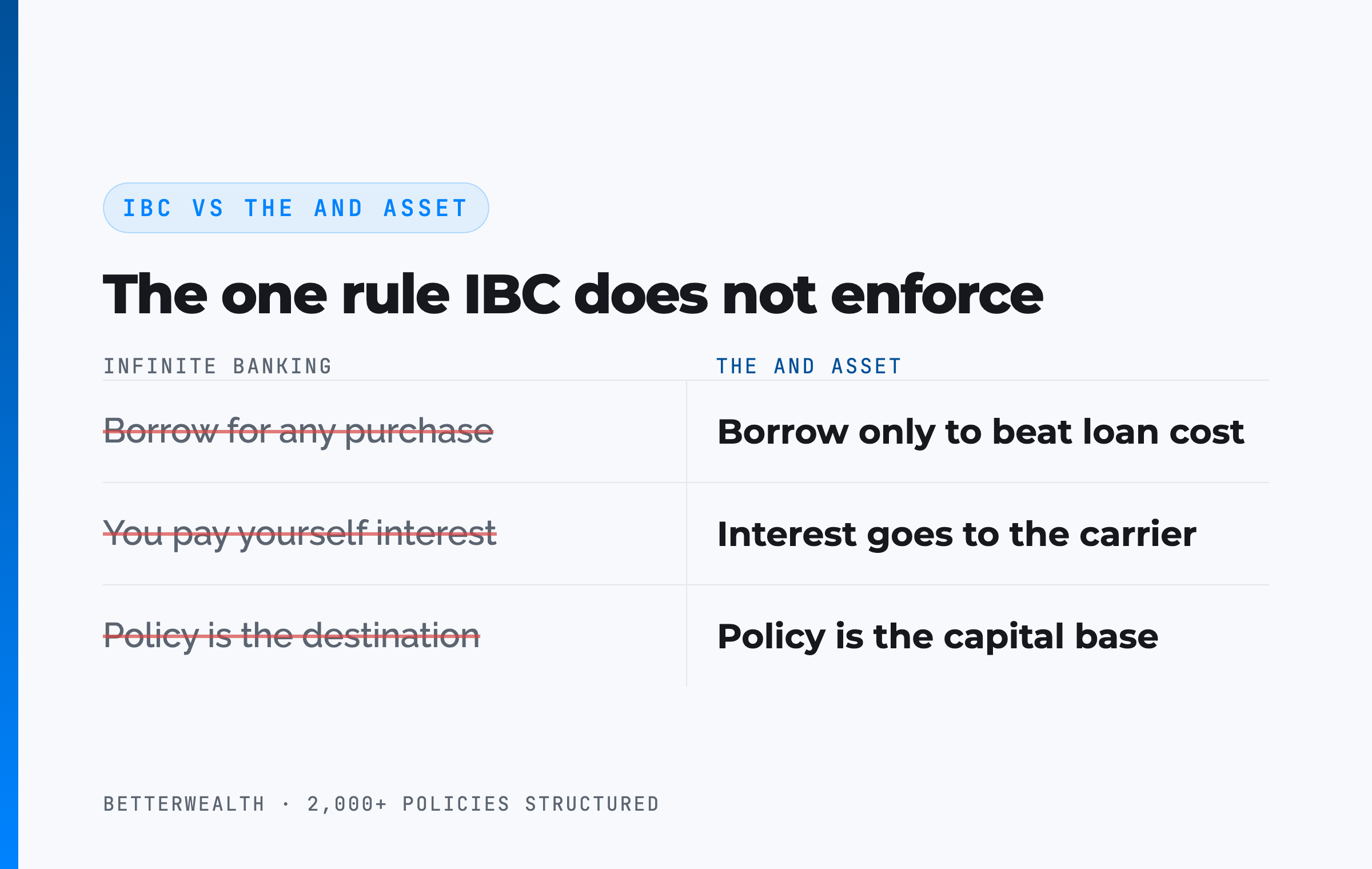
An example is when financing a vehicle purchase: instead of paying interest to a dealership or bank, you borrow from your policy’s cash value and repay it with “additional premium” rather than interest. This keeps capital working in a mutual insurance company benefiting all policy owners. Jason emphasizes that infinite banking is about financing control over your lifetime, not about getting “rich quick” or unrealistic returns. The goal is to complete the original loan repayment schedule fully, preserving system integrity and building lasting wealth.

Mistakes and Misconceptions to Avoid

Many infinite banking advocates sensationalize benefits like “getting all your money back” or having money “work double duty,” which oversimplifies the process and misleads consumers. Jason highlights that once money is paid as premium, it is no longer owned by you but by the insurer; borrowing against it means using the insurer’s capital, not your own. Furthermore, “cash value” is not cash but a contractual accounting figure tied to a death benefit, and excess interest paid when borrowing is additional premium, not a traditional interest payment returned to you directly.

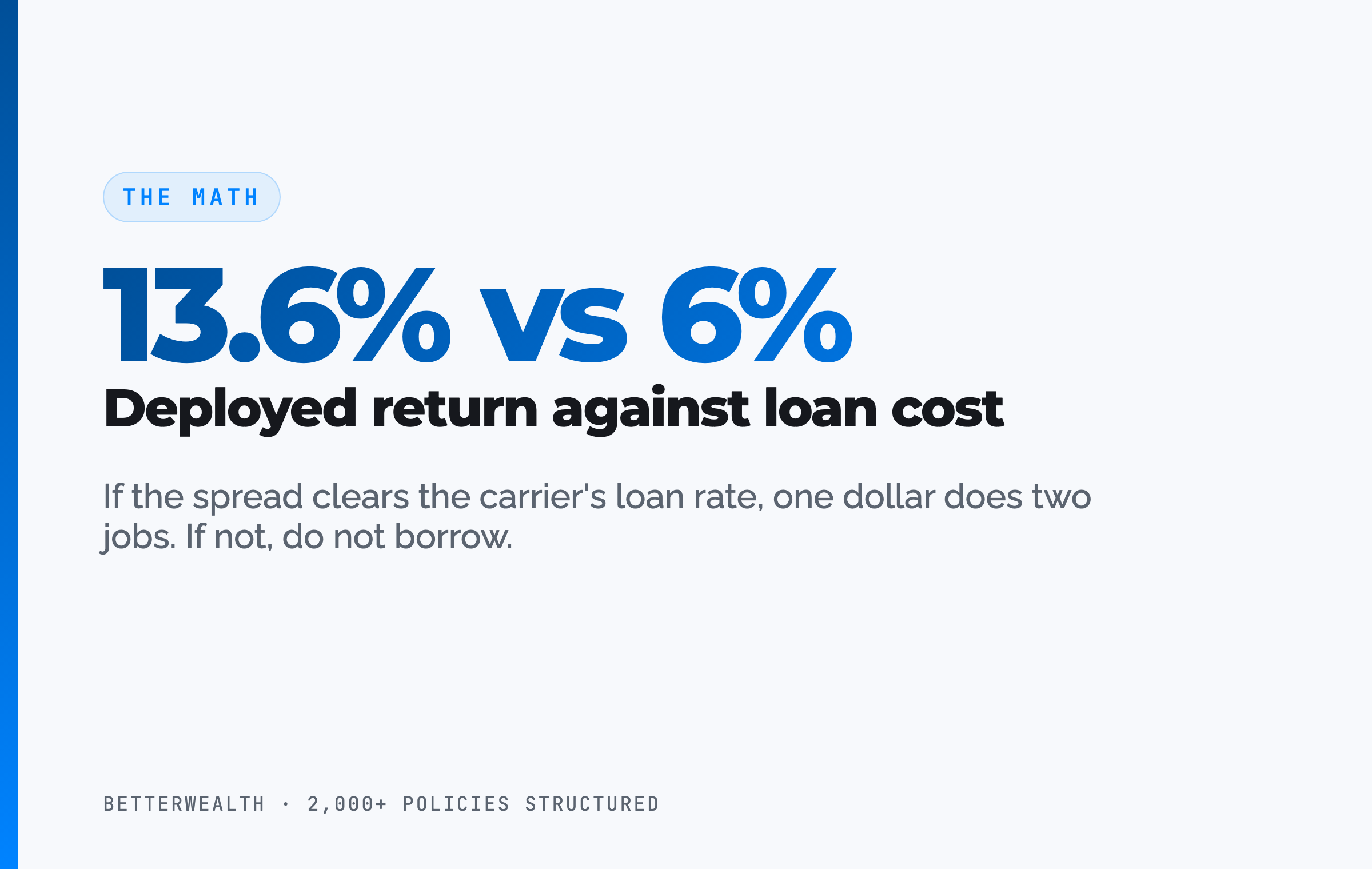
This distinction matters for proper financial decision-making. When someone refinances a high-interest loan (e.g., 15%) into their policy loan at 6%, they are choosing where the capital goes, but must understand the implications on liquidity and opportunity cost. It isn’t always about rates but where profits accrue and for how long. Jason’s advice is to think about your thinking—to understand your unique goals and workload to determine if and how infinite banking fits your financial strategy.

Mentioned in This Episode

Below are the key figures, companies, and resources referenced in the conversation:

For more practical insights on life insurance in financial planning, read our life insurance stories collection to explore real client cases and expert guidance.

"If a person doesn't understand the problem, the solution just won't matter to them." — Jason Lowe

Key Takeaways with Jason Lowe

  • The infinite banking concept is primarily about controlling how you finance your lifelong needs, not just about owning a product.
  • Dividend-paying whole life insurance is a foundational tool, but the true power lies in using it as part of a systematic family banking process.
  • Sensationalizing infinite banking benefits can harm credibility; clarity and simplicity generate better long-term success.
  • Family banking requires clearly communicated, firm rules—Jason’s family enforces a one-strike loan repayment rule to maintain discipline.
  • Borrowing from your policy involves using the insurer’s capital; the cash value is a ledger entry, not direct cash you control.
  • Refinancing loans at higher or lower rates should consider more than interest—focus on where your capital benefits you over decades.
  • Teaching younger generations about infinite banking involves gradual education focused on values, responsibility, and business-like conduct.
  • Investing and lending within a family or business should include ownership, control, and the ability to intervene when necessary.

Resources

Want My Team’s Help?

If you are a high-income earner, business owner, or someone serious about financial independence, you know the challenge isn’t just earning money—it’s keeping, protecting, growing, and transferring it efficiently. Whether you want to explore tax strategies, estate planning, or leverage whole life insurance to build your own banking system, we can guide you. Click the big yellow button to book a free clarity call and discover how we help people like you better handle wealth the BETTER way.

Connect with Caleb Guilliams

Instagram | LinkedIn | BetterWealth Instagram

Below is the full transcript.

Full Transcript

In this video, I sit down with Jason Lowe, the founder of Ascendant Financial and the owner of 77 Life Insurance Policies. We unpack the truth about infinite banking, how to think like a personal banker, the biggest misconceptions hurting the movement today, and even how Nelson Nash changed his entire approach to building wealth. This was a super fun conversation that I had. Jason has some really hot takes as it relates to his family. We have a one strike rule in the family. You miss one, not two, not three, not five, one loan repayment without having first spoken to myself or Rebecca, you will never access another dime from the family banking system. There are no exceptions. Zero. Some standards that I even was pushing back in real time. But the more I think about it, I just think there's a reason why this guy has so much momentum and their family is clicking on so many cylinders. Can't wait to hear your feedback on this one. Enjoy this episode. J-Lo. Caleb. It's been a few years. It's been a while. it has you are here in Nashville Tennessee I'm so incredibly grateful that you would take time out of your very busy life to be here in Nashville at our event and knowing that you're here I was just like we had to sit down and jam I think the I mean I think I've had you on the show twice I think so yeah and it's just it's it's inspiring every single time like I'm just even thinking our first time when when I had you on you were one of my first guests and you were just so you cared so deeply about me and about our audience. Still do. And the way that you spoke brought me, it made me emotional then. And then just as I've been listening back and we've gotten people that have mentioned our podcast, it's just like you speak in such a way that has a ton of conviction. And so we'll talk a lot about what you're up to. I want to talk about infinite banking. I want to talk about whole life insurance. I want to talk about Canada, what you're doing in the States, but how are you? Like, how are you doing? I'm blessed. I'm doing outstanding. And being here in Franklin, I think, is the perfect place, given that people are so, from my understanding, very well grounded in faith and family values and freedom. And so what a perfect venue to be hosting your events and to really be encouraging people to get more grounded in all three of those areas of life. But I'm doing outstanding. Thank you for asking. So is it fair to say that you are the top Canadian life insurance producer in all of Canada? Is that fair to say? Or your agency is? Yeah, I would say that my teammates are for sure. I've been personally, I've been out of production for over two years now. And there's a whole great story behind that, which I'm really happy to share. But I have to give Dan Sullivan credit from Strategic Coach for motivating me to move in that direction. And it was the right. decision after pushing through the fear because I was the top overall producer in Canada for years, nine consecutive years in a row. And so when your coach, your mentor says, in order for you to truly achieve 10X and then 100X, you have to give up your license. You have to not produce anymore. So you can see the look on your face, right? I asked him if he was kidding. I said, Like. I'm asking honestly, is this a joke? And he said, absolutely not. And so I took the leap after almost two years of reluctance. And I should have done it sooner in hindsight, given that now we've got the highest ratio of top producers within the Ascendant Financial team. And that's an engineered outcome. That's not luck or anything other than that. It's an engineered outcome. Explain Ascendant Financial. So you guys. Canada based, but now you're in the United States as well. So explain like the operation. And I know that infinite banking is like very core is a core piece. I don't know if it's it. I don't want to speak for you, but like, just explain the business model and like what your core message is. If someone were coming to the website or if they, if they were going to ask you what your 92nd thesis is, I would love to hear that as well. Yeah, sure. Well, what I can tell you, I mean, our, we get up every single day to make people heroes to their families and to their businesses. And the infinite banking concept is definitely core to what we do. It's what we specialize in, but that's the process. The placement of dividend paying whole life insurance represents the overwhelming majority of our business on both sides of the border. But we, in terms of our model, so when new agents or even experienced agents, when they contract with us and they move into our eternal. internal ecosystem. We're providing lead generation, sales and marketing automation, all of that technology to digitize that experience, but to hyper-personalize it for prospects and for existing clients. Quarterly group client coaching sessions that we facilitate both sides of the border. Our coaching and mentoring program that we facilitate literally on a daily basis, given that we operate in what we named a pod structure. So we have five to six advisors, a new business team associate who takes all the applications from submission to commission so the advisors don't have to carry that operational burden and handle any of the tasks that you and I are very familiar with, given our experience in the business. And a dedicated strategic assistant that coordinates all of the administrative activities. It's an incredible model. It's scalable and I'm quite proud of all the teammates that make it real every day. I get to do this. I get to operate my unique ability. And I'm very blessed, all the credit to my teammates who may take in this episode. They're the ones getting all the great work done every day. What's your message to the consumer that's here trying to find a better way for their finances and they land upon Ascendant Financial? Well, I would say first and foremost, make sure that you're working with someone who possesses the optimum mindsets of who you most love to be guided by. So for us, if we were to inverse that, so we love to work most and serve people who are well grounded in their family values. They're kind, they're respectful, they're responsible, they're coachable. They make decisions based on fact, not opinion. And they recognize that taking control, truly taking control financially is one of the most important things that they can do in their lives. Given you and I are well aware of the stress and the fractures and relationships that occur. because of money, because of finance, and it's entirely avoidable. So I would say to, to the general public, just really take your time to evaluate the potential in that relationship. You know, does this advisor or, or company really truly possess the optimum mindsets of someone that I would love to be guided by? And then not taking the advisor or the company's word for it, go and do some research, check on uncle Google, get a really good sample of existing client experiences. I think a hundred or so is a really good sample size. If you want to evaluate, I guess, proficiency and a track record of an advisor in the business. And so that would be my best advice. Cause we're not for everybody. Right? And if the message is you're for everybody, you're for nobody. I don't think anyone's for everybody. How would you articulate the financial problem? I mean, just to give our Nelson Nash a shout out. It's just like if you, the solution, a lot of people want to be solution focused. It'd be like, do this, do this, do this. This is what you should do. But if you don't understand the problem or have a clear understanding of the issue, then the solution and strategies may or may not be the right fit. So how would you articulate like the problem that people are facing financially right now? I think one of the biggest problems is ridiculously simple. People are earning income, W-2 interest income, dividend income, capital gains, wherever the money is flowing from. They're doing all the work to earn it in most cases with the exception of investment related income. And everyone else is getting all their capital. And they're not controlling how they finance the things that they need throughout the course of their lifetime. And credit to my late mentor, Arnelson Nash. God rest his soul. I miss him. I think about him every single day. And I wouldn't be talking to you. if it weren't for him, that domino that tipped over in my life. But when we say that people are not controlling how they finance the things that they need throughout their lifetime, if a person doesn't understand the problem, the solution just won't matter to them. So if you understand that your need for finance throughout your lifetime is very extensive, vehicles, property, appliances, the list goes on. Anything that you would otherwise lease, finance, or maybe even pay cash for. If you're not controlling how, those things are financed, then you are at a disadvantage when compared with someone who is. And Nelson always said, what you're doing financially is compared to what everyone else is doing financially. And so what I see most often as it relates to the infinite banking concept and maybe how it's communicated in the marketplace, there's a lot of really good excitement and energy around it, which is a good thing. But most conversations are led with a solution. So the person receiving that gets really excited around the tool that's used to implement the concept dividend paying whole life insurance, ideally with a mutual company. And if they do business with that advisor, they remember what they purchased, not why they want to implement the process because they in most cases just don't get there. And that's an opportunity. It's an opportunity to bring clarity, to shine a light on the truth. to make sure that we're not sensationalizing a concept that's completely unnecessary i agree i had richard canfield on the show oh good a while ago we went through your guys's book at the time yeah you guys are cranking up books so fast i don't know i don't know if it's your newest book it's definitely not right now but what i loved is it was well done and you also talked about some of the drawbacks i forget what it what it was like the drawbacks or like the the things that you should avoid when talking about infinite banking and not over sensationalizing that's right um and so you remember a couple of those like could you want cover because i will say this and it probably drives you even more nuts seeing videos of people that are heavily selling infinite banking or whatever you want to call it and it's like i and it's like especially knowing what you know and what i know it's like you're you're giving a lot of half truths And it makes everybody look bad, not only on how they're talking about it, but they're hyping people up by getting rich, buying liabilities. And it comes to a point where it's like you're taking a concept, but you're ultimately leveraging people's desire to overconsume. And those two things don't necessarily go hand in hand together. Does that make sense? Yeah, that's a really good point. I always assume that... in videos or social media content or interactions that I observe, that the intentions are good. Yeah. Right. People want to serve, right? They want to be helpful. They want to take care of people. And there's just things that are being said that are just simply not accurate. One that comes to mind would be get rich or get all the money back that you pay for, insert whatever that is, cars as an example, where you're not going to get back all the mileage. you're not getting back the money that you pay for them these cars have a real cost you're paying for them so that uh that's just factually untrue and so my hope is is that we can you know um help we can help advisors who have all the best intentions and may just not know that that's not accurate yeah um infinite banking policies yes you can buy an infinite banking policy here on the one hand we acknowledge that infinite banking is a process it's not a product and then on the other hand we co-mingle it and say go buy an infinite banking policy and so uh they simply don't exist and you know there are even life carriers that are communicating using that kind of language yeah there's some life carriers that don't like that language right so it's sort of yeah yeah two sides two sides some people are marketing it but some people aren't and but you don't go to the life insurance carry and say i want an infinite banking that's not no they would say we don't sell those what are you talking about uh And then I would say probably another common one would be, you know, have your money doing the job, having $1 doing the job of two. That's simply not true. Your dollar is either paying premium or repaying a policy loan. It is not doing any other job other than that. And, you know, Nelson did such a great job in his book, which I think it's really overlooked, the section where he describes it as being similar to a trust agreement. You have the grantor, you have the trustee, and you have the beneficiary. No different with the life insurance company. When you pay premium for a dividend paying whole life insurance contract, that money's not your property anymore. And then the grantor, you, pay the premium. The trustee, the life insurance company, puts the capital to work for the benefit of all the beneficiaries. That's right. And so when people grasp that and they catch that, they go, oh, right, okay, that makes sense. And one more would be... The, um... Your money still grows inside the policy even while you use it. What money are you referring to? Cash value is not money. Cash value is a ledger entry. That's all that it is. The net present value of the future payment of a death benefit. It's not money. That's why it's aptly named cash value, not cash. And so it's so important that we communicate these things accurately, especially when people take on multiple policies within their family banking system. we want to set them up for long range success. Yeah. Let's talk about the both, but let's talk about giving your dollar more than one job. It's a phrase I say a lot. But if you're new, I love having candid conversations, so hit me with this. Technically, that's not right because one, you pay a premium, it's no longer a dollar, it's cash value. Because the way that I try to articulate this because we're always trying to get people to think. differently or just trying to get them to grasp this is a life insurance policy has multiple utilities and multiple benefits it gets you right you you protect your family yeah you have in a lot of cases liquidity that you could use you have creditor protections in every state some better than others you're you're getting some tax benefits when set up and used properly right so you are getting you know 10 to 30 depending on how creative you are 10 to 30 different benefits by having this life insurance contract at the foundation of your life. So I want to hear the pushback to that because what I... try to even explain like all your life your your life insurance could be compared to like an iphone your i don't look at my iphone and say what rate return did my iphone get me my is my iphone a great investment but it's like everybody that comes to this conference most likely is going to have a smartphone why because it's so it's actually not expensive when you look at all the jobs that that it does for us. And- So I'm not looking at my iPhone as an investment, but it's like at the foundation of how I run my businesses and my investments. Right, right. Similar thing to life insurance. What would be your pushback on me using the language of give your dollars more than one job by talking about the concept of using life insurance? What's a better way to explain that? And talk to me about that because I'm doing a total run on sentence. Where I see a lot of people talk about this, give your dollars more than one job is when they're very much leveraging the fact of use your money over here. and did like. I try to be really conservative in the borrowing against your policy concept because I think like, while that's an amazing benefit, I've seen people go south when they try to do it too fast or all they care about is using their money and blah, blah, blah, blah, blah. But yeah, talk to me about the giving your dollar more than one job and why that could be misleading or how I could say this better. Well, I guess all I could offer you is that so when you pay a dollar in premium to the insurance company much like I described around the trust arrangement, how that works. You're paying for a death benefit. That's what you're paying for. The cash value is the net present value of that future anticipated payment of that death benefit. So the dollar leaves you, goes to the life insurance company. It's not your property anymore. When you need access to capital and you get to borrow against the equity in the policy, for lack of a better description. you're using the life insurance company's capital to do that, right? So it's just important that people understand what's actually happening so they know exactly what to do, right? And they can make a good financing decision if they want to borrow against that value or just choose to pay cash or some other method of financing. Is it fair to say though that by funding a life insurance policy, when set up and used properly, you are giving your dollars more than one job if you properly, like not. Technically, it's not a dollar in my pocket, but choosing to pay a premium with dollars. I would still say that I'm paying this premium, protecting my family first and foremost, but giving all the jobs that life insurance contract gives me is a net benefit. If it wasn't, I wouldn't fund it. Is that fair or am I being misleading by saying that? If you're a high income earner or own a successful business, you're already creating real value in the world. the real question is are you keeping that money protecting it and growing it the way that actually supports your long-term goals at better wealth we help people like you better keep protect and grow their wealth through various tax strategies estate planning especially design life insurance retirement planning and even a fractional family office service if you're interested in one or more of the areas we can serve and want to learn more the next step is to book a free clarity call with us. Click the link in the description or tag comment below to get started. Back to the video. I don't think that you're being misleading in that sense. I think that it's just important for people to have clarity because when somebody, just a consumer hears that, they think that either it may be too good to be true, that there may be something more to it than what it actually is. And Nelson, and again, I have to give credit to him. He always expressed, don't major in the minors. Stay away from anything that confuses people. you are exchanging money for a contract that guarantees the payment of a death benefit and guarantees access to the life insurance company's capital. And when people hear it explained in that way, because as you can imagine with the sheer volume of contacts that we receive every day, there are some themes, there are some patterns, right? Because we always ask people two questions. How long have you known about us? And what tip the domino over. Why are you creating a time to meet with us now? And it's not too long before the conversation gets steered toward, what are some things that you've developed an understanding of as it relates to this process? And we hear these repeated statements around, I get rich buying cars. I want to do that. I've been buying cars my whole life and I'm not rich. I want to go and do that. Or some of the other things we talked about, but clarity is so important. When you are fulfilling that duty of care to somebody, to put a contract in place where if you've ever delivered a death benefit, I have on a disproportionate number of occasions. I've never had a grieving family say to me, Jason. I wish the check was taxable and I wish that it was for less money. No grieving family has ever said, I'm sure glad we got rich buying all those cars. But when they understand the ridiculous simplicity of the infinite banking concept, which is to control how you finance the things that you need throughout your lifetime, which can certainly include investments, as you know, and to recapture the interest that you would otherwise pay to banks, to finance companies or credit card companies. I was at another summit and a group of advisors, wonderful people. And I asked a question. I said, can you tell me what recapturing interest is in two words or less? Now, Caleb, you can preempt. We didn't talk about this before the show. No, I would say in two words or less, redirecting money. Paying premium. Okay. Hold on. We need to back up. Okay. So paying premium is, say that again. So recapturing interest in two words or less, pay premium. Okay. You have to break this down. Absolutely. So you recall in Nelson's book. Okay. Yes. And he preempts the reader on the equipment financing example. And he said, I want you to understand that the extra interest is not really interest. It's additional premium that he pays into the policy to grow the death benefit. which in turn must grow the cash value because you know here in america much like canada the cash value is contractually guaranteed to match the total death benefit by age 100 of the life insured in canada age 121 of the life insured in america so when he is walking us through the equipment financing example he's wanting to convey among many things to the reader that the person would would have paid. the leasing company, the finance charge, the interest charge anyway. So that financial energy is being paid. It's just a function of where it's being paid to. The additional interest is not really interest premium. Okay. That's fair. So when people say- Say recapture. You get to recapture all the interest that you ever pay for. Well, again, let's provide some additional clarity and say, what you get to do is you get to control how you finance that thing, whatever that thing is. And the extra interest is the payment of additional premium. Premium. That's what it is. Right. Plain and simple. Because there have been people that have gotten confused about, okay, if the market rate is 5% and you pay 10%, how is that? Will you get that other 5% in a premium payment to you? That's exactly right. Because the whole point is if you just pay off the loan faster, that's not what Nelson is saying. It's not a... a lot it's It's a volume versus rate. Thank you. Can I tell you this quick story? Yes, yes. Okay, I got to tell you this. So when I first got going on my journey, this was in July of 2008. So I'm aging myself a little bit. I was 32 years young in July of 2008. Love it. My objective at that time, as you know, I've shared this in the past, was to get rid of the mortgage on our principal residence by age 45. That was just a number, no logic, no rationale. It just instinctively came up as the first number. so Rebecca said okay I can get aligned with that I think that's wonderful and Nelson again God rest his soul he said all right so I got going on my journey seven years into my journey the conventional bank was out of the picture I called Nelson right away now back in Canada in in that time you could get a 40-year amortization schedule on your mortgage so when I called Nelson I said Nelson I got rid of the bank 33 years ahead of schedule. We're going to have a mortgage burning party. And he said, no, I don't impersonate him very well. He said, you said now, I said, no, he said, take a seat. So I took a seat. I'm talking to him on my cell phone. And he says, do you want to be an honest banker? I said, yes, sir. I sure do. And he said, you signed on to a 40 year repayment schedule. I said, yes, sir. I did. He said, you need to finish the original repayment schedule. And I said, okay, well, I'm going to repay the policy loan balance that I have now, because that was a couple of hundred thousand dollars. He said, are you paying yourself a little bit of extra interest? I said, yes, sir, I am. And he said, what is that extra interest? I said, it's additional premium. And he said, yes, exactly. So fast forward to today. We have 77 policies in our family banking system. My premiums are $1.56 million a year. We have north of $100,000 a month coming back in loan repayments just from family. That's not the additional private lending that we do, which is also a great business of ours and blossoming extremely well. We have 27 individual lives insured, many more than once. And so this journey going into my 17th year, I've learned a lot along the way. One thing that is crucial is clarity. and not sensationalizing the message. It simply doesn't need to be. And full confession, I did that. Early in my journey, to all my colleagues, anybody in the industry who's watching, I've been there. And so I'm speaking from a place of, that's why they put erasers on pencils. That's right. Right? People make mistakes. Yeah. And Nelson pulled me aside after my first talk, 2013, the annual Infinite Banking Think Tank Conference. And he said, I'm walking to the back of the room and I could feel this little tug. And I looked down and there's Nelson. And he said, I thought you did an excellent job. And I said, well, thank you, Nelson. That means the world to me. Thank you. He said, now I need you to stop sensationalizing the message. It is meant to be ridiculously simple. So I stopped. And guess what happened to my production? Skyrocketed. I haven't looked at a single illustration in any presentation that I've done to an audience, to a podcast, to a YouTube video, to a seminar, to a summit for as long as I can remember. Yes, do we have a duty of care to reference that? Of course. That's all part of a process in purchasing a product. But I was going there first. I was sensationalizing the product. And so when I'm speaking to it now, It comes from a place of just wanting to mentor and to help people along the right path. And my hope is that they achieve the same net effect on their own production, that their production skyrockets, right? For all the right reasons. Right. Yeah. Isn't that good? It's so good. I have some technical questions. I don't, I, I'm, this is awesome. Okay. So if recapturing interest is paying premium, right? Would you say the, the goal then is to. recapture as like to pay yourself more is that I'm trying to simplify this is like is the goal to save more money every year is that the idea is like becoming your own bankers people that are able to save more I would say in simplicity that it's to finish the original loan schedule that you would have financed through someone else's system because when you control how you finance the things that you need and you put a little bit more capital in than what the insurance company calls for, well, you and I both know the loan balance to the life insurance company is going to be extinguished much faster. But if you created the original loan schedule to be five years, 60 months, but you get rid of the loan balance with the life insurance company in 48 months, well, you've got to honor that original loan schedule because you're the banker, you're the bank owner. It's not disrespecting cash because even if you pay cash for something, you are indirectly financing that. That's right. And so it's not disrespecting that. So next question I have is, I'm just making up numbers here, but let's say, what is the loan rate right now in Canada that the insurance company right now? Both Canada and the United States, we're experiencing as low as 4.5% and as high as 6.5%. So it's- Let's say 6%. Yeah, 6%. Let's say 6%. And let's say I have a loan rate at 15. that I'm paying. So I have a 15% car loan. Don't roast me in the comments, but just say- I would not pay 15%. That didn't come from me. I'm not kicking him under the table either. Yeah. And so I refinance that with my policy if I have enough cash value. But then what that tells you is I'm going to then pay that 15% schedule back to the insurance company. And then I'm going to keep that schedule. Once the loan is paid back, I'm going to- pay that additional in premiums. Is that? That's absolutely correct. And you can do it a variety of ways. Okay. Some people incorporate the framework within each monthly payment. Right. With a one-time annual additional premium contribution. And that's why Nelson recommended that this is meant to be a system of policies. Right. Not a single policy. And the money should go in the additional interest, which again is not interest. It's premium. Yeah. It should go in wherever your system will hold it. Understood. Initially in our journey, when we got up to a handful, seven policies. My wife, Rebecca, was quite irritated with me because she said, look, I'm tracking all these loans, but this policy won't hold the additional, the remaining schedule. And you keep telling me to finish the original loan schedule. What should I do? Should I put it in premium deposit? So that was a great opportunity for us to sit together and review it together. And I said, well, let's take a look at this and let's think of it as a system and let's see which policies might hold that extra premium. Let's get that in there. And that solved all the irritation. When would you fund? So for example, would you pay other loans back? Or do you have, so I'm getting super technical, but let's say you're going to redirect an additional $5,000 a month for the next two, two years kind of deal. And there's a big outstanding loan that you have over here. Would you consider repaying that? Or would you, does that new money have to start like be actual premium or paid up addition? There's no wrong answer. It's a game time decision. It's all going into the system because at the end of the day, you're going to get to a point where this is paid off and now you're going to have a wonderful first world problem of having all this money that you don't know what to do with. Most important, if you do this properly, you will always have to finish the original loan schedule. If you crank it out properly and you say, look, I understand what the life insurance company is calling for. I'm going to build my repayment schedule around what the life insurance company is calling for. then I'm going to repay an amount that I've decided because I'm controlling how I finance that thing that I've purchased, including investments. And once that loan balance is extinguished, then I have to finish the rest of it. Okay. So my next question is that makes a ton of sense. Thank you. Next question is if I had a loan at 3% and the insurance company is 6%, is there number one, are you in any world saying... that you should, because part of the thought process is like control the banking function. And so don't have outside entities control. But my mind goes, if you refinance the 3% loan, the 6% loan, I feel like you have less money to recapture an interest. Because there's three more percent is going to finance a company that you have part ownership in, you're a mutual owner. Yeah. But do you get what I'm saying there? Oh, I do. So how would you, number one, Would you recommend that? And number two, if you were to do that, where are you getting the extra interest to? Or are you just saying like, in this scenario, I'm just going to pay the insurance company and there's nothing to recapture because I'm literally paying more for that loan? Yeah, that's a really good question. You know, the best analogy that I use, first of all, there's no wrong answer. So I just want to be absolutely clear about that. Like you just have to recognize the... the outcomes of the decisions that you're making. So 3% is obviously less than 6%, right? We all know that. What Nelson taught me, and by proxy so many others, is that a fatal error in thinking is that the concept is a function of rates. Yes. It's a matter of where the money's flowing to, who it's being put to work for, and for how long. So let me unpack that just a little bit. If we recognize, again, cash value must... grow, it's contractually guaranteed to match the total death benefit of the policy by age X, depending upon what country you're in. If we recognize that, who do we want to be in a 100 or 121 year relationship with? Well, we want to be in a relationship with a company that is putting capital to work for all of the owners of the business. Nelson said something to me many years ago when this point would come up. And he would walk. people in the audience through a bit of a thinking exercise because he wanted you to think about your thinking, not his. He was always very clear about that. So what we do is the very same. So we say, look, if Caleb and I co-owned a Publix grocery store together, would we ever buy our food from Walmart? No. That would be a very easy decision because we recognize that we want that financial energy flowing back into our cash registers so we can buy more food. for more captive customers to do business with us. It's the very same thing as it relates to the life insurance company. The more capital the life insurance company has, the more capital they can deploy to captive customers, including policy owners, along with institutions, people that borrow money directly from these carriers. So to answer your question, it's a financing decision. Yeah. You've got to make the decision that's best for you. Whether it's a game time decision or something that you've put a lot of thought into, you have to do what's best for you. And so if I sat down with you and said, Caleb, you made the wrong choice. You should not have taken the bank up on that 3% offer because that would simply not be my place to do that. You have to think about your thinking, not mine. What I can tell you, going back to my own mortgage example, in hindsight. I would not have aggressively pursued a seven-year, let's get rid of the conventional bank because my goal was actually age 45, not age 39. So I ended up borrowing against every loan amount that was available so I could get rid of the conventional bank as fast as possible. But I passed up on a number of high caliber opportunities. That's my question. It's like looking back, there is an opportunity cost of not having liquidity. A hundred percent. And so in hindsight, I would have. finished my original objective. I would have carried it through to age 45 and I would have had capital available to take advantage of really high caliber opportunities. Well, now I don't have that concern because we've got so much financial energy flowing back to the life insurance companies that we have contracts with. Our loan amounts available are rising at an astronomical rate daily. I've got 13 companies in our low family group of businesses, all of which These opportunities were born because I had ready access capital on demand on my terms without reducing the assets value, the life insurance contracts value, and without triggering any taxable event. So it feels really good. It's incredible. And credit to, again, to our Nelson Nash. I give him all the credit. I owe him a debt of gratitude that I could simply never repay. And so I work hard at it by showing up at world-class events like yours. to be able to pour into people and to be able to just shine a bright light on the truth and um help people to think about their thinking not mine not yours yeah their own thinking yeah one thing you got to know about jlo is he won't shake your hand he'll give you a hug and that's a that's not evident well that's very true i'm a hugger so um man there's so so many things one of the questions that we get a lot is talk to me about your framework of when borrow against your cash value and i think you did answer this because it's like there's not a black and white you know you're not nelson nash is not opening up okay this is the formula but is there do you have like a basic way when you coach people like here's here's a way that we coach people on how they can use their policy to make sure that it's you know a plus not a negative i'm trying to simplify this as much as like I want to do as many activities that are pluses. I want to be around people that charge me, not drain me. So I want every decision I make, if possible, to be a plus, even though it might not mean increasing net worth, even though it might not be increasing cashflow, I want it to be a plus to Caleb. One of your greatest investments literally could be your health. Where does that show up on a balance sheet? It doesn't. But energy is how you show up. There's nuances and there's a concept of just peace of mind. What's the value of peace of mind? And this is where you kind of shared some things like early on, you may have said things differently. I have like a mile list of things I wish I would have said differently. And one of the things was just like, it hit me one day. I was just like, I'm debating about all these like fundamental, like math things on should you pay off your mortgage? Should you not? All these things. And it's like, at the end of the day, if you don't sleep well at night, Like that's the thing that matters because sleep is one of the greatest things, period. If something's prohibiting your ability to sleep well, it doesn't matter how amazing it is on paper. Don't do it. That's exactly what it means. Don't work with me. If your gut is saying not to do something, all I can say is trust your gut, maybe validate it, challenge it. But so I'm talking a lot, but how would you say if someone was to, to like, I want to know with all the opportunities that come your way. What are you saying yes to and what are you saying no to? And do you have a mental framework of how you decide how to use and deploy capital through your policies? Yeah. Well, we're in a bit of a unique situation given the quantity of policies that we have, more than 5 million in loan amount available today. So if you have a great opportunity, please get in touch with me. I'd like to evaluate it. I personally go through a very systematic process of evaluating an opportunity and then deciding how I'm going to finance it. So If it's business related, I'm always evaluating whether or not I want to raise capital rather than borrow against the value of my own system. That's always step one for me. And if I raise capital, I treat that capital with the very same degree of responsibility as I would my own. So that's my framework business-wise without kind of getting into my actual checklist, which is awesome. And then for personal decisions, as a family, we have just adopted the philosophy that we just want to do business at home. And so anything that... we would otherwise lease, finance, even pay cash for in many circumstances. We've decided as a family that within our family banking system, we're going to shop at home. And I'll give your viewers something to consider. This is really good. Now, sometimes I get, I will say, I get feedback that it might be a little harsh. So I'll just, I'll preempt everybody on that. Please bring them, bring the comments. So our kids, Rebecca and I, Rebecca. If she has occasion to tune into this, she's the most amazing wife on the planet. I love her so much. She's incredible. I wouldn't be chatting with you. She's amazing. So we have four children. Now our children, my son's 16, my oldest daughter's 15, my twin daughters are 13. The infinite banking concept is all that they've known. What we have been sharing with them since they were old enough to conceptually understand and process what we're describing. is we said, look, we're going to continue to preempt you to let you know. When you're 18, which is the legal age where they could technically purchase a life insurance contract and set about building their own system. Our family attorney who's been with us since Rebecca and I have been together, wonderful, wonderful attorney, has already been instructed, a sit down's happening with the kids. Mom and dad won't be there. Now the sit down is going to go exactly like this. Your mom and dad, as you know, as they've repeated many times throughout the years, they've put a process in place. They've also purchased life insurance on each one of your lives several times over. Each one of our children have eight policies on their lives. So you can imagine. And you're the owner of it currently. And you can imagine what those values are going to equate to when they're my age, when they're Rebecca's age. So the attorney is going to say. Your parents do not want to force you because they believe in freedom, they believe in liberty, they believe in you can make individualized choice. They're not going to force any of this concept or this process upon you long range. So here are your options. Option one, you shop at home for everything that you need. You do not see a conventional bank for anything other than the convenience of debit or whatever the medium of exchange is at that time. You repay your policy loans at an agreed upon schedule at 10% minimum, and that rate is not subject to negotiation. If you do that, your parents will transfer ownership of the life insurance policies that they purchased on your life when they graduate, when they pass away, and you will receive their death benefit proceeds in addition to what's going into our low family foundation of giving, our family trust, etc. That's option A. Option B, they're inviting you to contemplate opting out of the family banking system altogether. Now, if you do that and you choose to shop outside the home financially for things that you could have otherwise financed through the family banking system, you're not going to receive ownership of those contracts. Your parents will have them donated to charitable organizations of their choice. You will receive no death benefit from either of your parents' system of policies. You will receive no stock ownership in any of the low family group of companies. So just take all the time that you need to contemplate what decision is best for you. Now, here is the teaching point. Yeah. This is a business. It has to be treated that way. This isn't anything else. We see scenarios. And if you're watching this as a parent or a grandparent, and you have policies on your kids or your grandkids. I implore you, do not gift those policies under any circumstance. Any time where that's occurred, a surrender request to terminate the contract and forfeit it in exchange for converting cash value into cash. I've experienced it. It comes just a few days after the transfer. We cannot touch base with the parent or the grandparent because the ownership of the contract has changed. We can only talk to the owner. We can't talk to anybody else. And so three times is a revolution for me. This has happened twice. We have been on the podcast, on the YouTube channel, broadcasting to our client base and our prospect base. We implore you, do not do that. You are setting up the kids and the grandkids for failure, not for success. We hear that term all the time, generational wealth. Well, generational wealth can translate into a parent or a grandparent saying, I've got to transfer this wealth to the next generation. What you would be better served transferring is the wealth mentality. and focus on the generational family values, the generational ambition, the generational knowledge that is what should be transferred first before a contract gets transferred. And so it broke my heart the first two times that this happened, Caleb. And our team notified me of it. I was literally crushed because knowing the parents and the grandparents in these two scenarios, their hearts were absolutely in the right place. And so. Yeah. It was a blessing in disguise for us because it's making us better as guides to say, we need to guide you and help you understand what you're going to feel inclined to do at some point as your child or your grandchild is maturing. And we implore you do not do that. Wow. So your kids will have an opportunity to make the most no brainer decision of their life, maybe outside of like, who should be your Lord and Savior. And then it's like, should you sign this or not? So it. That means that they have to come to the family system first. Yes. So you have the ability, like, let's just, I'm just playing devil's advocate. If rates were super, super low and they come to the family and say, hey, and there may be a world in 30 years from now that the family company could say you could do it, but they have to come to you first. That's right. Estate planning is what ensures that everything you've worked for ends up with where it's supposed to be, with who it's supposed to be with. We've helped entrepreneurs, high-income earners, and even retirees create multi-generational legacy plans with trust, wills, guardianship documents, and more, all with unlimited revisions and no ongoing fees. If you want to get started with your estate plan or you have an existing estate plan that you want us to review for you, then click the link in the description or tag comment below to learn more. Back to the video. Okay. Yeah. I love that. I love it. Well, it's all part of, again. we want our kids thinking about their thinking not mom and dads so that's why we want the attorney to handle that conversation so that our kids don't feel persuaded or influenced because mom and dad are in the room the attorney is going to deliver it and you know i really compressed how the attorney is going to deliver it but the attorney's got marching orders in terms of how to get the kids thinking about their thinking yeah you should you should sweeten the pot for them and uh do the zap post like if you if you decline this we'll give you 250 000 here and do the whole prodigal son like and if they want to get back they have to pay back that with interest you know i'm just i'm just trying to like make this a little exciting well can i put in a just a quick shameless plug for my son and my nephew they have a book releasing we release books every quarter through our wealth on main street brand which is not uh not ascendant financial It's a standalone media company and podcast. My son... 16 years young. He's spoken at events, big stages with my nephew, Evan, who's also 16 years young. They were born three weeks apart. They have a book coming out next quarter that's titled diapers to dollars, a teen's perspective on the infinite banking concept. And I couldn't be any prouder of them too. I would love to have them on. Oh yeah. I'd be honored. And I know they would be too. Let's make that happen. Let's, and let's make that happen. And please. in the comments, share with me some of the questions that you would love to ask, because that would be, I mean, I can't imagine like that's going to be a fun conversation with the time that we have. Let's, let's dive into some of the things that you were doing with your family. You just, you, this is a perfect bridge because you shared that story, which I love, by the way, there might be people that think that is extreme, but it's like what you're doing for your family is incredible. And we've seen, we've seen, I know that you've personally seen, and I have seen if you just, a lot of, a lot of this is not a money problem. It's a values problem. It's a character problem. And what you're doing is you're instilling that you're creating checks and balances and stabilizers to say, if this is out of line, it's not going to be a, like a new thing. Like I'm telling you what the consequences are over here. And it's, it's very clear and the stakes are high and I commend you for doing that. But I know that this didn't happen overnight. You guys have family retreats. You said that you have 77 policies within the family. Like, talk to me about. how you do this with your family and some of the things that you do and what you would challenge other people to think about. I mean, I got a one-year-old who has a life insurance policy on her life that's owned by her parents. And so I want to learn from you because this is something that I very much look up to you in. You have a family, you have multiple kids, you're doing things well, your premiums are higher than my premiums right now when it comes to life insurance. So I'm like open ears to like. how I can model some of the things that you're doing with your family that's worked well, and some of the things that you've done that have not worked well, and say, hey, like, maybe don't do this mistake that I made. And I want to be wise and learn from learn from your mistakes. and not learn from my own. How's that? Well, first of all, I'm grateful, sincerely. I'm the some parts of everyone who's entered me. And so for you to say, hey, I'd love to learn, that's a signal that you understand there's no such thing as having arrived in knowledge. And I love getting together with our family. We typically do it on vacation. So we make it a very small component of the vacation. It takes about 90 minutes or so. And we host our annual family banking meeting. Now in that meeting, our kids, my nieces and nephews as well, they're old enough now to contribute actively to those meetings. So they're asking really insightful questions. We prepare a list of thought starters for the kids before the meeting, because sometimes they might just jam up where it's like, oh gosh, I don't really have anything to ask. Like uncle helps us understand, like we're borrowing money, we're repaying it, we're keeping things ridiculously simple. We're going to need the use of money for the rest of our lives. So why not get really good at developing this rhythm now? But we give them thought starter questions. We share really good dialogue. We acknowledge and recognize the kids for repayment. So for following Nelson's golden rules, right? To think long range, which is three generations past your own. Don't be afraid to capitalize the system. Don't steal the fees. Don't steal the fees. Okay, sorry, put you on the spot there. No, no. Don't do business with banks and rethink your thinking. He didn't say rethink my thinking as often as possible. He wants you to think about yours. So the family banking meeting is to guide the family to think about their thinking, not mine. So I would ask questions. Hey, we have an upcoming home renovation that my brother-in-law and my sister-in-law want to do. So kids, I'd like you to list. All the disadvantages of financing that through the family banking system. So the kids, it takes them a moment because they're, well, there aren't any. We can't think of any disadvantages. My responsibility as the patriarch of the family is to say, can you expand on that for me? Like, why are there no disadvantages in your mind's eye? And kids have such a higher degree of neuroplasticity than adults do. They grasp this so quickly. So the annual family banking meeting, having some framework around that. We have a course and a guide, a family banking guide that we're releasing, I think, at the end of Q3. Don't quote me on that, but I will let you know in case we want to jam on it. Yeah, absolutely. And this is not to promote anything on your show. Any guest of yours, we'll take care of them as a favor to you. But we're just going to walk through the exact framework. And it's so simple, but that is where all of the gold is. It's in the simplicity. We don't sit there with the kids and educate them on the attributes and the mechanics of dividend paying whole life insurance contracts. That's the best tool to get the job done, the process. We get them focused on the process and the problem so that when they can conceptually take on the solution, they're going to know exactly what to do. But what we do distinguish very clearly. is that even within my own family, as a coach, a guide, I'm responsible to you, not for you. You bear the responsibility of controlling how you finance the things that you need throughout your lifetime and you treat it like a business. The moment you don't do one of those two things, we have a one strike you're out rule in the family. You miss a payment, even for our teenage kids and our... teenage nieces and nephews, you miss one, not two, not three, not five, one loan repayment without having first spoken to myself or Rebecca or your parents. If they own the contracts on your life, you will never access another dime from the family banking system. There are no exceptions, zero, period. You might get some comments on that. Well, again, we treat this like a business. If, and are they excommunicated from the family system or they still get the policies when you pass away? I'm just like, let's say in your 30s, you have a bad, well, no, let's just say college age. You have a bad year and you just go off the deep end and then you come back in your Christian faith, you repent. It's like you'll forgive them as a father, but they're still, they're done. At present, they're done. Okay. And what I will share is that we recognize. Financial difficulty can strike anybody at any time. Whenever a loan is processed within the family for adults. So when our children are now... young adults. The family lawyer handles the transaction. So the lawyer sits down, reviews the deal. The money goes in to escrow. The lawyer transfers the money. So for all of our adult family members, that's how the process works. It's not J-Lo is writing a check. Exactly. And so there's no surprise. The attorney will remind you again, hey, we understand you just did the home rental loan. Now you're out financing the next vehicle that you need. I need to remind you. If you encounter any financial difficulty whatsoever, you bear the responsibility of being proactive in communication. We can capitalize payments. We can readjust. But you have to communicate. You have to communicate because it's a business. Yeah, I love it. And so. Yeah, no, I. People are going to think I'm this stern guy. No, no, no, I love it. I love my family enough to treat it like a business. Yeah, yeah. Plain and simple. I love it. And I think because you're so... like you're setting these things up, I hope that you never have it. Have you has anyone in the family defaulted? Not once. And I just would love to have a combo with you if that ever happened to see, you know, I don't know. I'm not, I don't want to make except, I mean, you guys are, what you're doing is working and it's amazing and it's great. And so a lot of times when you are too lenient, you're not respecting the potential that your family has. And it's interesting because I literally was going to ask you this, and I think you already answered it. I was like, there's such a stigma of people, like don't loan money to your friends and family. It's like, and like, I understand where that comes from. And the only way that it's successful is if you create a very unemotional system like you've have, because if it's, because if it's you, then it'll be like, well, JLo, his premium, like you just make up excuses of like, you know, he, he's so. Rich, why do I need it? Like, blah, blah, blah, blah, blah. And it's like, and you just immediately cut that off. And so I think it's great. Yeah, well, I appreciate that. I don't ever want a family member or anyone that I private lend to that my, I shouldn't say me personally, we have a system and a company that handles all of that. And a wonderful team credit to our team at Lend to Profit. Thank you for all that you do. And so... What I would say is that I don't ever want to be in a position where somebody thinks they're doing me a favor by paying back their loan balance. You're not doing me a favor. You're being respectful, responsible, and you're honoring the agreement. Let's not commingle that or confuse that with doing anybody a favor. And so I'm very, very clear around our lending guidelines that I didn't develop a top-down approach with my family. I led them through a thought exercise on what our lending rules should be. So these outcomes are not fully derived from me. Yeah. The family co-created this set of non-negotiable standards. Yeah. And so they embrace it much more than had it just been me top down. This is the way it's going to be. I think I know the answer to this, but if one of your kids, I'm assuming they're all very entrepreneurial, but let's say they're like, hey, I want to start this business. And they're... they want to raise money kind of deal for the business and the business fails you know because you know that's a that's a process if they took out a policy loan the expectation would be they would work a second job if they had to to make like it's not just like hey sorry your stock equity is gone it's like if if you're taking do you guys do anything outside of loans for your family system or do you guys invest and instead of a loan you're investing in equity in companies oh yeah uh well i do that personally all the time but I don't lend unsecured. But lending and investing, you invest unsecured? I only invest where I have ownership interest in the business. If we don't have immediate collateral, then I want ownership interest in the company and the ability to assume control if things start to go sideways. Can I give you a real example? Please do. Yeah. Oh goodness. This is a good one. A business that e-commerce, that company. at that time was doing this back in July of 2019. That business was doing somewhere between 30 and 50k a month. You know what I'm talking about. I had that discussion with you. And two very young founders in the company, I agreed to invest capital in exchange for equity and the ability to assume control if the business went sideways for any reason. One of the founders of the business created a very toxic culture. I had to step in. I had to let go of that founder. That business this year will do $20 million and is generating incredible net margin. That is not luck. That is not, hey, we hoped everything worked out and it worked out. I inserted myself, my method of operating people, process and technology, and that business is now no longer a startup. It's now a very durable company. It gainfully employs people and we profit share with our team and all of these things that may not have otherwise come to fruition. If I had just put my capital to work and not my intellect and my experience, that's where that turned that business around. And so you didn't necessarily need to own more than 50% to make that happen. You just negotiated that in the terms. That's right. And so you will not invest in a company if you don't have the ability to. One thing I'm getting from you, which I think is a big takeaway, is you hate losing money at all costs. That's an understatement. And, but I think that needs to be underlined because whether it's Warren Buffett's two rules to investing is don't lose money and listen to rule number one. And it's just like, you realize, even when you look at people that are like big time investors, they don't necessarily care as much about the rate of return. They care about, can I get the same rate of return and limit my downside? And the more I'm, I'm a, the more experience I get in my life, uh, I realize how I become more obsessed about not losing money. and less obsessed about the sexy upside. Oh, don't ever lose that obsession. It's taken me 29 years and counting, but I'm grateful for that. I would share with you, Caleb, in addition to what you just said, for myself personally, I'm always betting on the jockey first before the horse. I'm going to run that horse around the track and I'm going to evaluate that horse every square inch, but I'm always betting on the jockey first. But I have to have a provision where I have the ability to insert myself to have a positive effect on the company. Every single one of the businesses that I'm blessed to have an ownership interest in operate profitably. You're familiar with Daymond John. I am. So we were at an event in San Diego. This was three or four years ago. I can't remember exactly. So Daymond John says, Show me an entrepreneur who's built one successful company, and I'll show you an entrepreneur who's worked extremely hard. Show me one who's built two, and I'll show you an entrepreneur who got lucky. Show me one who's built three or more, and I'll show you an entrepreneur who's got a proven method and a system. That's who you want to be aligned with. And so I love, love. taking a business from its current degree of productivity to a much higher degree. I can see it. I can see where operationally, sales, marketing, automation, technology, I can see where levers can be pulled to do that, to achieve that. So I'm not just deploying capital, I'm deploying my intellect and my experience and my network. And that has value. And so it's all part of the negotiation process. It's one thing to get money. But boy, you better treat it responsibly. Well, there's a lot of follow-up conversations, whether it's on the podcast or personal side. I want to learn from you. Let's jam on the podcast. We'll give value to your audience. Yeah, I'd love that. I would love part two to learn more about that. Sure. Because that is a, and we've had many conversations, so you know this is my heart. But as I'm getting into my 30s, I want to really be ready to take this to the next level, which will look like. not just deploying capital, but deploying intellect to be able to multiply and create more value with other people, entities and all. And so I would benefit greatly by learning more from you. And so from the bottom of my heart, Jason, thank you for being here in Tennessee. Thank you for being a part of our event. Thank you for being an amazing friend. Congrats on being in the United States from a business standpoint. And I look forward to many more conversations. I sincerely like thank you audience for making what we do possible because I, none of this would be, I mean, we, you said this a couple of times. If this person wasn't in my life, I would not be here. That's right. I would not be here right here. If we didn't have an audience, our amazing clients, if we didn't have just, I'm so grateful. And, and so thank you for that. And just knowing that anytime you subscribe and share content and share, like share in the comments, how we can be better and different questions that actually not just tells YouTube. that this is valuable, but it also makes us better because we're learning and listening. And I very much strive to. be the best communicator I can. And thanks to our audience who's brutally honest. It helps me keep me on my toes. So J-Lo, thank you. Oh, you're welcome. It was an honor to be here and credit to your audience for being so engaging. Can't wait to read the feedback in the comments, but anything I can do to serve you or your audience, just call upon me. You know how to reach me. Thanks, Caleb.